
Last updated November 25, 2026
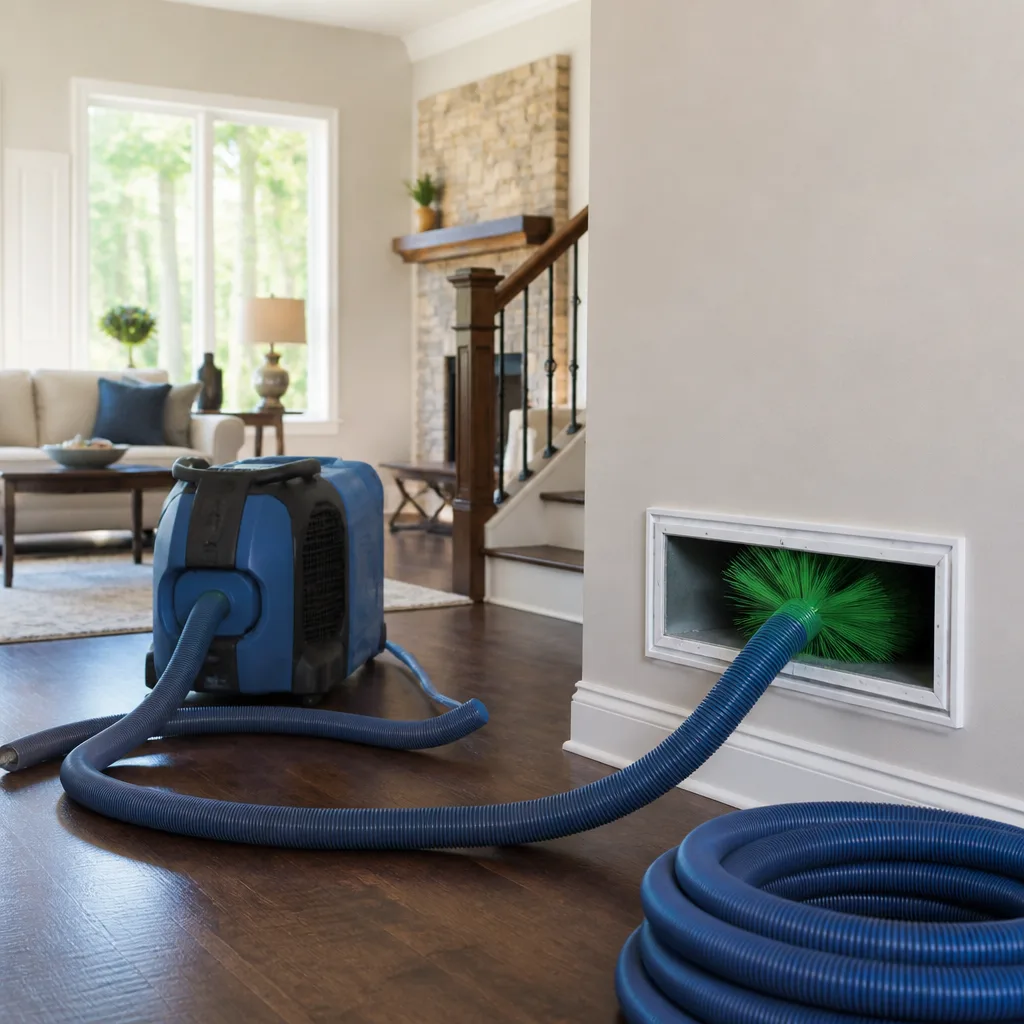 Whole-home duct cleaning
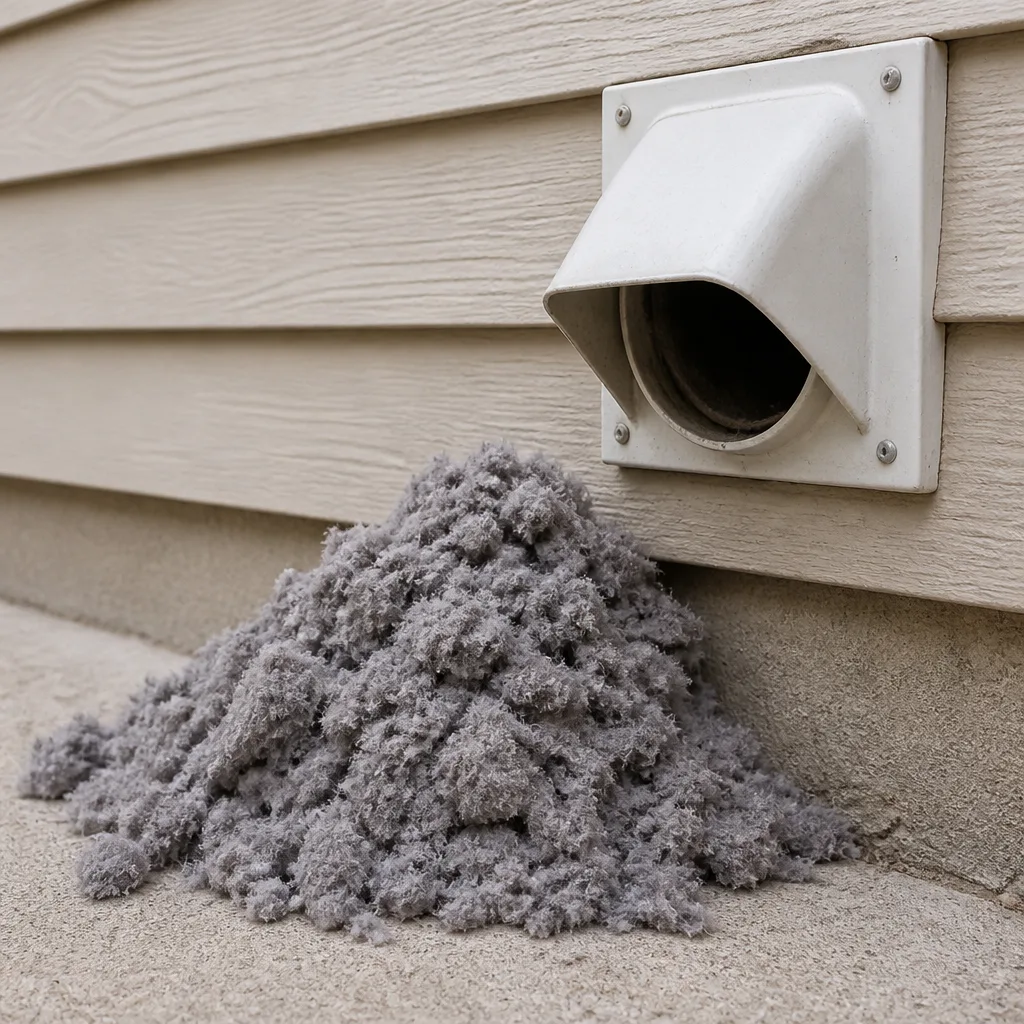 Dryer vent cleaning
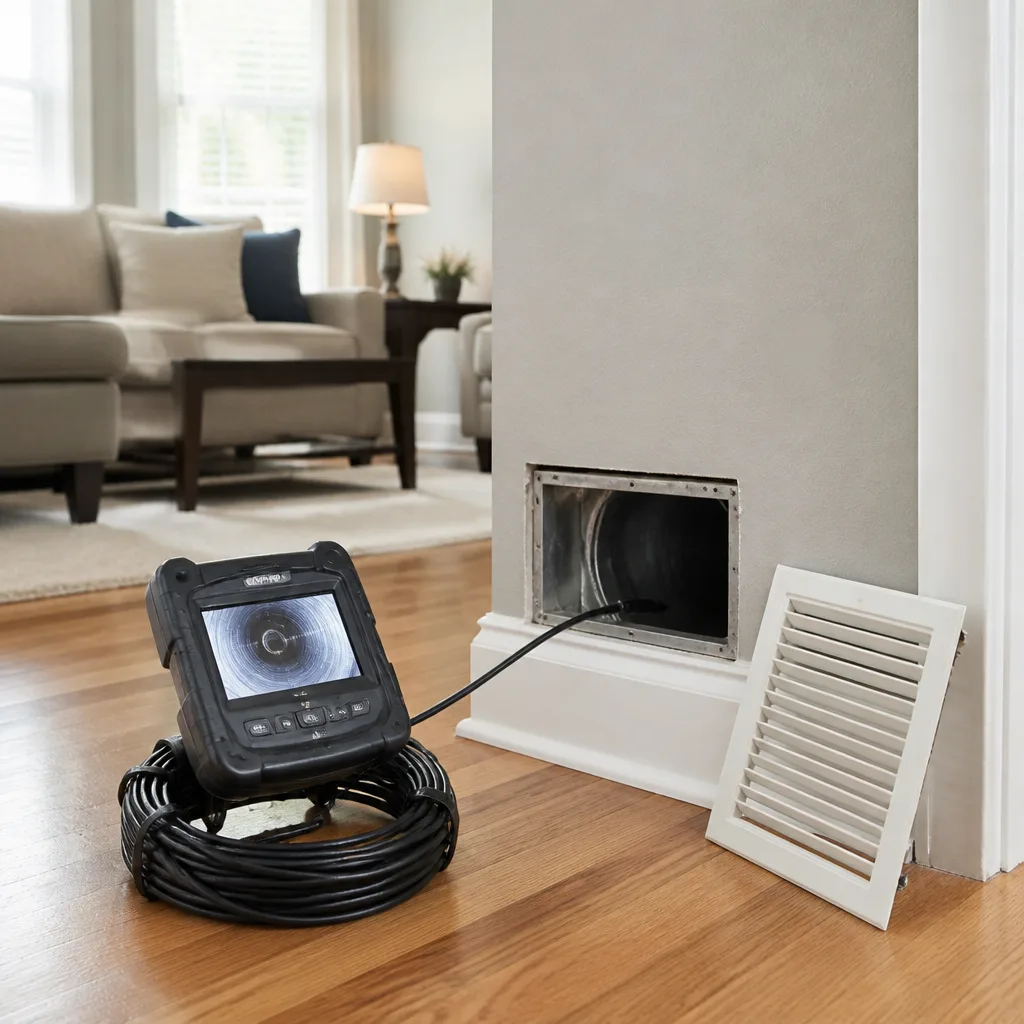 Camera inspection
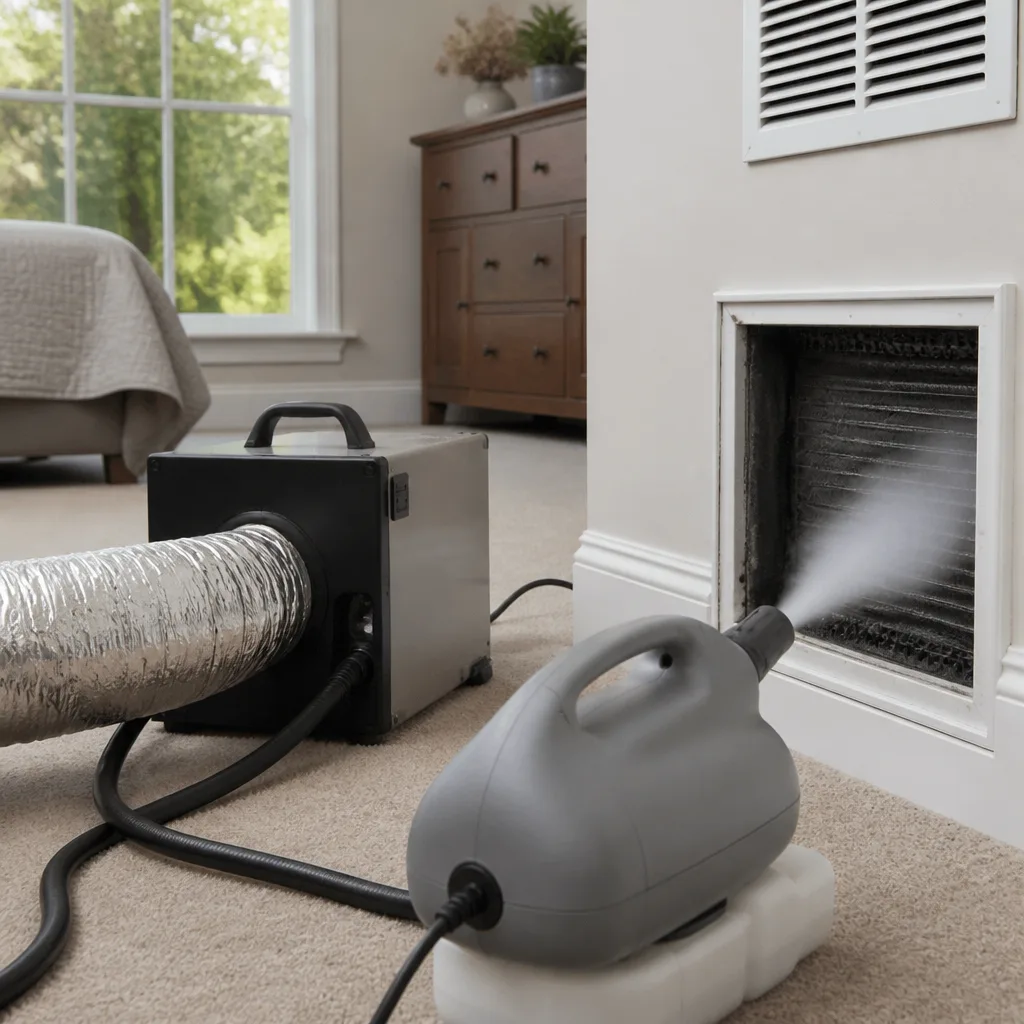 Sanitizing & deodorizing
Whole-system duct and dryer vent check with before-and-after photos - you see exactly what came out of your vents
That "$99 whole-house special" is a bait ad - the real number appears once they are in your hallway, or the "clean" is a shop-vac at the register. We photograph the inside of your ducts before and after instead.
DIY vs Professional Air Duct Cleaning: The Newport Beach Homeowner’s Decision Guide
Two very different objects get sold under the same name. A $30 dryer-vent brush kit from a hardware store and a containment-grade negative-pressure system used on commercial remediation jobs are both called “duct cleaning equipment,” and that gap is where most homeowners get lost. It’s also why the DIY-versus-professional question can’t be answered with a single yes or no. Some tasks around your ductwork genuinely belong to you. Others leave a false sense of a finished job. This guide separates the two, honestly, for Newport Beach homes.
Quick Answer
You can responsibly clean supply registers, replace filters on schedule, and brush out a short, accessible dryer vent run yourself. Anything involving the interior of the trunk lines, the blower, the evaporator coil, or contaminated debris that could get stirred into your living space calls for commercial-grade equipment with negative-pressure containment, which no rental or consumer tool provides. For most Newport Beach homes with central air, the split falls along that line.
Styles & brands we work with
- Whole-home duct cleaning
- Dryer vent cleaning
- Camera inspection
- Sanitizing & deodorizing
Table of Contents
- What You Can Legitimately Do Yourself
- What Requires Commercial-Grade Equipment
- Why DIY Compressed Air Can Make Things Worse
- How Newport Beach Humidity Affects Disturbed Debris
- The Honest Cost Comparison
- Dryer Vents: Where DIY Actually Works, and Where It Stops
- A Pre-Decision Inspection Checklist
- When to Call a Professional
What You Can Legitimately Do Yourself
Start with the tasks that don’t carry risk and do make a measurable difference. Register cleaning is real work. So is filter discipline. What matters is knowing which is which so your effort lands where it counts.
Here’s the honest owner-task list for a typical Newport Beach home:
- Register and grille wipe-downs. Remove the supply and return grilles, wash them in a sink or hose them off, dry them fully, and reinstall. Dust on the face of a register is surface soil. It doesn’t reflect the condition of the duct interior, and wiping it costs nothing.
- Filter replacement on a real cadence. A 1-inch pleated filter in a busy household usually needs swapping every 60 to 90 days. A 4-inch media cabinet filter often lasts six to twelve months. Write the date on the filter edge so you stop guessing.
- Visual inspection with a flashlight and phone camera. Pop a register and shine a light down the branch run. If you can photograph the interior, do it. Photos give you a baseline and, later, a way to verify what a technician says they found.
- Keeping the return path clear. Furniture, rugs, and storage boxes pressed against return grilles choke airflow and force the system to work harder. That’s free to fix.
- A short, straight, accessible dryer vent run. If your dryer vent exits the wall right behind the appliance with one or two short elbows and a reachable outside hood, a stiff brush kit and a shop vac can clear lint from that run. We’ll cover where this stops working in the dryer vent section below.
None of these requires a tool you can’t carry in one hand. All of them help. None of them clean the inside of a trunk line.
What Requires Commercial-Grade Equipment
The interior of a duct system is not a harder version of register cleaning. It’s a different job with different physics. A consumer shop vac generates suction at the nozzle and nowhere else. A commercial platform combines high-volume negative pressure at the main trunk, mechanical agitation inside the run, and containment at the source so loosened material travels out rather than into the room.
Here’s what a full-system professional job involves, in order:
- System assessment. A technician maps the trunk-and-branch layout, identifies returns, notes any disconnected joints, crushed flex runs, or gaps at plenum connections, and checks the air handler and coil. This is where a single visit tells you more than a dozen register wipe-downs.
- Negative-pressure setup. A high-volume vacuum with HEPA filtration is connected to the main trunk, and the system is put under negative pressure before any agitation begins. This is what keeps loosened debris from drifting into the home.
- Mechanical agitation. A rotary brush or air whip travels the length of each run, contacting the duct walls. Vacuum alone does not remove adhered soil. The brush does the work; the vacuum carries it away.
- Component cleaning. The blower wheel, evaporator coil, and drain pan are cleaned separately. These components collect a surprising share of the total debris load.
- Verification and sealing. Before-and-after photos of the duct interior, and a check for leaks or unsealed joints that would let contamination back in. Ducts that leak at the plenum pull attic or crawlspace air into the system every time the fan runs.
The equipment matters here. Rotobrush and Nikro mechanical cleaning platforms are built for this work, and Abatement Technologies systems bring containment-grade negative-pressure practice into the job. When you book a professional air duct cleaning in Newport Beach, ask specifically what equipment will be used and how negative pressure will be maintained during the job. A company that can answer that question in plain language is a company that plans to do the work properly.
Why DIY Compressed Air Can Make Things Worse
This is the point most DIY guides skip. If you blow compressed air into a duct to loosen debris, you’re doing exactly what a professional does with mechanical agitation minus the one thing that makes it safe: containment. Without negative pressure holding the system under vacuum, loosened particles have two directions to travel, and one of them is into your living room.
What ends up in the air is not just dust. Duct interiors accumulate settled particulate, lint, skin cells, pet dander, and in some homes mold spores that have colonized a damp section of flex duct. Once aerosolized, fine particles can stay suspended for hours. Small particles in the respirable range are the ones that reach deep into the lungs. For a household with allergies, asthma, or an infant, that’s a real concern, not a marketing one.
There’s a second issue: compressed air pushes debris downstream. Material loosened in a branch run travels toward the air handler or the return plenum. If it settles on the evaporator coil, you’ve traded a dirty duct for a partially blocked coil, and coil cleaning is a more involved job than duct cleaning. In our experience, the phone calls after a DIY compressed-air attempt tend to be about a problem that didn’t exist before the attempt.
The safety position here is simple. Don’t use compressed air or leaf blowers inside ductwork. Don’t run a shop vac nozzle down a supply run hoping it’ll do the work of a rotary brush. If you want to know what’s in your system, look. If you want it removed, the equipment has to match the job.
How Newport Beach Humidity Affects Disturbed Debris
Newport Beach runs on the mild side, but it has humid stretches, particularly during the marine layer months and through late summer. That matters for how debris behaves once it’s been disturbed. The general principle is straightforward: fine particles settle faster in dry air than in humid air. Higher humidity adds moisture weight to larger particles and can cause them to clump and drop, but the fine fraction, the particles small enough to stay airborne, tends to linger longer in humid conditions.
What that means in practice for a Newport Beach home:
- If you disturb settled debris in a duct without containment, the resulting cloud hangs in the air longer during humid periods than it would in dry inland air. Windows open and a fan running help, but they don’t capture fine particles.
- Damp duct interiors are also where biological growth gets a foothold. A small leak or a poorly sealed joint that pulls humid outside air into the system can create conditions where mold colonization begins on duct liner or flex duct interior. Once that’s established, cleaning alone may not be enough; the source of the moisture has to be sealed.
- If you’ve just completed a renovation in Newport Beach, construction dust in the ducts behaves the same way. Fine drywall dust and wood dust stay suspended longer in humid conditions, which makes containment more important, not less.
In our experience, the homeowners who notice the biggest air quality difference after professional cleaning are the ones who did a renovation or moved into a home with an unknown duct history, and they notice it most during the humid season. That pattern tracks with the physics. When you disturb a system without controlling where the debris goes, humid air prolongs the exposure.
The Honest Cost Comparison
Here’s the comparison most DIY-versus-professional writeups get wrong. They compare the price of a professional job against the price of a rental tool and call it even. The real comparison includes labor, consumables, the risk of a failed job, and the fact that a consumer tool can’t do the same task as a commercial platform.
Start with what a homeowner actually spends on a DIY attempt at full-system cleaning:
- Tool rental or purchase: a rotary brush kit, shop vac, and extension hoses. Rental rates vary; expect to spend a meaningful part of a professional job’s price on rental plus fuel and time.
- Time: a full afternoon, realistically more, for one person to work through the accessible runs. Most of that time is setup and cleaning up the mess after the containment fails.
- Consumables: filters, bags, tape, drop cloths, and probably a replacement filter sooner than expected because of the dust load.
- The re-do risk: if the job isn’t done correctly, you pay for it once and then again when you call a professional. That’s the part nobody budgets for.
Professional air duct cleaning pricing in Newport Beach is quoted per system, not per vent, and the written estimate sets the final price. That structure exists for a reason: a whole-system job is priced as one job with one outcome. You know the number before work starts. There’s no per-vent tally that turns into a surprise, and no coupon price that grows on the invoice. Ask for the estimate in writing and confirm it covers the full system, the air handler, and the verification photos.
The warranty question is worth its own line. Many HVAC manufacturers and installing contractors have maintenance requirements in their warranty terms. Consumer-grade cleaning methods that push debris toward the coil or leave moisture in the system can create conditions a manufacturer may treat as improper maintenance. Read your warranty before you start. A professional cleaning with documented before-and-after photos gives you a record if a warranty question ever comes up.
For the full scope of what a scheduled professional job covers in this market, our air duct cleaning page lays out the process step by step.
Dryer Vents: Where DIY Actually Works, and Where It Stops
Dryer vent cleaning is the one place we’d genuinely tell a careful homeowner to start with DIY, with conditions. It’s also the one place where a DIY attempt that stops halfway leaves a real safety hazard in the wall.
Here’s the honest dividing line. A dryer vent run that exits directly behind the appliance, has one or two short elbows, and is fully accessible can often be cleared with a stiff brush kit and a shop vac. What you’re clearing is lint, and lint is what ignites. The U.S. Fire Administration and the National Fire Protection Association both point to failure to clean as a leading contributing factor in dryer fires. That makes this a safety task, not a cosmetic one.
What doesn’t work:
- Long runs. A vent that travels more than a few feet through a wall or ceiling, has multiple elbows, or routes up to the roof is beyond a homeowner brush kit. The brush reaches; the debris doesn’t come out.
- Rigid or semi-rigid duct with bends. A brush that binds at a bend will stop, and forcing it will disconnect or crush the duct.
- Any run you can’t see. If you can’t confirm where the vent exits and whether it’s clear from end to end, you don’t know the condition.
There’s also a code point worth checking. Most building codes cap dryer vent length and elbow count for a reason: airflow. A long, elbow-heavy run collects lint faster than a short one. A professional dryer vent cleaning includes a full-length inspection of the run and verification that airflow is restored from the appliance to the outside hood. That’s the difference between clearing what you can reach and confirming the whole run is safe.
A Pre-Decision Inspection Checklist
Before you decide whether to hire out or reach for a brush, spend fifteen minutes gathering information. A phone call with these answers in hand gets you a much clearer picture.
- Count your registers and returns. Write down how many supply registers and return grilles you have. A system-level estimate needs that number.
- Locate the air handler and coil. Note the brand, model, and service history if you have it. If the system has never been cleaned, that’s useful information.
- Shine a flashlight into two or three registers. Look for visible dust, lint, debris, or discoloration on duct liner. Photograph what you see.
- Check for recent work. Renovation, remodeling, roofing, or a recent move-in all change the calculation. Construction debris in ducts is the most common reason we get called for a system that was clean two years ago.
- Check the filter and the return plenum for gaps. An unsealed return pulling attic or crawlspace air is the most common source of recurring contamination we find.
- Smell and feel. Does the air from any register smell musty? Is airflow weak at one or two registers compared to the rest? Those two observations point to specific problems worth a professional look.
- Look for a dryer vent problem. If the dryer takes longer than it used to, or the outside vent flap doesn’t open while the dryer runs, that’s a lint blockage worth addressing now.
When to Call a Professional
Call if any of the following applies. There’s no upside to guessing on any of these.
- You’ve had renovation, remodeling, or roofing work done. Construction debris travels deep into duct runs and stays there.
- You’re moving into a home and don’t know the duct history.
- Anyone in the household has allergies, asthma, or a chronic respiratory condition.
- You’ve found visible mold growth on a register, duct liner, or inside flex duct.
- The dryer vent run is long, has multiple bends, or exits somewhere you can’t fully inspect.
- Airflow is weak at some registers, or you’ve noticed a musty smell when the system runs.
- You’ve already attempted a DIY clean and want to verify the system is actually clean, including the coil.
Each of these calls for a technician who can assess the whole system on one visit, not a part-swapper. Newport Beach Air Duct Cleaning offers free estimates in Newport Beach – call (833) 482-6044. Our technicians have up to 10 years of experience on commercial-grade platforms, and the written estimate sets the final price before any work begins.
See the difference
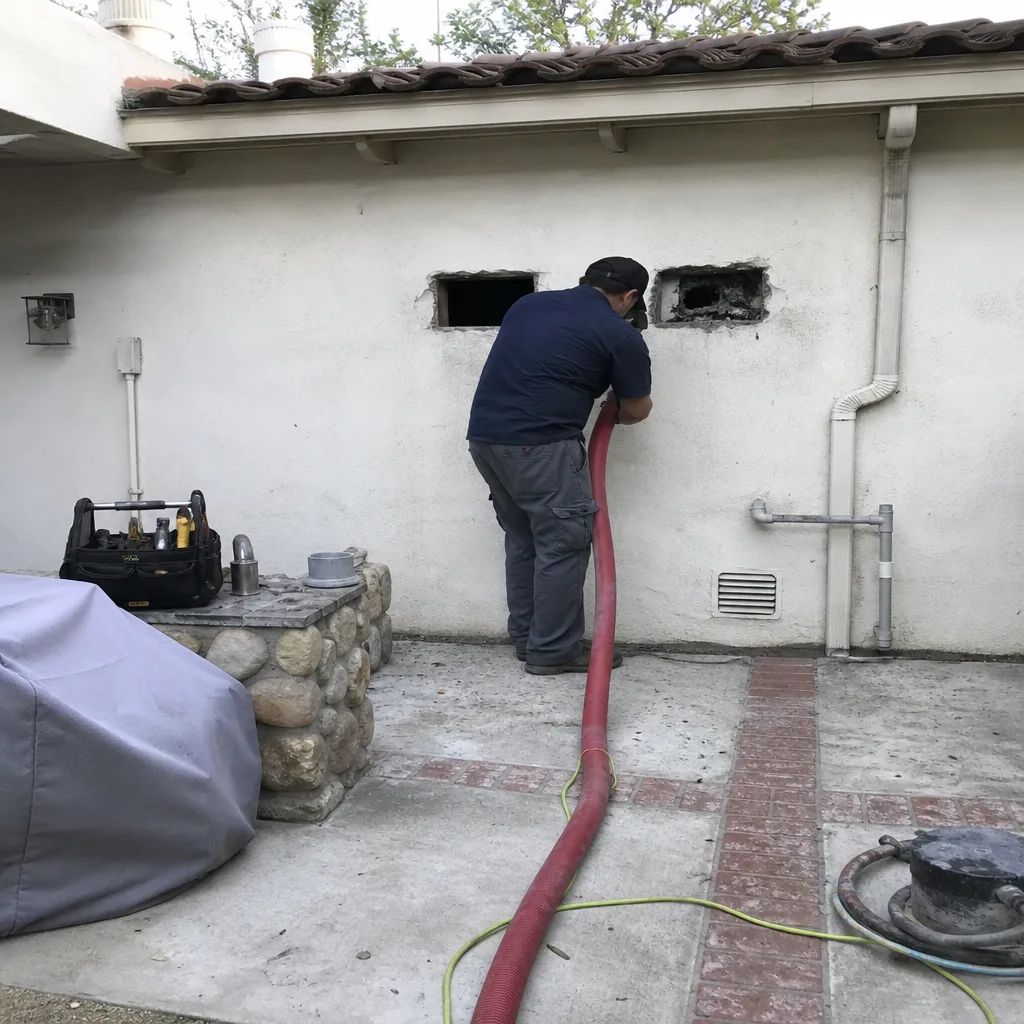 Before
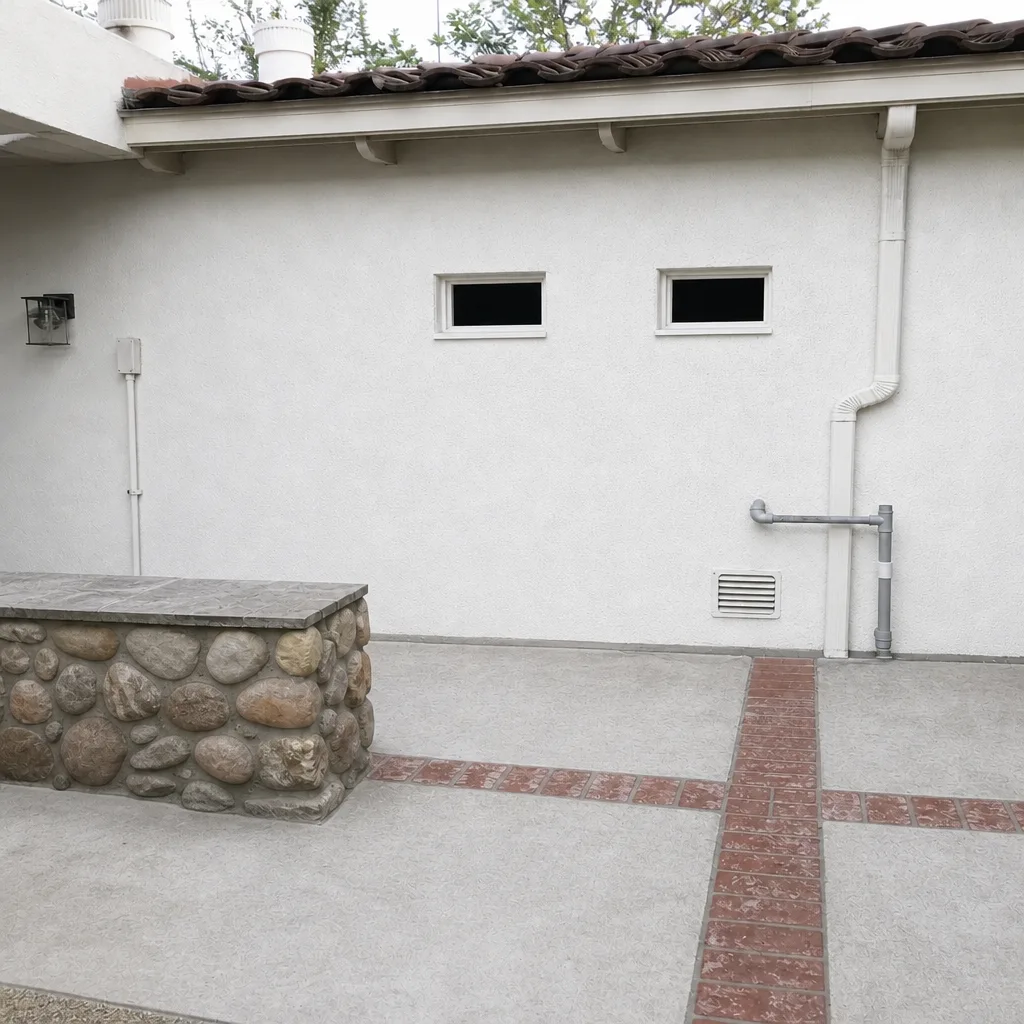 After
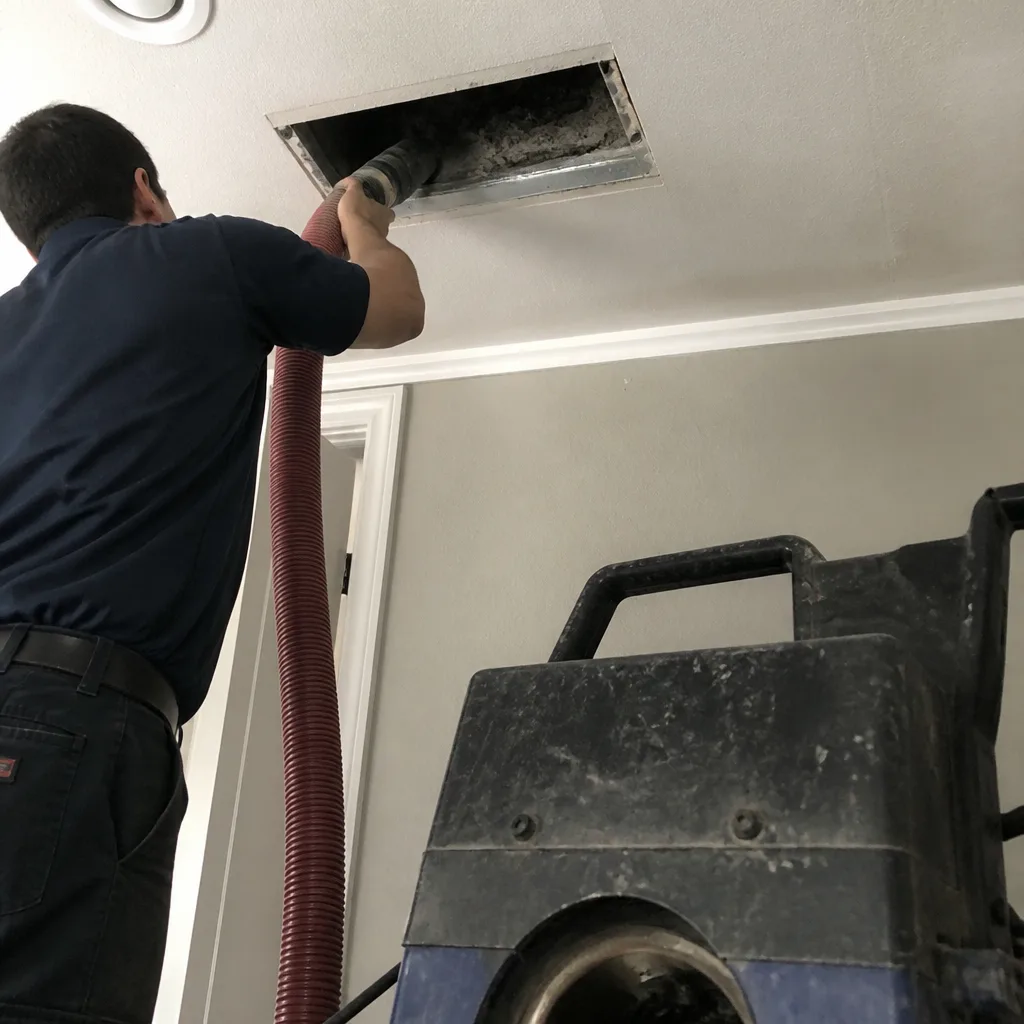 Before
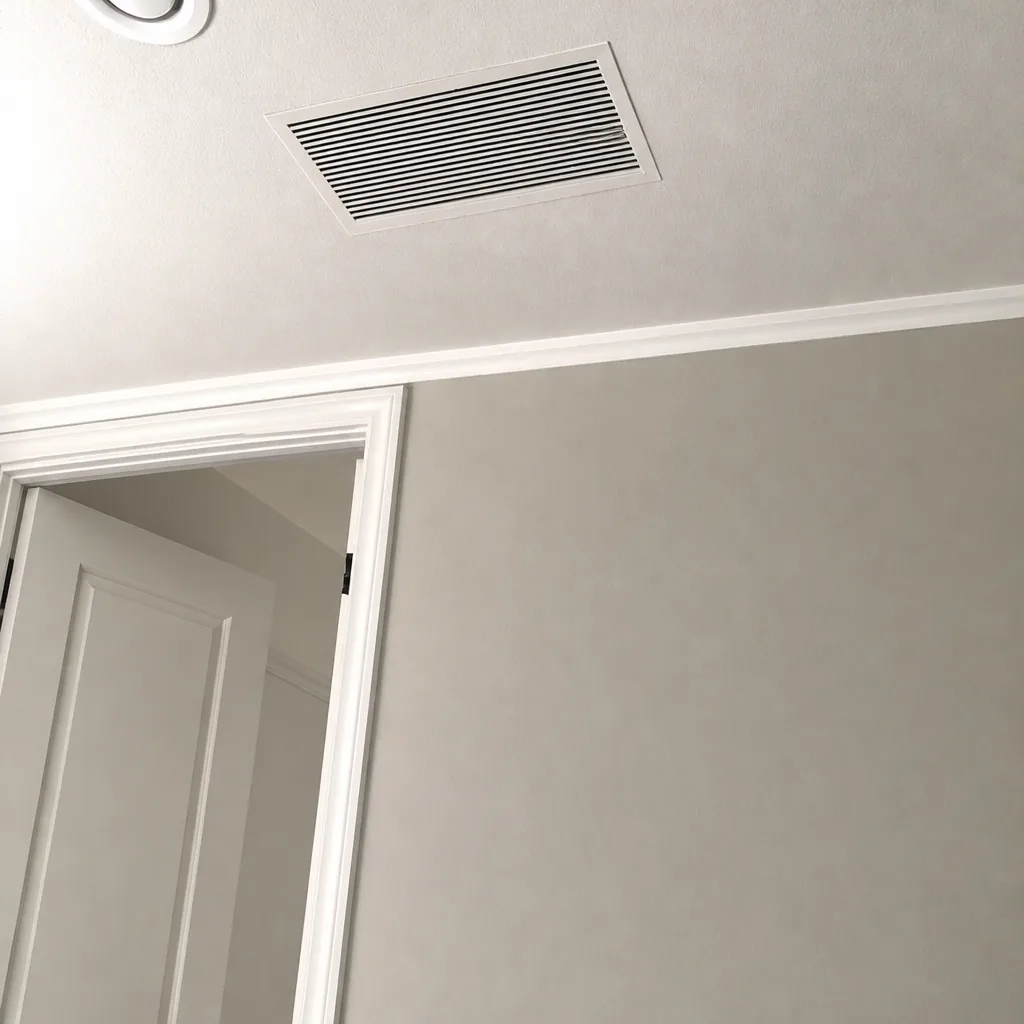 After
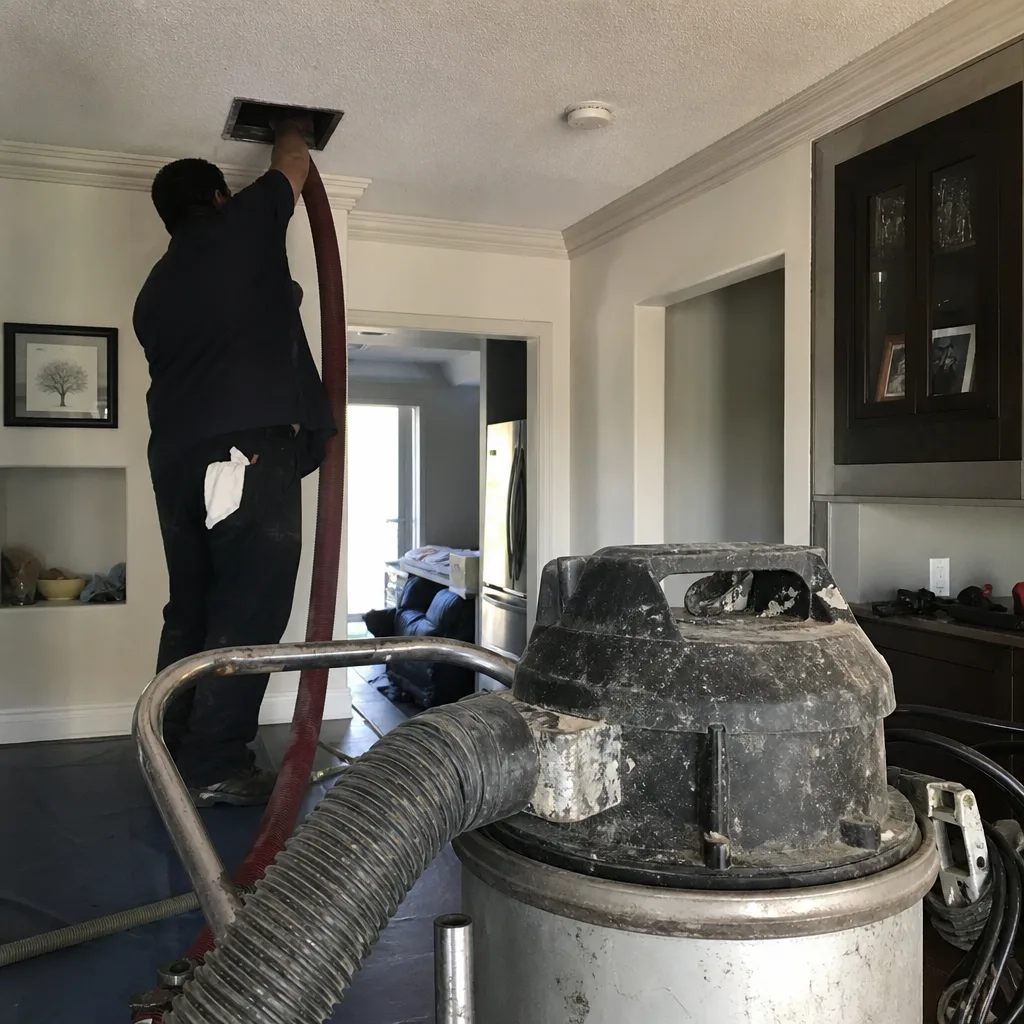 Before
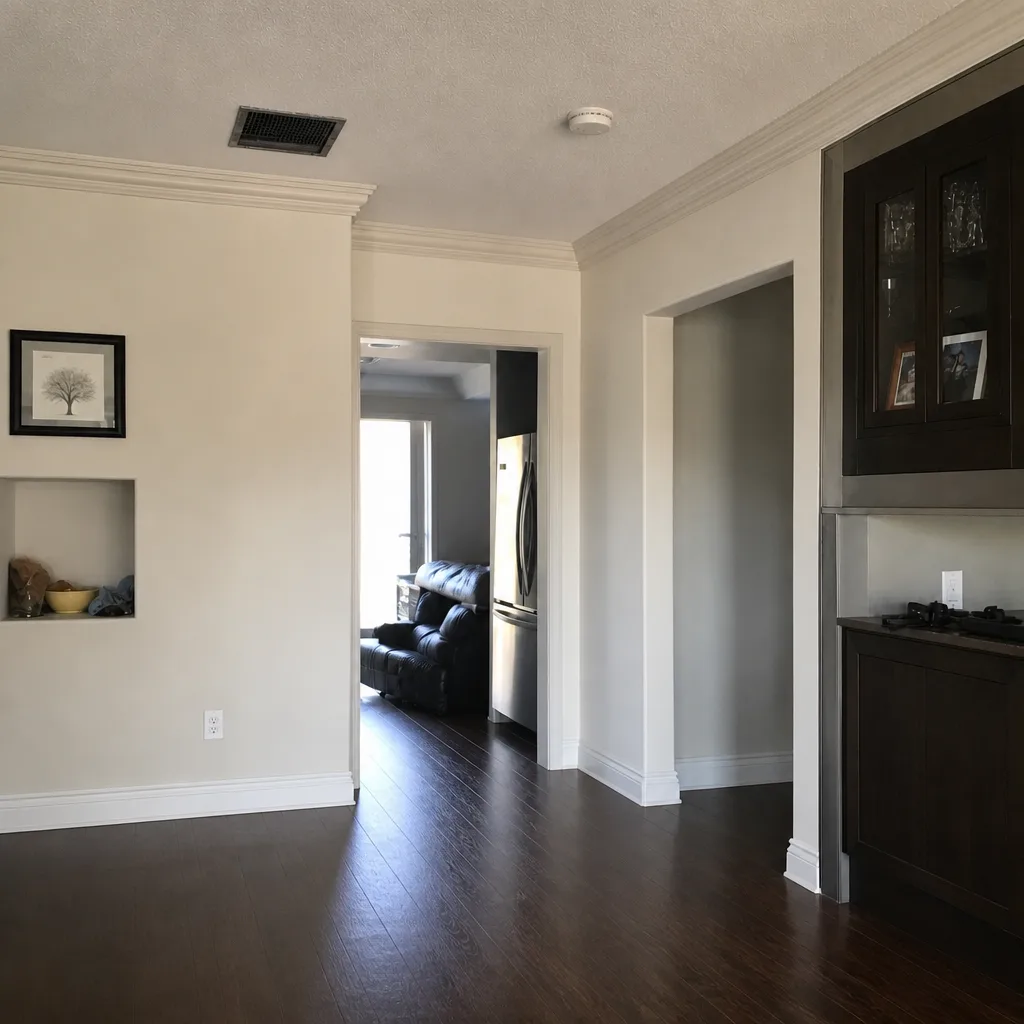 After
Common Mistakes to Avoid
- Using compressed air inside ductwork. A leaf blower or compressed-air nozzle loosens debris without containment, and the fine fraction ends up in your living room air. If you have any doubt, don’t.
- Running a shop vac nozzle down a supply run. It clears the first two feet, gives a satisfying sense of progress, and leaves the rest of the run untouched. The register looks clean; the duct isn’t.
- Skipping the air handler entirely. In our experience across Newport Beach homes, the blower wheel and evaporator coil hold as much debris as some duct runs. Cleaning only the ducts and leaving the air handler is a partial job.
- Ignoring a long or elbow-heavy dryer vent run. Lint behind a bend collects at a rate that surprises most homeowners. The Fire Administration data is consistent here. If you can’t reach it, get it inspected.
- Accepting a coupon price you didn’t see in writing. A low teaser number that grows on the invoice is the industry’s worst habit. Ask for a written estimate that covers the full system and confirm there are no per-vent line items before work starts.
- Assuming a portable vacuum with a HEPA filter equals negative-pressure containment. A portable vacuum is a good tool. It is not a containment system. Negative pressure means the whole duct system is under vacuum during agitation, not just the nozzle end.
- Cleaning ducts without sealing leaks. A duct that leaks at a plenum or a boot pulls attic air into your home. Cleaning without addressing the source leaves the problem to return. That’s why repair and sealing matter as much as vacuuming.
For the broader context of what a whole-system cleaning includes, including the air handler and coil, our HVAC cleaning page is the right next read.
Frequently Asked Questions
No, not to a professional standard. A shop vac can remove surface dust near a register, but it can’t maintain negative pressure across a whole duct system, and its suction drops off with distance. Debris loosened in the middle of a run has nowhere to go but into the air. On a Newport Beach system with any real accumulation, a shop vac gets you a partial result with a false sense of completion.
Pricing is quoted per system, not per vent, and the written estimate sets the final price. That means you should ask for a full-system quote in writing before work starts and confirm it covers the air handler, the coil, and verification photos. Call (833) 482-6044 for a free estimate. There are no per-vent charges and no coupon price that grows on the invoice.
Yes, for three specific tasks. Register and grille cleaning, filter replacement on a regular cadence, and a short, straight, fully accessible dryer vent run are all reasonable owner tasks. Anything involving the interior of the trunk lines, the air handler, the evaporator coil, or a long dryer vent run needs commercial equipment and containment. The dividing line is whether you can control where the debris goes.
It can if a manufacturer determines that improper cleaning contributed to the failure. Many HVAC warranties include maintenance requirements. Pushing debris toward the coil or leaving moisture in the system can create conditions a manufacturer may treat as improper maintenance. Read your warranty terms before starting, and keep documentation, including photos, of any professional cleaning.
The cheaper quote is usually quoting less work. Common shortcuts include cleaning only the accessible registers, skipping the air handler and coil, or quoting per vent and adding line items on site. Ask a company to specify in writing what equipment will be used, whether the entire system will be under negative pressure, and whether before-and-after photos are included. Then compare the estimates on equal terms.
Most homes don’t need annual cleaning. Common triggers in this market are a recent renovation or remodeling project, moving into a home with an unknown duct history, visible mold inside the duct system, persistent musty odor when the system runs, or a household member with allergies or asthma whose symptoms worsen when the HVAC is running. Clean ducts are only the start. If we find leaks or unsealed joints, sealing them matters as much as cleaning. Call (833) 482-6044 for a free estimate to get a specific answer for your home.
The Bottom Line
DIY and professional duct cleaning aren’t the same service at different price points. They’re different tasks. Register wipe-downs, filter discipline, visual checks, and a short dryer vent run belong to you. The interior of the trunk lines, the air handler, the coil, and any run you can’t fully inspect need containment-grade equipment. Getting that distinction right saves money twice: once by not paying for work you can do responsibly, and once by not paying twice for work a shop vac can’t finish. Start with the inspection checklist. If you’re in Newport Beach and want a full-system assessment, call (833) 482-6044. We answer 24/7. Fast dispatch from 7am to 7pm, Sunday through Friday. Estimates are free and the written estimate sets the final price.
If you want to see how the full range of services fits together, start at Newport Beach Air Duct Cleaning. From there, air duct cleaning is where most homeowners begin, dryer vent cleaning is the one safety task worth prioritizing, and HVAC cleaning covers the coil and air handler side of the system. Clean ducts are only the start; repairing leaks and sealing joints fully is what keeps them clean.
Written by the team at Newport Beach Air Duct Cleaning.