
Last updated November 25, 2026
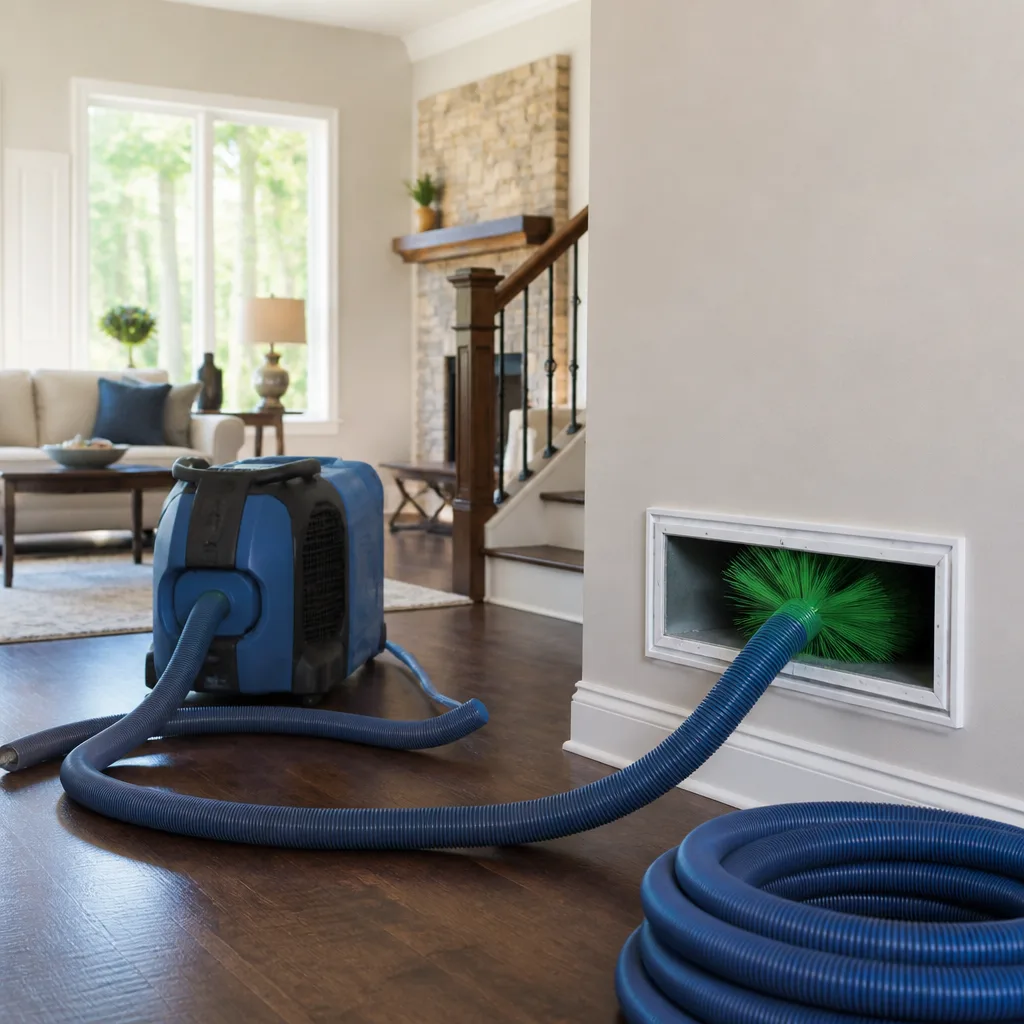 Whole-home duct cleaning
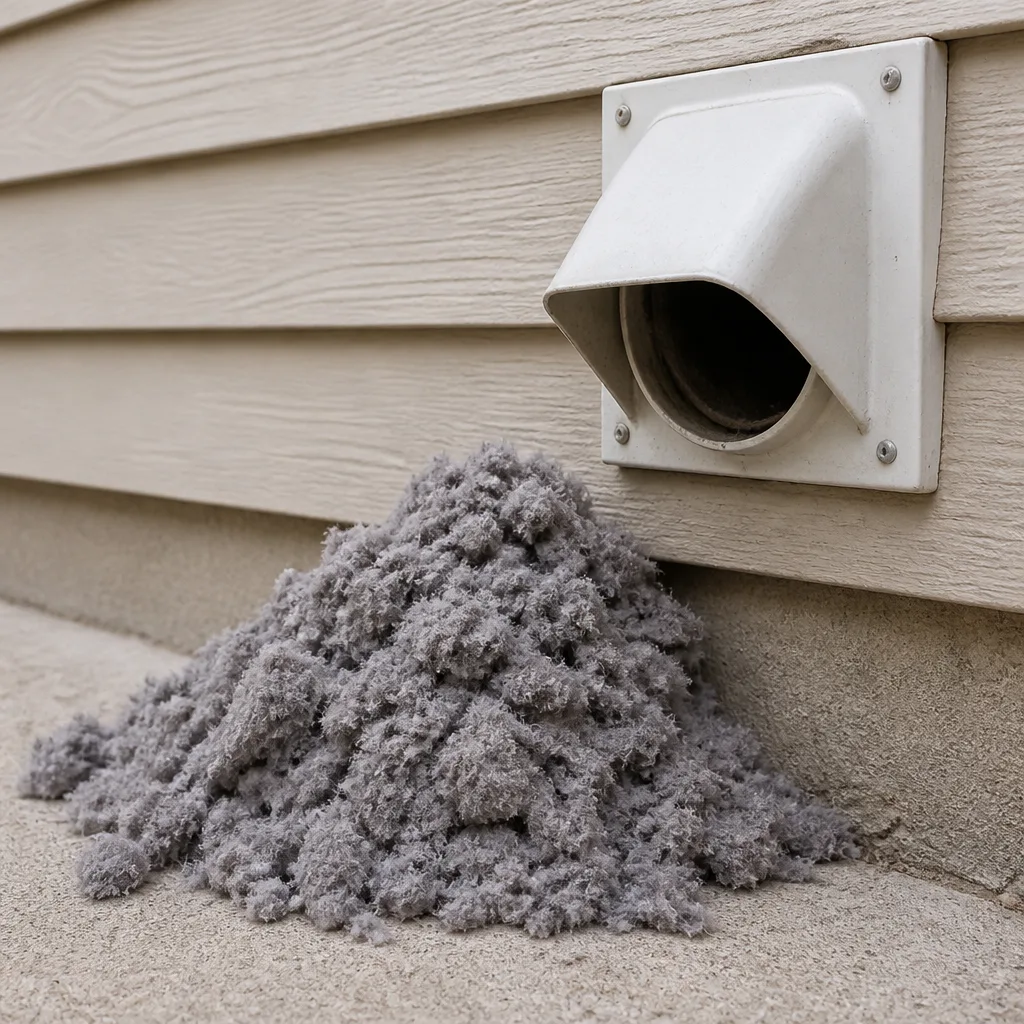 Dryer vent cleaning
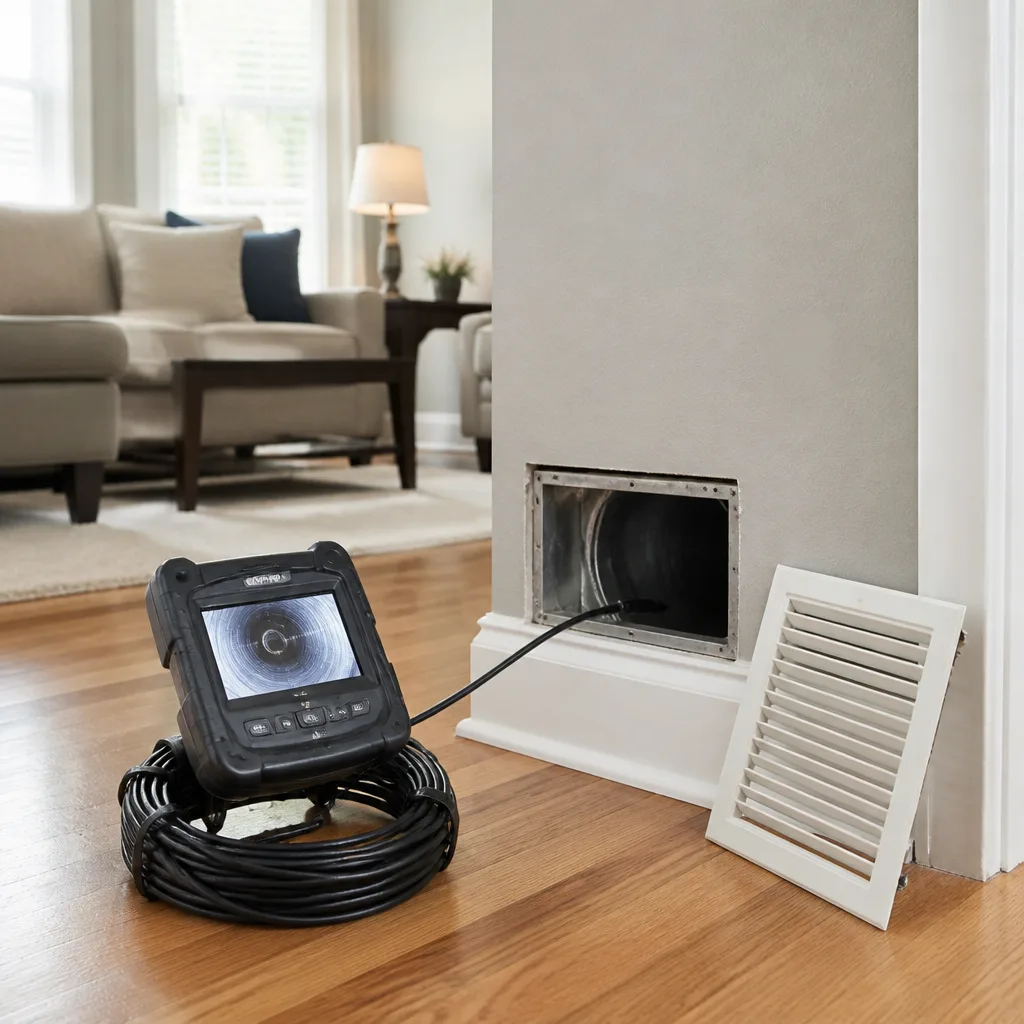 Camera inspection
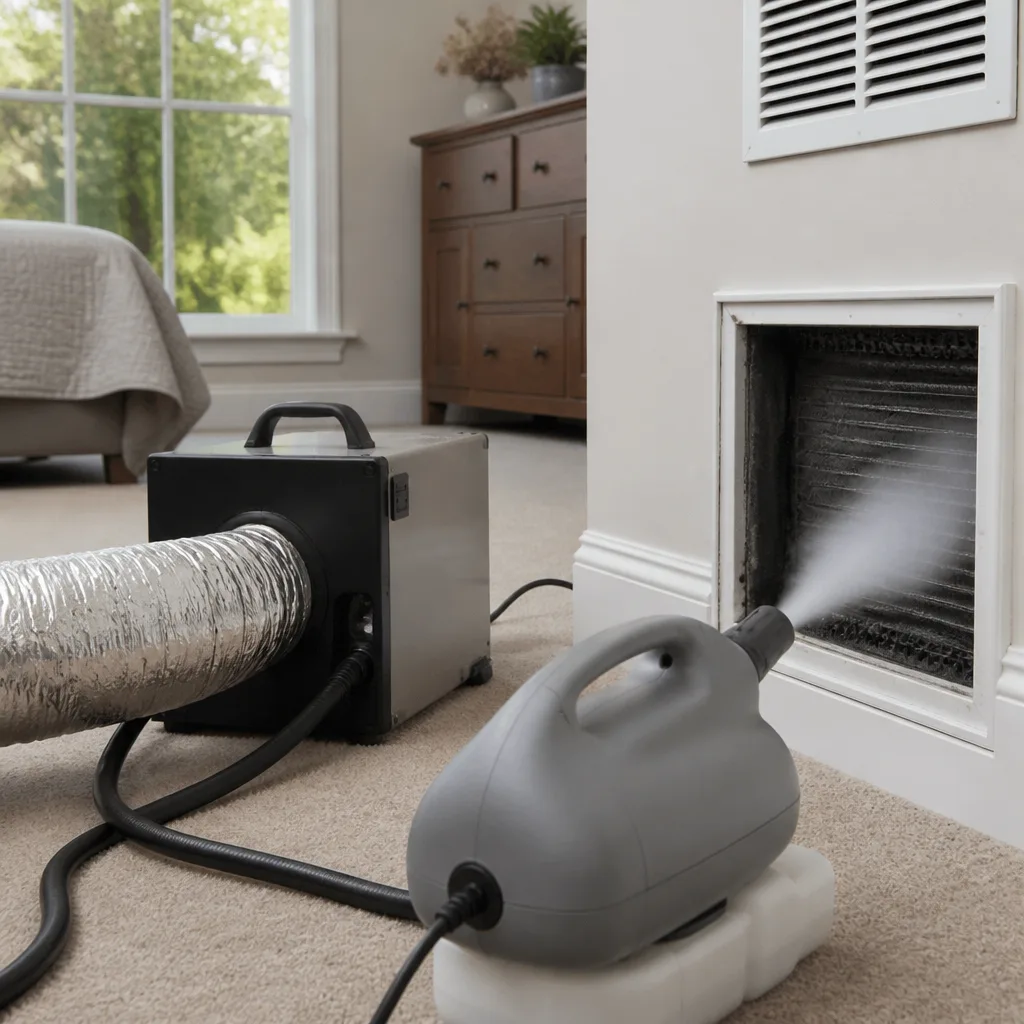 Sanitizing & deodorizing
Whole-system duct and dryer vent check with before-and-after photos - you see exactly what came out of your vents
That "$99 whole-house special" is a bait ad - the real number appears once they are in your hallway, or the "clean" is a shop-vac at the register. We photograph the inside of your ducts before and after instead.
Seasonal Air Duct Cleaning Care for Newport Beach: Year-Round Homeowner’s Guide
Most duct-care advice you’ll read was written for a place with four real seasons, and it doesn’t fit here. Newport Beach doesn’t get a hard freeze, a spring thaw or a fall furnace startup, so the calendar most guides hand you is upside down. Our worst indoor-air stretch isn’t summer. It’s fall, when Santa Ana winds push fine dust and grit through every seam in a building envelope, ductwork included. What follows is a working calendar organized around Newport Beach’s four functional air-quality seasons, not the seasons on a greeting card. You’ll learn what each stretch does to your ducts, how to prep before the wind event rather than after, how to check for moisture problems once the marine layer lifts, and how to time filter changes so you’re not quietly straining your blower motor. It’s built for homeowners and property managers who want the whole system understood, not just vacuumed.
Quick Answer
The best time to clean air ducts in Newport Beach is late September to early October, before Santa Ana wind season, paired with a full duct inspection and sealing pass on any leaky runs. A second, lighter check belongs in spring after the pollen peak. Cleaning on a fixed annual date misses the point; you want cleaning timed to the two events that actually load your system, the pre-wind sealing window and the post-marine-layer moisture check.
Styles & brands we work with
- Whole-home duct cleaning
- Dryer vent cleaning
- Camera inspection
- Sanitizing & deodorizing
Table of Contents
- The Four Functional Air-Quality Seasons in Newport Beach
- Pre-Santa Ana Preparation: Seal Before You Clean
- Post-Marine-Layer Inspection: What to Check in Late Summer
- Why June Gloom Heavy AC Use Loads Your Evaporator Coil
- Seasonal Filter MERV Ratings Without Overloading Your Blower
- Cleaning Is Only the Start: Repair, Sealing and Air Quality
- Dryer Vent Care on a Seasonal Calendar
- A Month-by-Month Duct Care Calendar
The Four Functional Air-Quality Seasons in Newport Beach
Newport Beach has four air-quality seasons that matter to your ductwork, and they don’t line up with summer, fall, winter and spring the way a Midwest guide assumes. Think of them as load events. Each one puts a different kind of material into your system, and each one calls for a different response.
- Marine layer season (May through September): Cool, damp mornings that burn off by midday. Your air conditioner runs long, steady cycles because the outdoor air never gets dramatically hot, and that steady runtime pulls more airborne material across the evaporator coil than a short, hard blast would.
- Santa Ana season (October through December): Dry, gusty offshore winds that carry fine particulate. This is the heaviest debris-loading window of the year, and it arrives through gaps you can’t see.
- Post-storm window (January through March): Rain events followed by clearing. The concern shifts from dust to moisture getting into places it shouldn’t, particularly flex duct runs near exterior walls.
- Spring pollen peak (roughly March through May): The return of heavy pollen loads pulled in through the return side, plus the first real cooling demand of the year.
Notice what’s missing: a furnace startup season. Heating loads here are light, so the dominant stress on your ducts is cooling runtime and wind-driven debris, not combustion. That single difference is why generic seasonal advice misfires in Newport Beach. When you’re planning the year, anchor it to the two events that actually move the needle: the Santa Ana winds and the marine layer. Everything else is maintenance around those poles.
If you take one idea from this section, take this: your duct system is a filter for the building envelope, and the envelope gets tested twice a year in Newport Beach, once by wind and once by damp. The rest of this guide is about meeting those two tests on purpose instead of by accident.
Pre-Santa Ana Preparation: Seal Before You Clean
Cleaning your ducts in October without sealing the leaks first is like mopping a floor with the window open to a dust storm. The Santa Ana season will reload everything you just removed. That’s why the order of operations matters, and why air duct cleaning and sealing belong in the same conversation.
Here’s the sequence we recommend for the pre-wind window, roughly late September through early October:
- Assess the whole system. A technician maps the supply and return runs, checks the air handler and coil, and looks for disconnected joints, crushed flex sections and gaps at the plenum. One visit, full-system assessment is the goal, not a spot check of what’s visible.
- Clean first, but plan for the seal. Mechanical cleaning with a platform like Rotobrush or Nikro pulls the accumulated debris out. Vacuuming alone doesn’t fix the paths that let wind-driven particulate back in.
- Seal the leaks. Duct repair and sealing closes the joints and penetrations the Santa Ana winds use as entry points. Sealing before the winds arrive is worth more than cleaning after them, because it changes what happens in October rather than cleaning up after it.
- Confirm airflow after changes. Tightening a system changes pressure balance. A quick verification pass makes sure returns still pull correctly and no run is starved.
Newport Beach homes near the inland edge of the city, where lots back up toward the canyons and open ground, see more wind-borne grit than properties tucked into sheltered interior blocks. If your home sits on a rise with an unobstructed western exposure, treat pre-Santa Ana sealing as a priority rather than an option. Fine particulate doesn’t need a big gap; it travels through hairline seams. Sealing those seams before the wind arrives is the difference between a duct system that stays clean through the fall and one that’s loading up all season. Commercial-grade equipment from Abatement Technologies, with containment-grade negative-pressure practice, keeps the cleaning step from pushing dust into living space while the work is underway.
Post-Marine-Layer Inspection: What to Check in Late Summer
Once the marine layer breaks down for the season, usually by late September, it’s the right time to look for moisture-related growth in flex duct runs. Warm, damp mornings followed by cooling cycles create condensation-friendly conditions, and any run that passes through or near a cooler exterior wall is a candidate. Growth doesn’t announce itself; it hides in the first few feet of flex where the temperature differential is steepest.
What a proper post-marine-layer inspection covers:
- Flex runs near exterior walls and in unconditioned spaces. Look for sagging sections where condensation pools, and for any dark discoloration on the interior liner.
- Connection points at the plenum and boots. These are where moist air most often finds a cold surface. A loose boot at an exterior wall lets humid morning air contact a cool duct surface.
- The evaporator coil and drain pan. A slow drain or a pan that holds standing water is the common thread behind most moisture complaints.
- Filter and return grille condition. If a filter looks damp or smells musty, that’s a signal, not a small annoyance.
If any of those turn up, the fix is layered. Cleaning removes what’s there, sealing closes the path that let moisture in, and an air-quality sanitizing pass treats surfaces that are hard to reach by vacuum alone. Guardsman-grade sanitizing treatments are available as part of the air-quality tier, and they’re used when the inspection shows growth rather than as a default upsell. The point of a late-summer inspection in Newport Beach is timing: catch moisture problems before they’ve had a full heating-and-cooling cycle to spread, and you’re dealing with a smaller job than you would be in the spring.
Why June Gloom Heavy AC Use Loads Your Evaporator Coil
June Gloom is easy to misread. The mornings are cool and gray, the afternoons mild, and the tendency is to think the air conditioner is coasting. It isn’t. During marine layer season, most Newport Beach homes run their AC in long, low-intensity cycles because the outdoor temperature climbs gradually and never spikes. Those long runtimes move a steady stream of airborne material across the evaporator coil every day.
A short, hard cooling cycle moves a lot of air quickly and then stops. The coil dries between cycles. Long, steady cycles are different. The coil stays wet and loaded for hours, and the debris that passes the filter has more time to stick. By the end of the season, it’s common to find a coil that’s working harder than it needs to, which shows up as longer runtimes, weaker airflow and a house that never feels quite as crisp as it used to.
This is why cleaning timing matters more than cleaning frequency. A spring HVAC cleaning that includes the coil and air handler, done before the marine layer settles in, gives you a clean coil to start the heavy-runtime season. Cleaning mid-season, in August, doesn’t buy you much because you’re fighting the same load that’s already deposited. And cleaning only after the season is over means you spent June through September cooling a house with a fouled coil.
The practical takeaway for Newport Beach: schedule the coil-inclusive cleaning in late spring, before the long runtimes begin, and treat the fall as the debris-removal window for the dust side of the problem. Two different jobs, two different reasons, two different months. If your system runs on a variable-speed blower, the effect is amplified, because the controller compensates for reduced airflow by running longer and slower, which loads the coil even more.
Seasonal Filter MERV Ratings Without Overloading Your Blower
The instinct when Santa Ana season approaches is to drop in the highest-MERV filter you can find. That instinct can backfire. A filter’s job is to trap particulate without choking airflow, and every step up in MERV adds resistance. Push it too far and your blower motor works harder, your coil gets less air across it, and your system runs longer to do the same job. The filter becomes the problem.
Here’s how we think about it by season, with the caveat that your system’s manufacturer spec is the ceiling you shouldn’t exceed:
- Marine layer season (May through September): A mid-range MERV is the sweet spot for most homes, enough to catch fine particulate during heavy cooling runtime without adding excess pressure drop. If your system is designed for a higher rating and the ductwork is well-sealed, step up a level.
- Santa Ana season (October through December): This is the one window where a higher MERV is worth considering, provided your sealing work is done. A tighter duct system tolerates a denser filter better because the air has fewer bypass paths. If you haven’t sealed, don’t jump to a dense filter to compensate; seal first.
- Post-storm window (January through March): Step back down to the mid-range. The heavy particulate load has passed, and the moisture concern means you want air moving freely with nothing that holds dampness.
- Spring pollen peak (March through May): Mid-range again, checked more often because pollen loads clog a filter faster than everyday dust does.
The nuance most seasonal guides skip: filter changes should follow airflow symptoms, not just the calendar. If your system is short-cycling or you notice weak supply airflow, check the filter before anything else. And if you’re planning an air-quality upgrade, a proper air cleaner from a manufacturer like Aprilaire is engineered for the pressure drop, which a generic high-MERV pleated filter is not. We can recommend and fit filtration that matches your system’s airflow rather than fighting it.
Cleaning Is Only the Start: Repair, Sealing and Air Quality
The single biggest gap in most seasonal duct advice is that it treats cleaning as the whole job. It isn’t. Cleaning removes what’s there today. Repair and sealing close the paths that will refill it tomorrow. Air-quality equipment changes what gets through the filter in the first place. All three belong in a seasonal plan because each one solves a different part of the same problem.
In practice, a system-level approach on a Newport Beach home looks like this:
- Inspect the entire system, not just the visible ducts. Air handler, coil, plenum, supply and return runs, connection boots and the exhaust side all get assessed on one visit.
- Clean with commercial-grade equipment. Rotobrush and Nikro platforms are built for mechanical cleaning of the whole system, not surface vacuuming. Containment-grade negative-pressure practice keeps debris out of living spaces while the work happens.
- Repair and seal what’s leaking. This is where the root cause of re-contamination lives. Surface cleaning without sealing lets the same contaminant path reopen within a season.
- Add air-quality hardware where it earns its place. Filtration and purification products from Honeywell and Aprilaire can be specified and installed during the same visit, matched to what your system can actually pull through its blower.
Newport Beach homes with older flex duct in unconditioned attics are the most common place we find leaks that just get cleaned around season after season. The duct looks fine from the outside. The joints have separated. Sealing them is the only fix that changes the pattern. This is a breadth of service worth having under one roof, so you’re not coordinating three contractors to solve one seasonal problem. Clean ducts are only the start; the system-level view is what actually holds.
Dryer Vent Care on a Seasonal Calendar
Dryer vent cleaning deserves a place in this calendar because it’s a fire-safety item, not a comfort upgrade. Lint accumulates in the vent regardless of season, but heat and heavy use put it under more stress. The practical windows are simple: inspect before dry, windy Santa Ana season when lint is at its driest and most combustible, and again in spring as part of the pollen-clearing pass. dryer vent cleaning is a standalone service for us, not an afterthought tacked onto a duct job, and it gets the same systematic approach we bring to the HVAC side.
Two things to check yourself between cleanings: how long a typical load takes to dry, and whether the exterior vent flap opens fully with a clear, strong airflow. A load that used to dry in one cycle and now takes two is a signal. A vent flap that barely moves is a stronger one. If the run from the dryer to the exterior wall is long or has sharp bends, it loads faster and needs attention more often. Given how many Newport Beach homes have dryers set on interior walls with a long vent run to the exterior, this is worth a calendar slot rather than a memory.
A Month-by-Month Duct Care Calendar
This is the year in order, built for Newport Beach conditions rather than a generic national script. Use it as a starting plan and adjust for your home’s exposure, system age and duct type.
- March through May, spring pollen peak: Check and replace filters more often as pollen loads climb. Schedule a duct inspection if you haven’t sealed the system in the last year. Confirm the drain pan is clear before cooling season begins.
- May, before marine layer season: Full HVAC cleaning, coil and air handler included, so you start the heavy-runtime season with a clean system. This is the single most valuable cleaning slot of the year in Newport Beach.
- June through August, marine layer season: Monitor airflow and filter condition as the AC runs long cycles. Address any moisture smell early. No heavy cleaning needed unless symptoms show.
- September through October, pre-Santa Ana: The pre-wind window. Duct repair and sealing on any leaky runs, full duct cleaning, and a filter step-up only if the sealing is done.
- October through December, Santa Ana season: Watch filters and airflow as debris loads. This is the season when an unsealed system shows it most clearly.
- January through March, post-storm: Moisture-focused inspection on flex runs near exterior walls. Drop the filter back to mid-range. Address any growth found before spring.
The pattern to notice: the two biggest jobs happen at the ends of the marine-layer and Santa Ana windows, and the quiet stretches are for monitoring. That’s the opposite of the “clean once a year in spring” rhythm most guides suggest, and it’s the rhythm that fits how Newport Beach actually stresses a duct system.
Common Mistakes to Avoid
- Cleaning before sealing. If you clean in October and skip sealing, the Santa Ana winds reload the system within weeks. Sealing first makes the cleaning last.
- Deferring the pre-Santa Ana window to late fall. Waiting until the winds are already blowing means you’re doing repair and cleaning while the system is actively taking on debris. Aim for late September and early October.
- Jumping straight to the highest MERV filter for Santa Ana season. Dense filters on a leaky system increase pressure drop without reducing debris. Seal, then consider a step up.
- Skipping the post-marine-layer moisture check. Flex runs near exterior walls are the first place condensation finds. A visual inspection in late summer catches growth before it spreads.
- Ignoring the coil because the ducts “look clean.” The evaporator coil is the second half of the system, and in marine layer season it’s where long runtimes leave the most deposited material. Coil cleaning belongs in the plan, not as an optional extra.
- Treating dryer vent cleaning as a one-time job. Lint builds back. On a Newport Beach home with a long vent run to an interior-wall dryer, an annual check is the floor, not the ceiling.
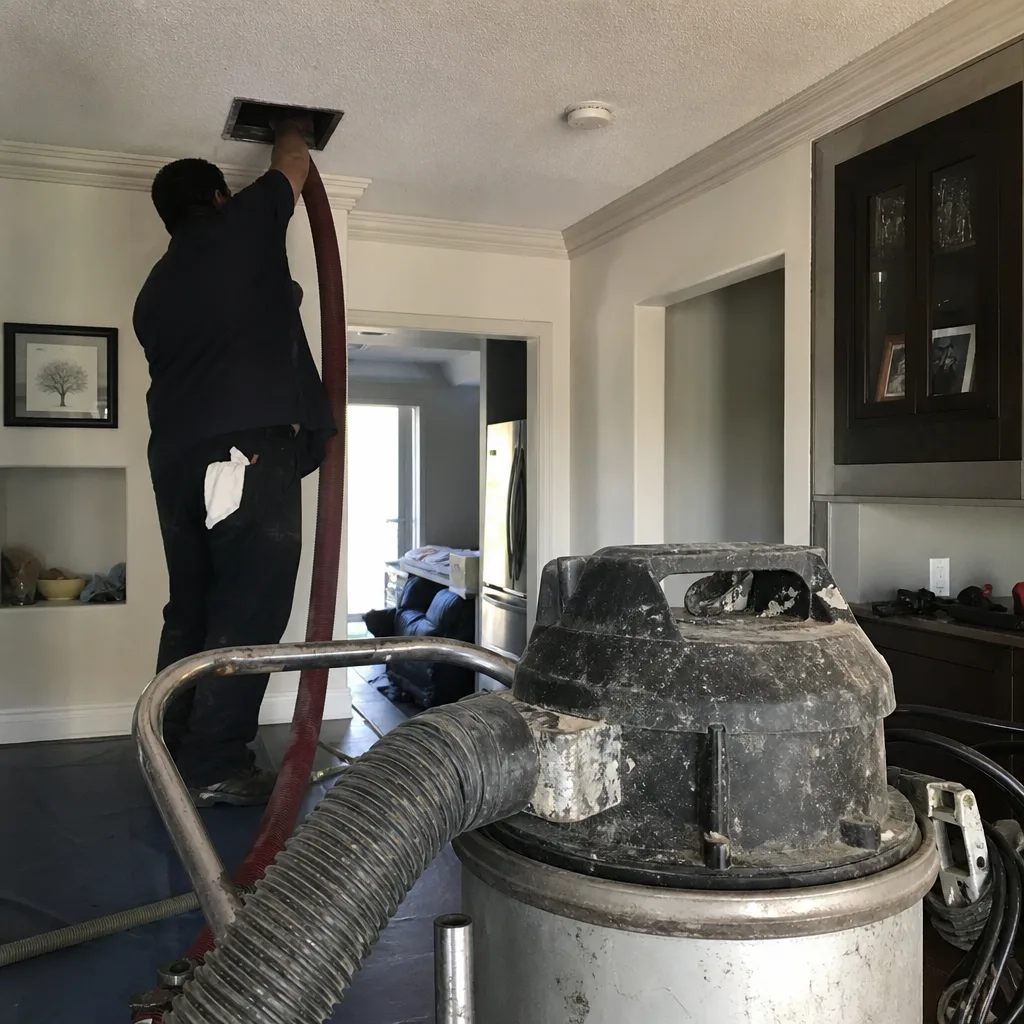
- Using consumer equipment for a whole-system job. A shop vac reaches what’s visible and nothing else. Commercial platforms are built to clean the system, not the grille.
See the difference
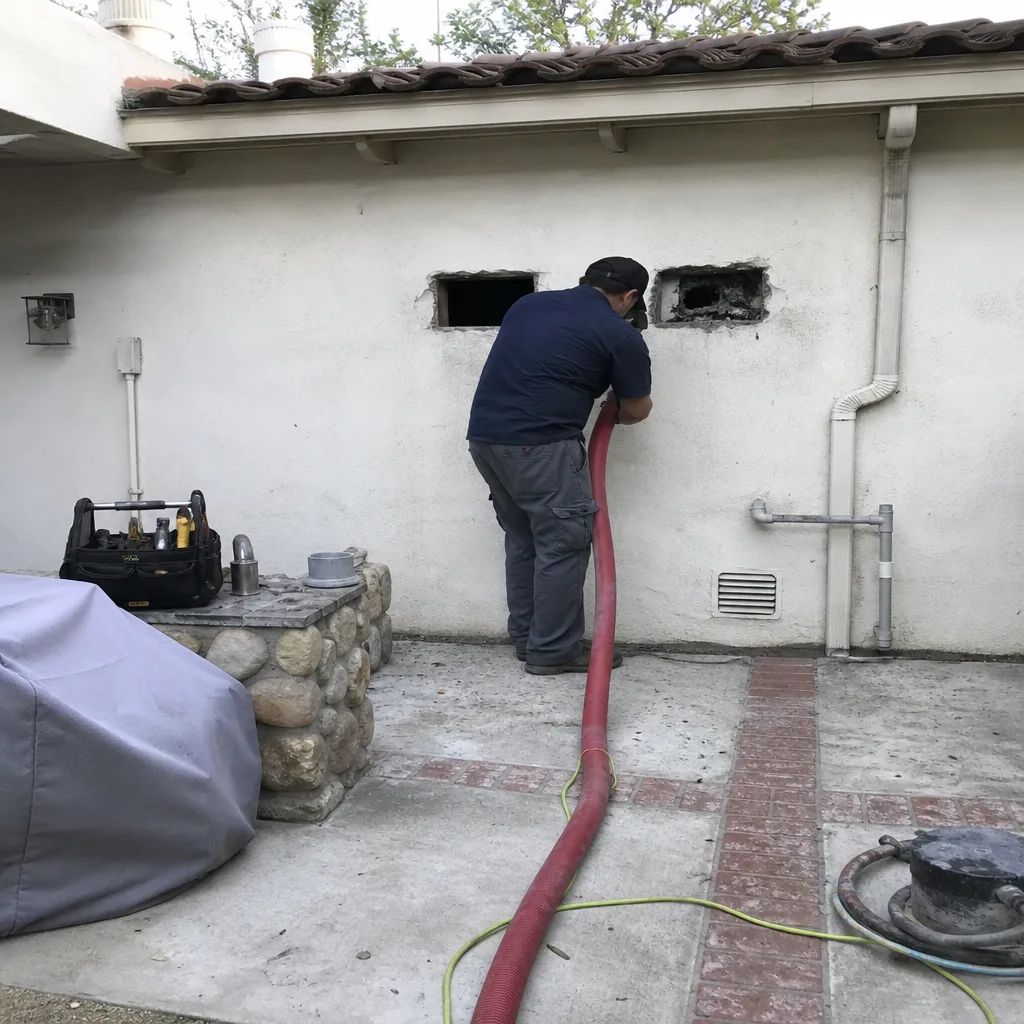 Before
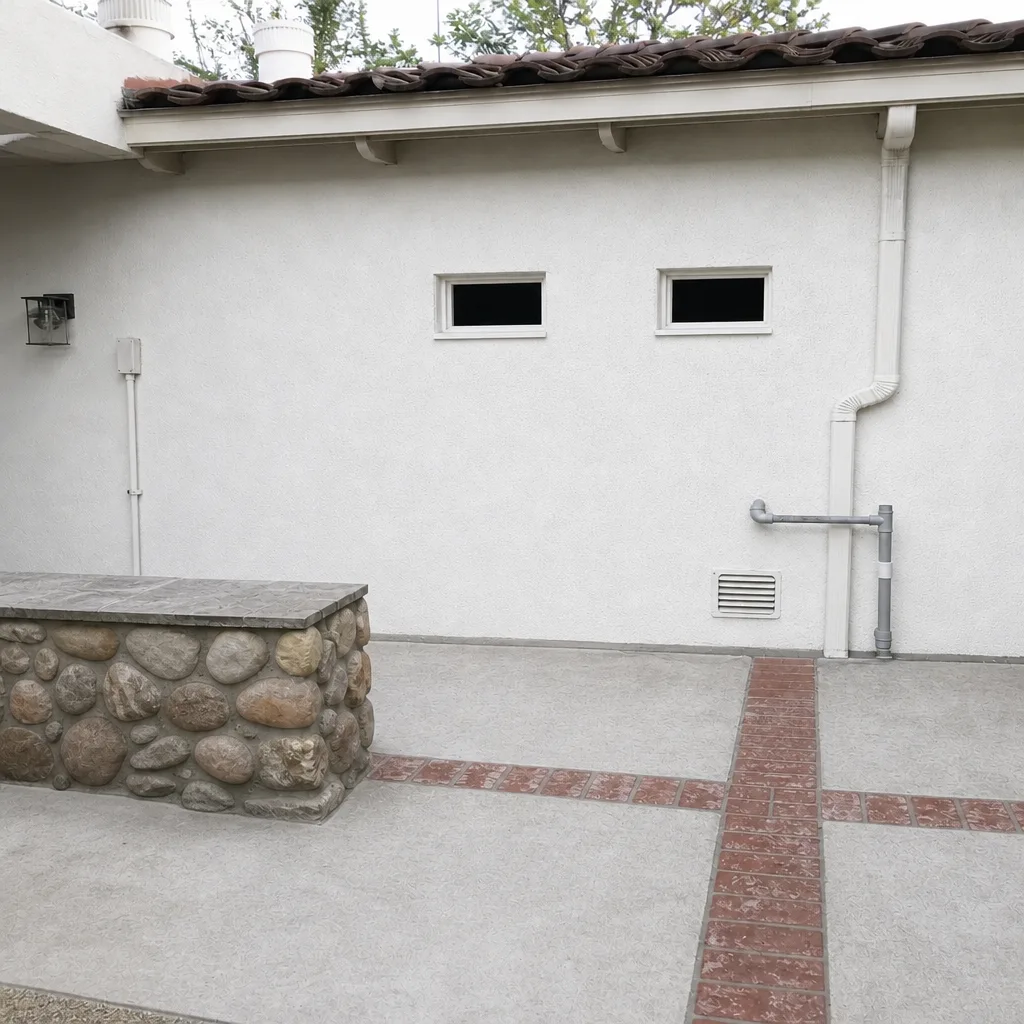 After
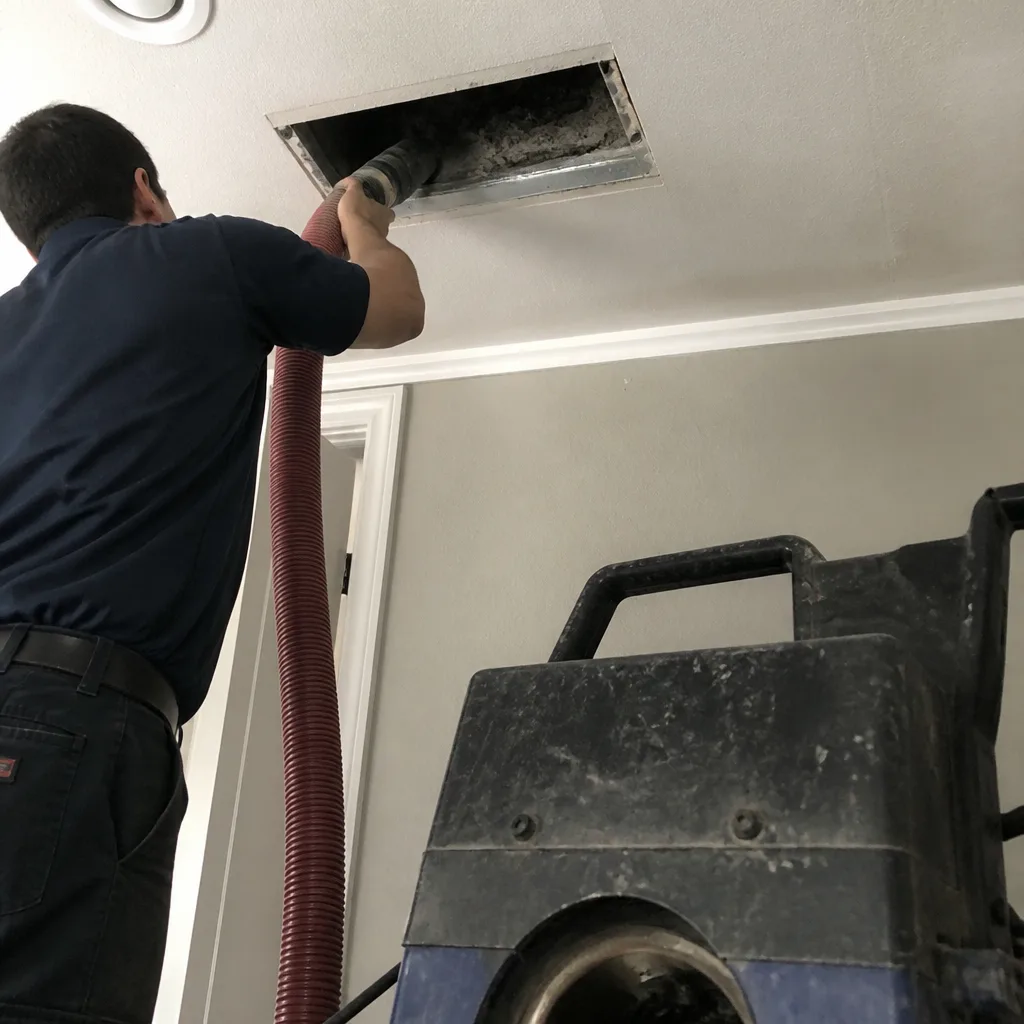 Before
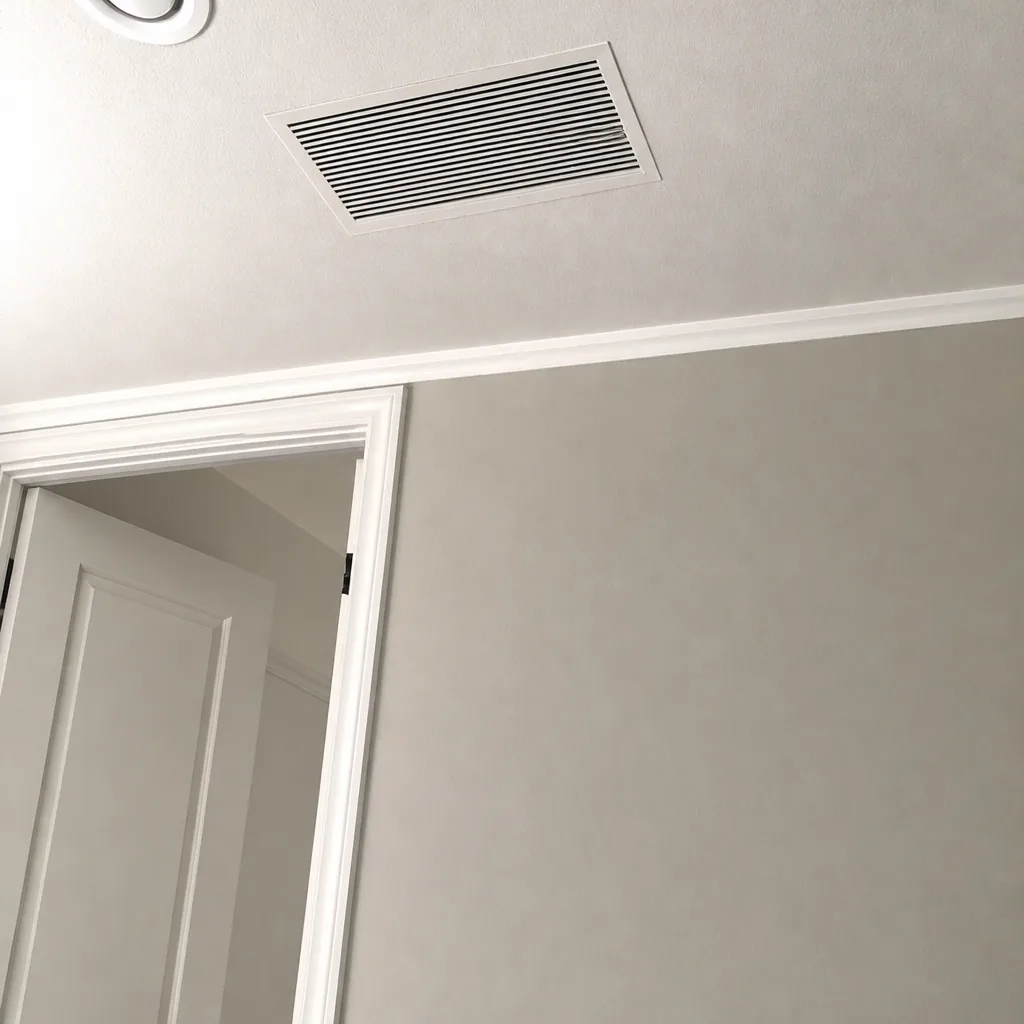 After
 Before
 After
When to Call a Professional
Some duct care is a homeowner job: changing filters, checking the dryer vent flap, watching for airflow changes. Some isn’t. Call a professional when you smell a musty or damp odor from a supply register, when a run near an exterior wall shows discoloration or condensation, when you’ve noticed a slow drop in airflow over weeks, when your dryer takes noticeably longer to dry a load, or after a renovation has put drywall dust through the system. Call before Santa Ana season if you haven’t had the system sealed in the past year, and call before marine layer season if you want the coil cleaned ahead of the heavy cooling stretch. Newport Beach Air Duct Cleaning offers free estimates in Newport Beach, and our technicians have up to 10 years of experience with commercial-grade Rotobrush, Nikro and Abatement Technologies equipment. If you’re planning a filtration upgrade, we can also supply and install Honeywell and Aprilaire products as part of the same visit. Call (833) 482-6044. We answer 24/7. Fast dispatch from 7am to 7pm, Sunday through Friday.
Frequently Asked Questions
Most Newport Beach homes do best with one full cleaning timed to late summer or early fall, plus a spring coil check and an annual sealing inspection. That’s the baseline. Homes with older flex duct, recent renovations or pets may want an extra pass in spring. The timing matters more than the frequency, since the goal is to have a clean system before each load event rather than to clean on a fixed schedule.
Fall brings Santa Ana winds, which push fine particulate dry and fast through every gap in the building envelope, your ducts included. Summer in Newport Beach is mild and the AC runs steadily but without wind stress. The Santa Ana weeks are when a leaky, unsealed system takes on the most material in the shortest window, which is why sealing before October matters more than cleaning after it.
Clean first, then seal immediately after, as part of the same service window. Cleaning on a sealed system pulls out what’s already there, and the seal stops the next lot from getting in. If you seal a dirty system, you trap the existing debris inside. If you clean a leaky system and leave it, the Santa Ana winds refill it within weeks.
Mid-range MERV for most of the year, stepping up one level for the Santa Ana months only if the system has been sealed and the manufacturer spec allows it. Higher MERV adds airflow resistance, and on a leaky system that resistance buys you nothing because the air is entering through unsealed gaps before the filter sees it. If you want filtration that performs without choking the blower, a properly spec’d air cleaner from a manufacturer like Honeywell or Aprilaire is a better choice than a dense generic filter.
Check flex duct runs near exterior walls for sagging, condensation and dark discoloration on the inner liner, then check the evaporator coil drain pan for standing water and the filter for dampness or a musty smell. If any of those turn up, schedule a full inspection with cleaning, sealing and a sanitizing pass as the likely combination. Attic duct leaks in Newport Beach homes are one of the most common things a seasonal inspection finds.
One visit covers a full-system assessment, and the work itself can be scheduled as a single coordinated job: cleaning, repair and sealing, and air-quality sanitizing all under one roof. Filtration and purification upgrades from Honeywell and Aprilaire can be specified on the same visit as the cleaning. That’s the practical benefit of an indoor-air specialist over a duct-only cleaner; you’re not coordinating a cleaner, a sealer and a hardware installer separately.
For related cavity-side work, our Newport Beach Air Duct Cleaning service overview shows the full five-service range and what each one covers on a seasonal plan.
The Bottom Line
Newport Beach’s duct care calendar runs on two events that generic guides miss: the Santa Ana winds that load your system in fall and the marine layer that stresses your coil in summer. Cleaning before each event, sealing before the winds, and checking for moisture after the marine layer breaks down will do more for your indoor air than any fixed annual schedule. Filter ratings should move with the season, and dryer vent cleaning deserves a slot on the same calendar because it’s a safety item rather than a comfort one. Commercial-grade equipment for the cleaning, sealing for the leaks, and air-quality hardware for what gets through the filter. That’s the full loop, and it’s worth running on purpose.
If you’d like a year-round plan matched to your home rather than a generic one, our air duct cleaning and HVAC cleaning pages explain the process and what a full-system assessment covers. You can also read the dryer vent cleaning page if the vent-side safety check is what brought you here.
Ready for a full-system assessment?
Call (833) 482-6044 for a free estimate. Our technicians have up to 10 years of experience, and we use commercial-grade equipment from Rotobrush, Nikro and Abatement Technologies to clean, repair and seal the whole system, not just the grilles you can see. We can also supply and install Honeywell and Aprilaire air-quality products on the same visit, matched to what your system can actually handle. We answer 24/7. Fast dispatch from 7am to 7pm, Sunday through Friday. The written estimate sets the final price, so there are no surprises once the work starts.
Written by the team at Newport Beach Air Duct Cleaning.