
Last updated November 25, 2026
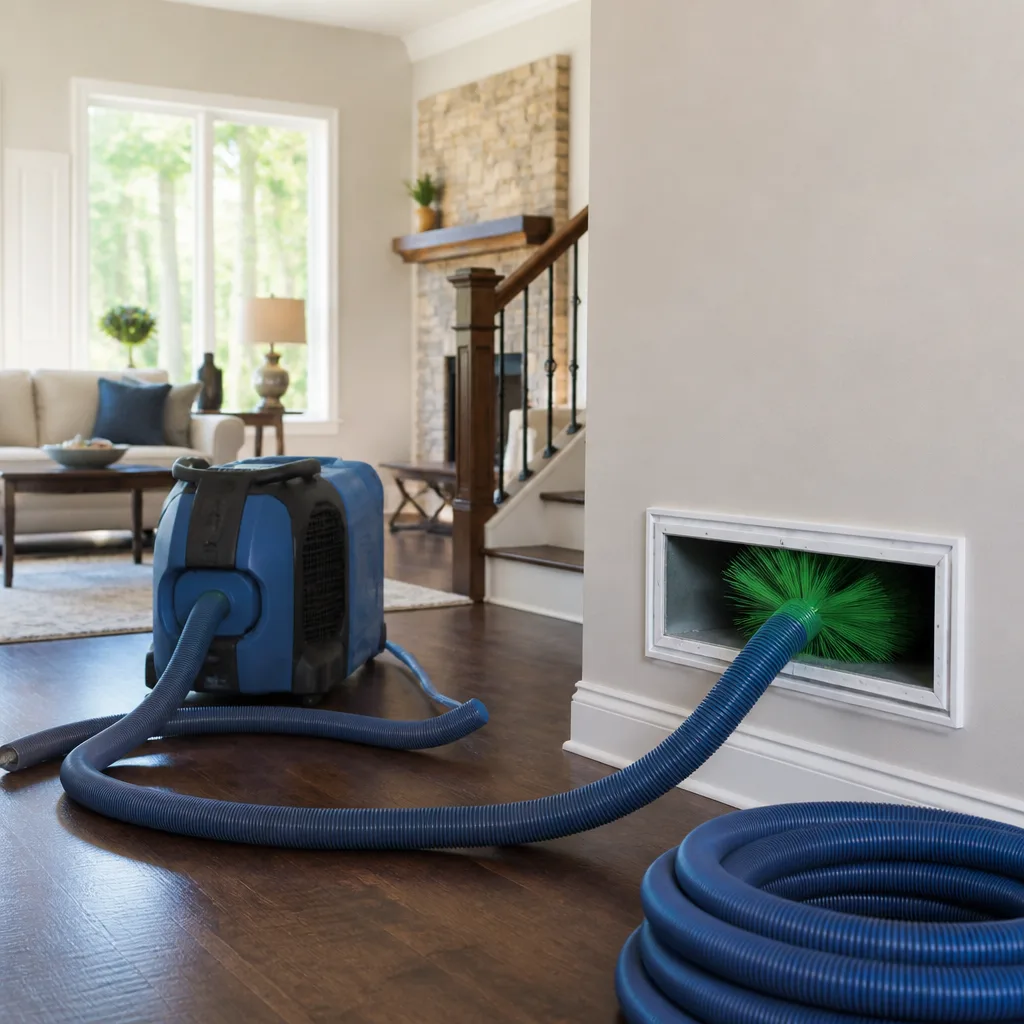 Whole-home duct cleaning
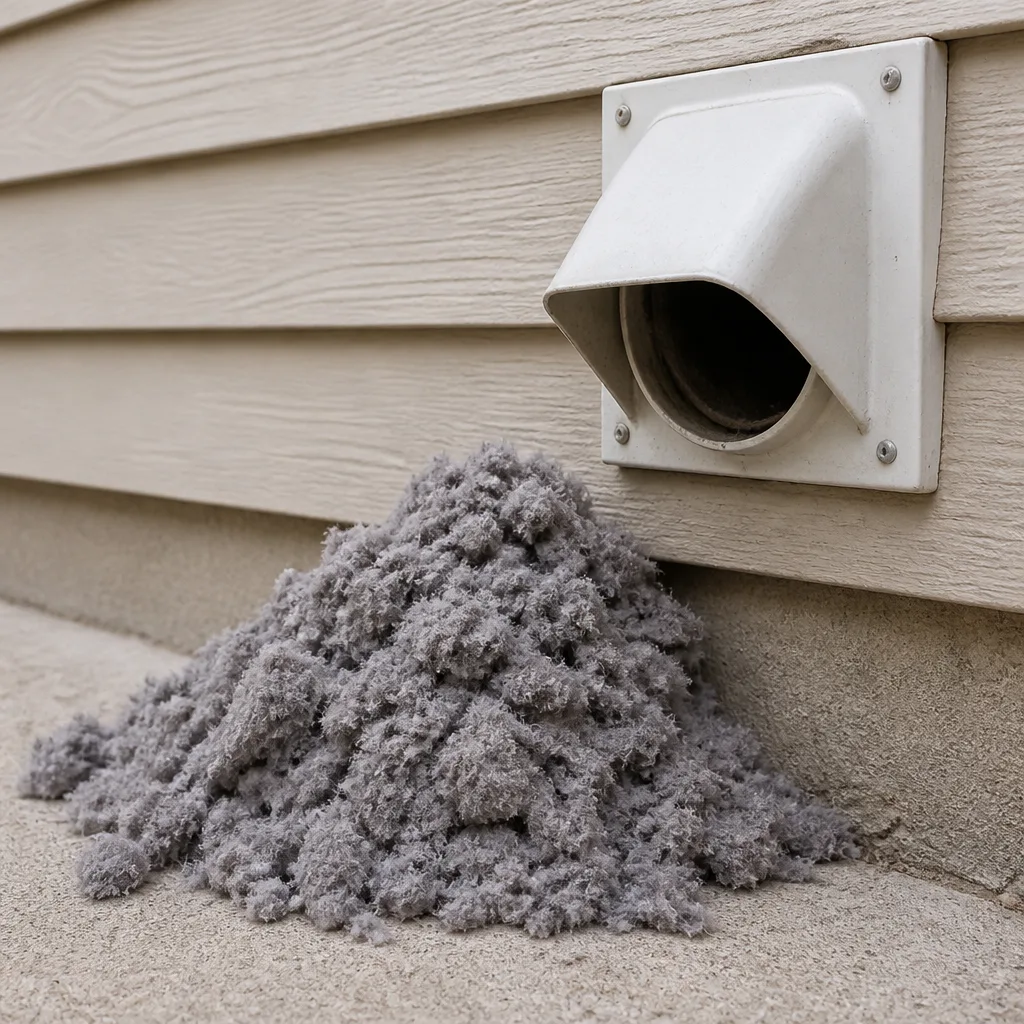 Dryer vent cleaning
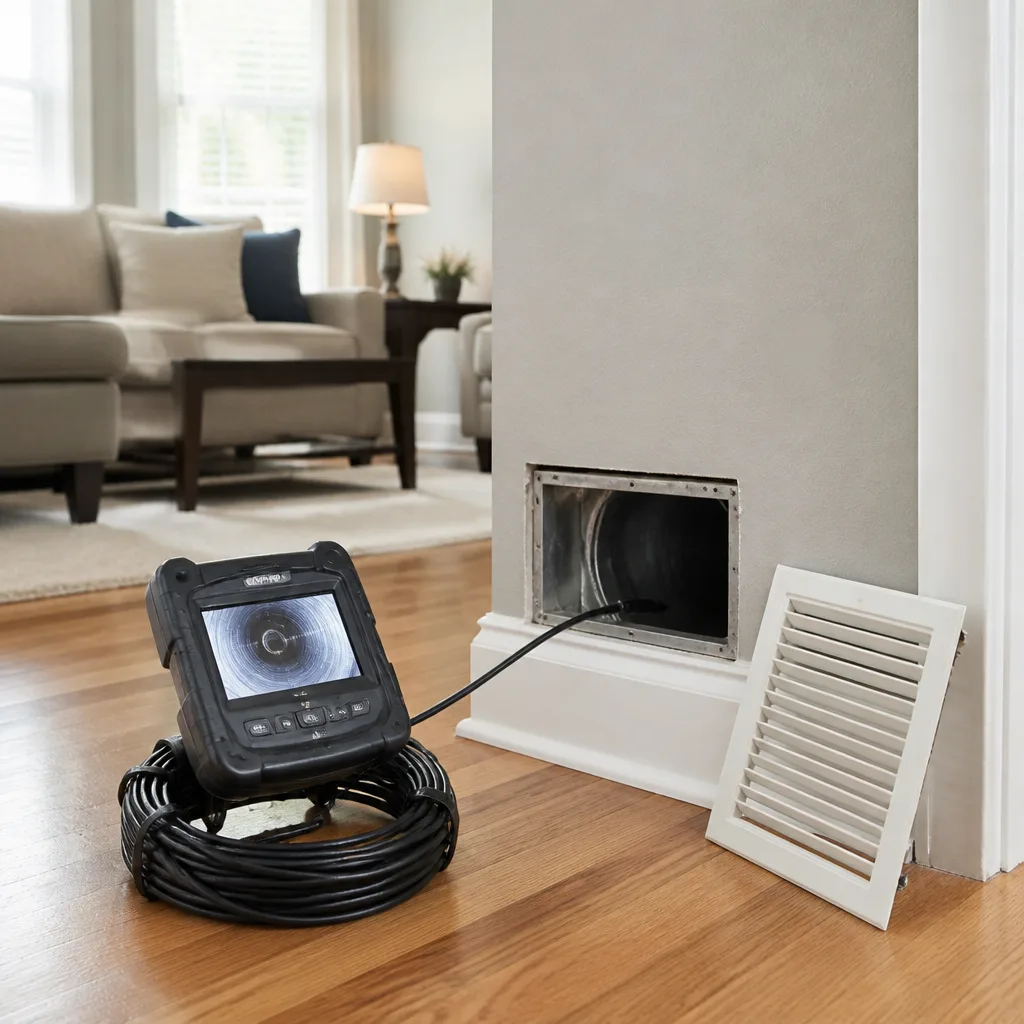 Camera inspection
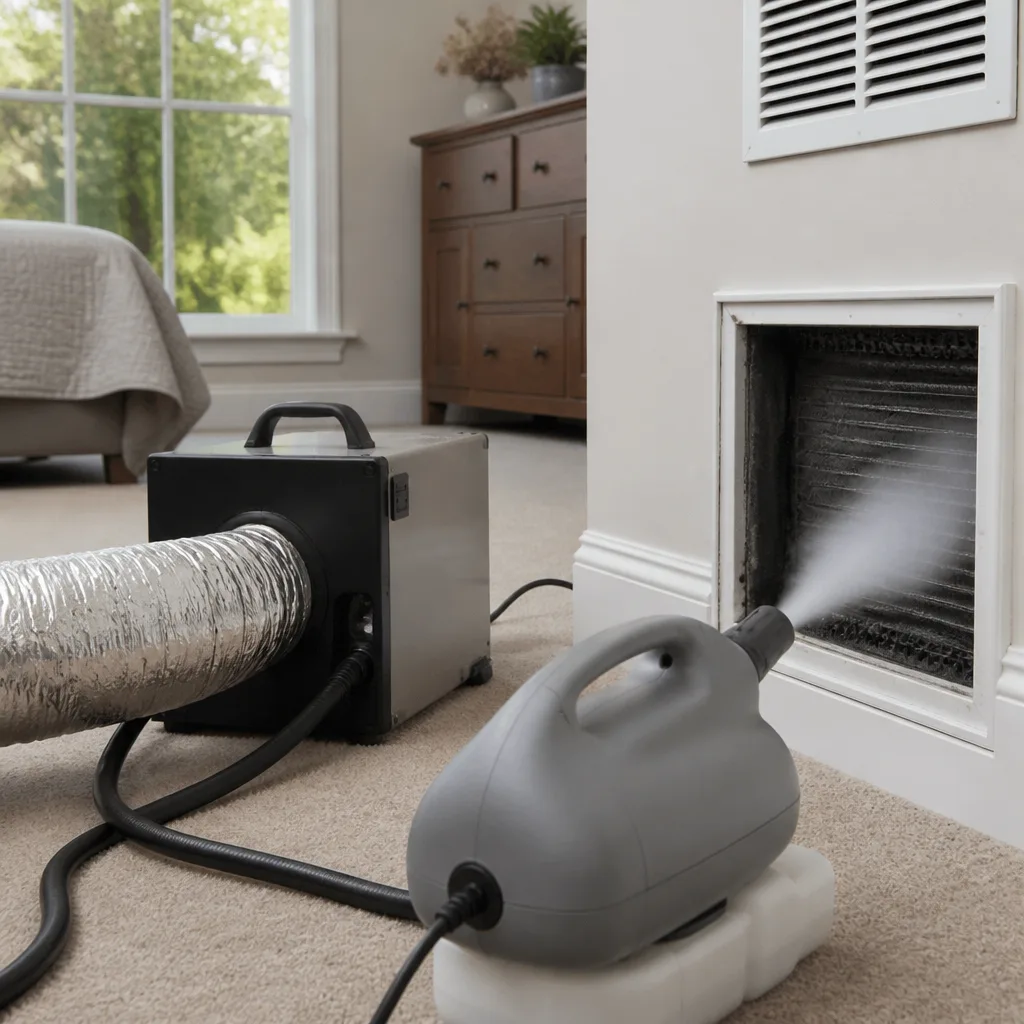 Sanitizing & deodorizing
Whole-system duct and dryer vent check with before-and-after photos - you see exactly what came out of your vents
That "$99 whole-house special" is a bait ad - the real number appears once they are in your hallway, or the "clean" is a shop-vac at the register. We photograph the inside of your ducts before and after instead.
Air Duct Cleaning Emergency Preparedness Guide for Newport Beach Homes
Most homeowners assume the HVAC system is safe as long as the power stays on. The opposite is often true. During a major smoke event, a system that keeps running is the very thing pulling contaminated outdoor air into the house and coating the inside of the ductwork with fine ash. In our experience, the homes that end up needing the most involved cleanup are frequently the ones that never lost electricity at all. This guide walks you through what actually happens to ductwork during three Newport Beach emergencies – wildfire smoke, flooding, and post-earthquake debris – and the exact steps that limit the damage before a technician ever arrives.
Quick Answer
If outdoor air quality spikes, shut the HVAC system off, close windows and dampers, and keep it off until the air clears. After any smoke, flood, or earthquake event that introduces fine debris or moisture into the system, have the ductwork inspected – ash coats evaporator coils differently than ordinary dust, and water contact starts a 48 to 72 hour clock before mold can take hold. Document everything with photos and airflow notes for your insurer, then schedule a full-system assessment with commercial-grade equipment.
Styles & brands we work with
- Whole-home duct cleaning
- Dryer vent cleaning
- Camera inspection
- Sanitizing & deodorizing
Table of Contents
- The Shutdown Protocol: When Outdoor Air Quality Crosses 150
- Post-Wildfire Duct Inspection: What Ash Does That Dust Doesn’t
- Flood and Moisture Intrusion: The 48-72 Hour Window
- Post-Earthquake Debris and Duct Integrity
- Documenting Duct Condition for Insurance Claims
- Pre-Season Prep Before Santa Ana and King Tide Seasons
- Why Equipment Grade Matters in Emergency Cleanup
- Common Mistakes to Avoid
The Shutdown Protocol: When Outdoor Air Quality Crosses 150
When the Air Quality Index climbs past 150, the single most effective thing you can do is turn the system off. An HVAC system running during a smoke event acts like a giant intake, continually cycling ash-laden outdoor air through the filter, the coil, and the ducts. It’s counterintuitive, because on a normal day running the fan feels like it helps. During heavy smoke, it works against you.
Here’s the sequence we recommend for Newport Beach homes:
- Switch the thermostat to “off” – not just “auto,” which can still trigger the fan.
- Close every window, exterior door, and fireplace damper. Check that the flue is shut if you have one.
- Close the fresh-air intake if your system has a controlled outdoor-air damper.
- Leave the fan off until the outdoor AQI drops back into a safer band and the visible haze clears.
- Once it’s safe to run again, check the filter before you restart. A loaded filter will pass fine particles straight through to the coil.
That last step matters more than people expect. Ash pulls a filter into a matted, clogged condition fast, and a clogged filter forces the system to pull harder. If you’re unsure whether the filter has been compromised, replace it before restarting. We answer 24/7 if you want to talk through what you’re seeing.
The coastal zone designation across much of Newport Beach means onshore breezes can push smoke inland in ways that make air quality uneven from block to block. Neighbors a few streets apart can sit in very different AQI readings on the same afternoon. Check a live monitor for your immediate area rather than relying on a county-wide number.
Post-Wildfire Duct Inspection: What Ash Does That Dust Doesn’t
Fine wildfire ash is not ordinary house dust, and it doesn’t behave the same way inside a duct system. Dust accumulates gradually and sits loose on surfaces. Ash is alkaline, abrasive, and often acidic when it combines with moisture, and the smallest particles travel deep enough to reach the evaporator coil and settle into the filtration media. That difference is why a routine vacuum pass isn’t enough after a smoke event.
When we assess a Newport Beach home after a smoke event, we’re looking at specific things:
- Evaporator coil fouling. Ash packs into coil fins and insulates them, which cuts heat transfer and stresses the compressor. Ordinary dust builds up slowly; ash can coat a coil in a single event.
- Filter saturation. A filter that looked fine before an event may be fully loaded afterward. Ash loads media differently than lint or pet hair.
- Duct interior residue. Fine particulate clings to duct walls and can enter through returns faster than supply runs.
- Odor retention. Smoke smell lingering in the ducts after the house itself smells clean is a signal that residue is sitting in the system.
- Return-side contamination. The return plenum often collects more ash than the supply trunks because it’s first in line.
In our experience, a home that ran its system through a smoke event needs more than surface cleaning – it needs a coil inspection and a mechanical cleaning pass with equipment that can agitate and extract the fine material. Consumer shop vacuums can’t reach it, and they don’t contain what they stir up. This is where professional air duct cleaning differs from a filter change: it addresses what’s already settled inside the system, not just what enters it next.
Flood and Moisture Intrusion: The 48-72 Hour Window
Water in the ductwork is a different problem than ash, and the clock runs faster. Once moisture contacts the interior of a duct or the insulation lining it, mold colonization can begin within 48 to 72 hours. That window is the reason flood response has to be prompt – and the reason “we’ll deal with it when it dries out” is the wrong instinct.
Newport Beach sits low in places. King tide events and storm surge can push water into garages, crawl spaces, and lower-level mechanical rooms. When water reaches the air handler or the duct runs, here’s the response sequence:
- Turn off the HVAC system. Running it with water in the ducts spreads moisture and spores through the whole house.
- Photograph the water line, the affected equipment, and any visible duct moisture before you move anything.
- Shut off power to the air handler at the breaker if the equipment sat in water.
- Get standing water out and start drying the surrounding structure with fans and dehumidification.
- Schedule a duct inspection within the 48 to 72 hour window – even if the ducts look dry on the surface, the lining may be holding moisture.
Duct systems with interior insulation are the highest risk, because the lining traps water where you can’t see it. A professional inspection with moisture readings tells you whether the system needs cleaning, sanitizing, or repair and sealing. That’s the point at which a full indoor-air assessment saves you from tearing things apart later. Our air quality and sanitizing service exists for exactly this scenario – Guardsman-grade treatments applied after the system is dried and cleaned, not instead of it.
Post-Earthquake Debris and Duct Integrity
An earthquake doesn’t just shake the house – it can crack duct joints, dislodge flex connections, and pull apart seams that had been sealed for years. Debris from ceiling spaces, attic insulation, and drywall dust can drop into the system through those new openings. The result is two problems at once: contamination entering the ducts, and a system that’s leaking so it draws unfiltered air from unconditioned spaces.
After a significant shaker, check these before running the system:
- Look for gaps at duct joints, especially in the attic and any exposed runs in the garage.
- Check the flex duct connections at the air handler and any registers near the ceiling.
- Watch for drywall dust around supply registers – it’s a sign debris came through.
- Listen for a change in airflow or a new whistling at registers, which can indicate a separated joint.
- Sniff for mustiness after any plumbing line or roof leak the quake may have caused.
If you find damage, the fix isn’t cleaning alone – it’s closing the system back up. Surface cleaning without repair leaves the openings that let contamination in, which is why we treat duct repair and sealing as a core service rather than an add-on. Seal the seams, then clean what’s inside. Doing it the other way around wastes effort.
Documenting Duct Condition for Insurance Claims
Insurance claims for duct contamination live and die on documentation. The adjuster wasn’t in the house during the event, so your photos, readings, and contractor reports are the evidence. Throwing out the loaded filter before you photograph it is one of the most common mistakes we see.
Build a documented record before cleanup begins:
- Photograph the filter as found, with a reference object for scale if ash or debris is visible.
- Photograph every visible register, return grille, and any exposed duct run – wide shot then close-up.
- Note the date and time of the event and when you shut the system off.
- Record any airflow or temperature readings you can take at the registers before cleaning.
- Save a copy of live AQI readings from during the event for smoke-related claims.
- Keep the contractor’s pre-clean inspection report and post-clean documentation together.
We provide before-and-after photos of your own system as part of every job, which gives you a clean paper trail for the claim and proof the work happened as described. A written report from a professional who inspected the system before cleaning will carry far more weight than a receipt alone.
Pre-Season Prep Before Santa Ana and King Tide Seasons
Preparedness is easier than recovery. The Santa Ana winds that drive wildfire risk and the king tide cycles that drive flooding are both seasonal, so there’s a window in the mild months to get the system ready. Here’s what we recommend for Newport Beach homes before either season arrives:
- Replace the air filter on schedule and keep a spare on hand so you’re never stuck mid-event.
- Seal gaps at duct joints and around the air handler so smoke and debris can’t leak in.
- Confirm your outdoor-air damper closes properly – test it before you need it.
- Clear any water path toward the air handler or garage mechanical space before storm season.
- Schedule a baseline HVAC cleaning so you start from a clean system; a pre-event baseline makes post-event claims and inspections far easier.
- Consider upgrading filtration media if your system supports it – we carry and install Honeywell and Aprilaire products and can fit them on the same visit as a cleaning.
Getting to a clean, sealed baseline before the season means an emergency cleanup afterward is smaller and faster. It also gives you a documented “before” condition, which is exactly what an insurer will ask for if damage does happen.
Why Equipment Grade Matters in Emergency Cleanup
The equipment behind a cleanup determines its outcome. Consumer vacuums and shop vacs stir fine ash and mold spores into the air rather than removing them, and they can’t reach the full run of a duct system. Emergency work calls for commercial-grade tools and containment practices.
We use Rotobrush and Nikro mechanical cleaning platforms – the equipment trusted across the HVAC industry for residential work – because they agitate and extract material a vacuum alone can’t reach. Our Abatement Technologies setup provides containment-grade negative-pressure practices, which means we reduce cross-contamination into the living space while we clean rather than blowing it around. Our technicians have up to 10 years of experience, and they assess the whole system – coil, plenum, returns, and supply runs – on one visit. Clean ducts are only the start; the full assessment is what tells us whether the system also needs repair, sealing, or a sanitizing treatment on top.
If you want a free estimate in Newport Beach, call (833) 482-6044. We answer 24/7. Fast dispatch from 7am to 7pm, Sunday through Friday.
Common Mistakes to Avoid
- Running the system during a smoke event. It pulls contamination into the ducts instead of out. Turn it off when AQI crosses 150 and leave it off until the air clears.
- Tossing the filter before photographing it. That loaded filter is evidence for an insurance claim. Capture it first.
- Waiting on flood-damaged ducts. Moisture in a duct lining can turn to mold within 48 to 72 hours. Get it inspected inside that window, not after it dries out.
- Cleaning without checking for damage. After an earthquake, cracks and separated joints let contamination right back in. Repair and sealing has to come before or with cleaning.
- Assuming a filter change is a duct cleaning. A new filter helps what’s entering the system, not what’s already coating your coil and ducts.
- Skipping the post-clean documentation. Without before-and-after photos and a written report, you have no record for a claim or for the next owner if you sell.
- Delay on dryer vents after any event. Smoke and debris events can leave lint residue that raises fire risk. That’s why dryer vent cleaning is a dedicated service for us, not an afterthought.
See the difference
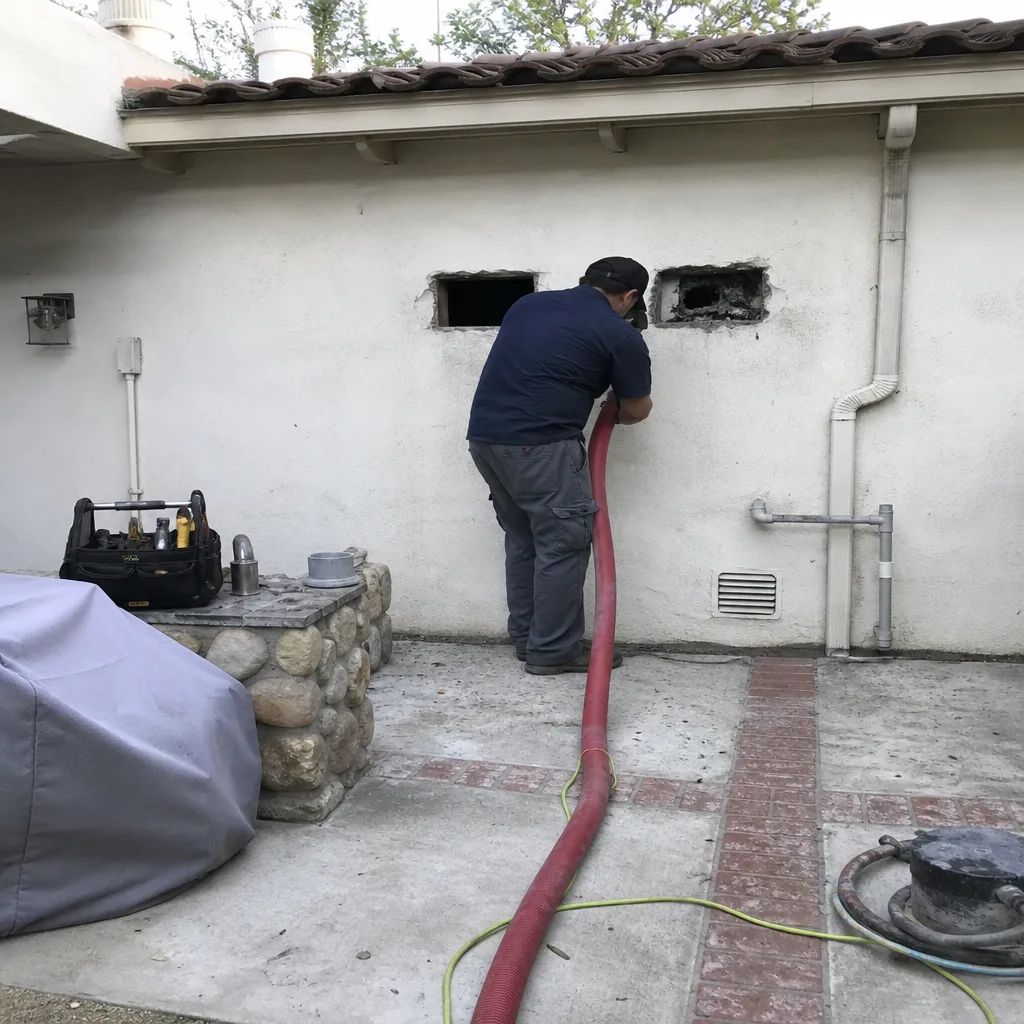 Before
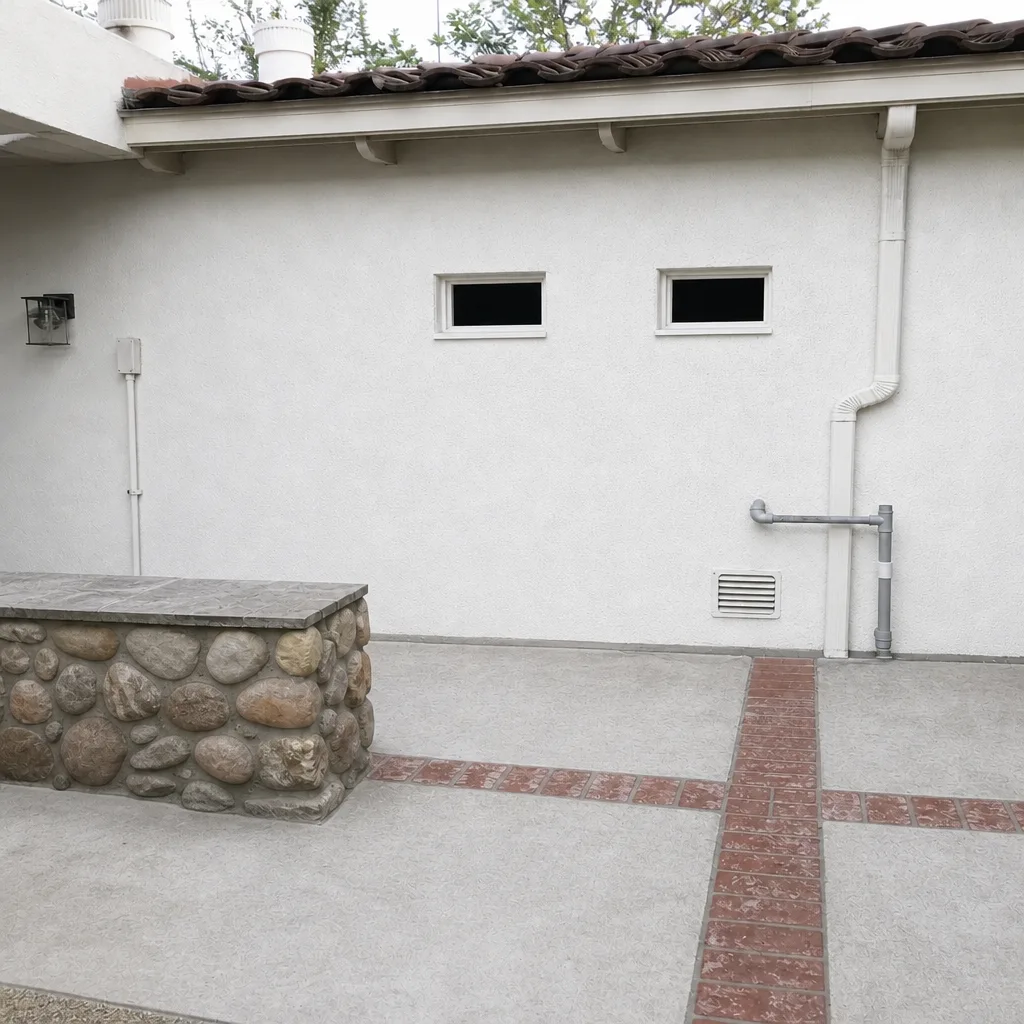 After
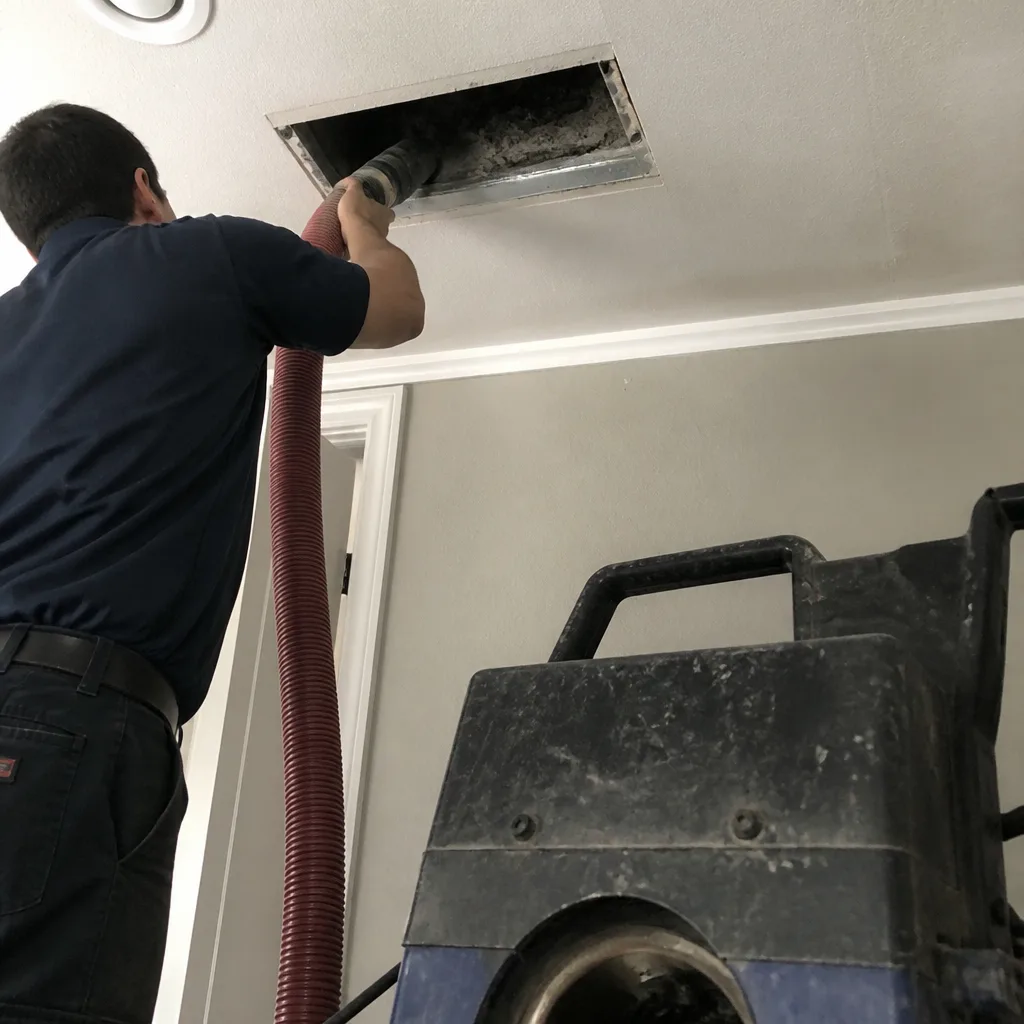 Before
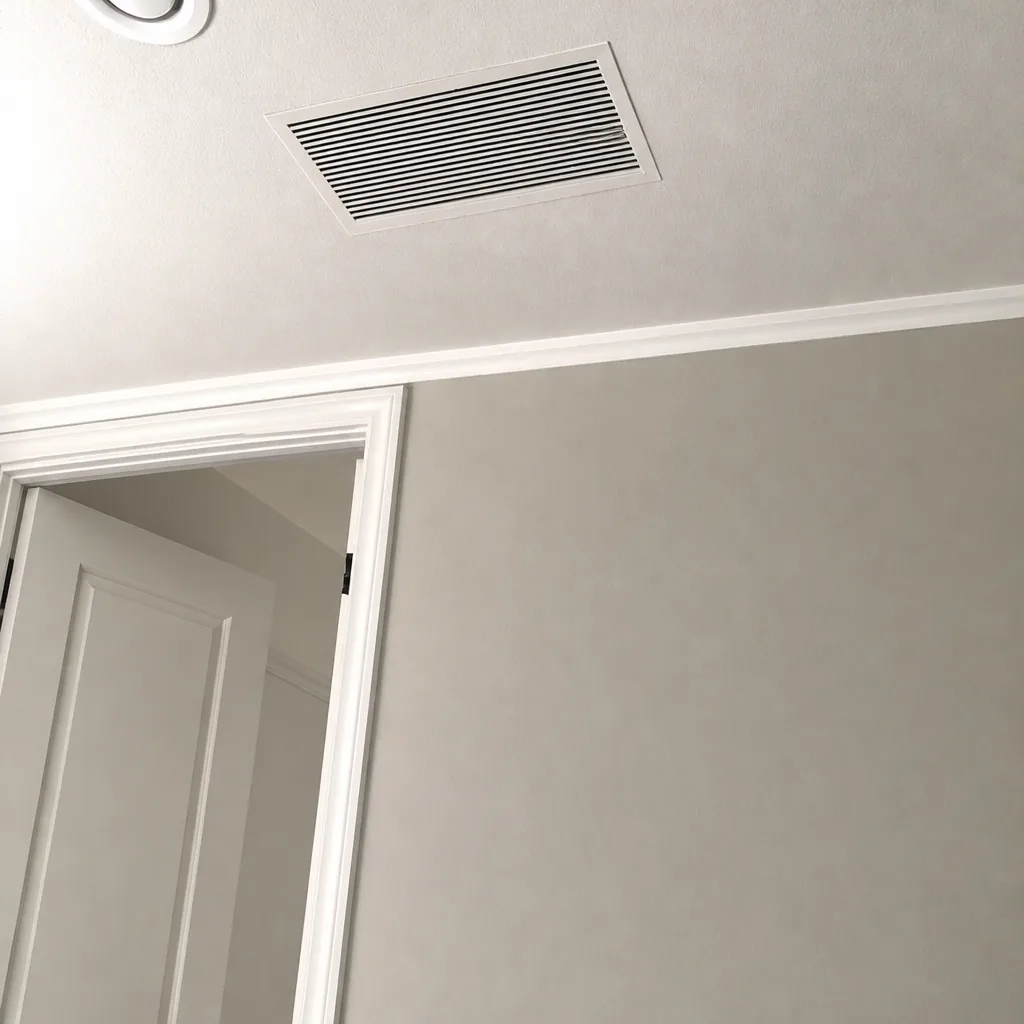 After
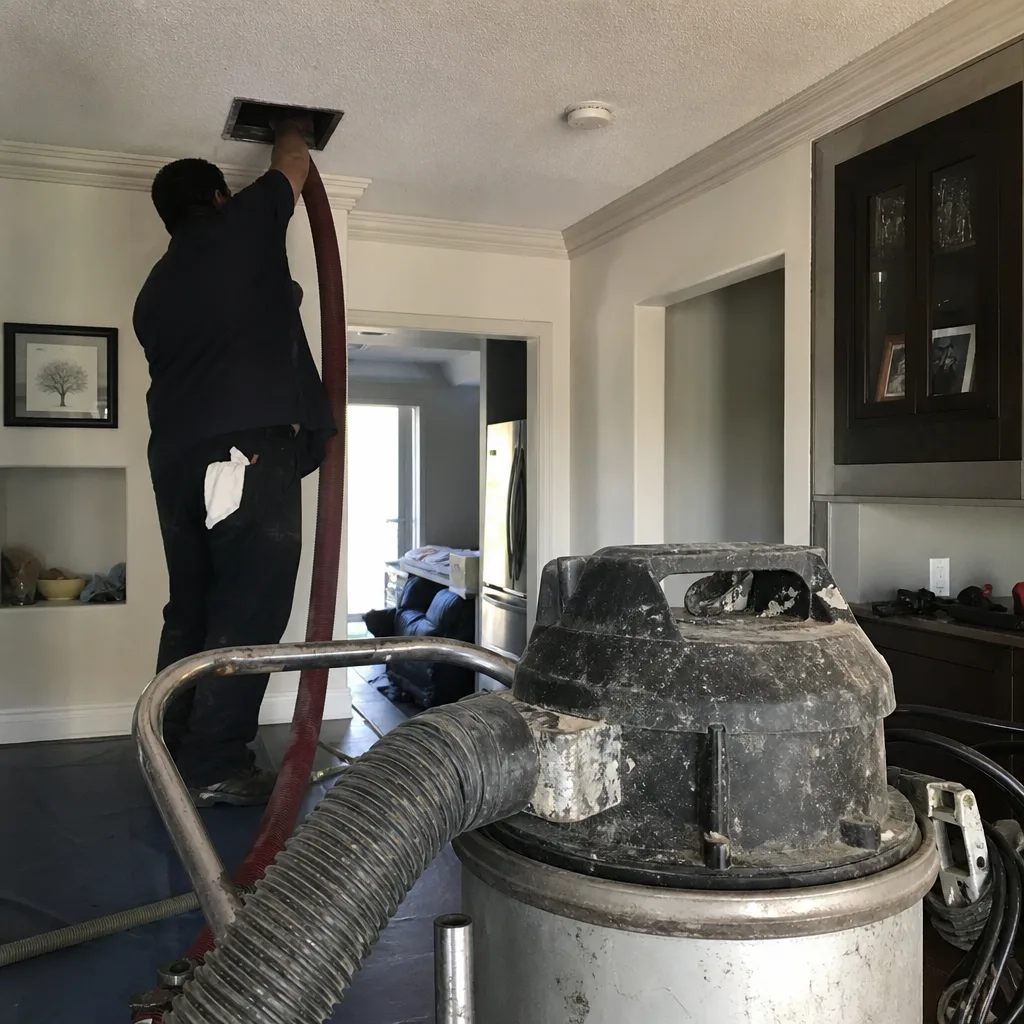 Before
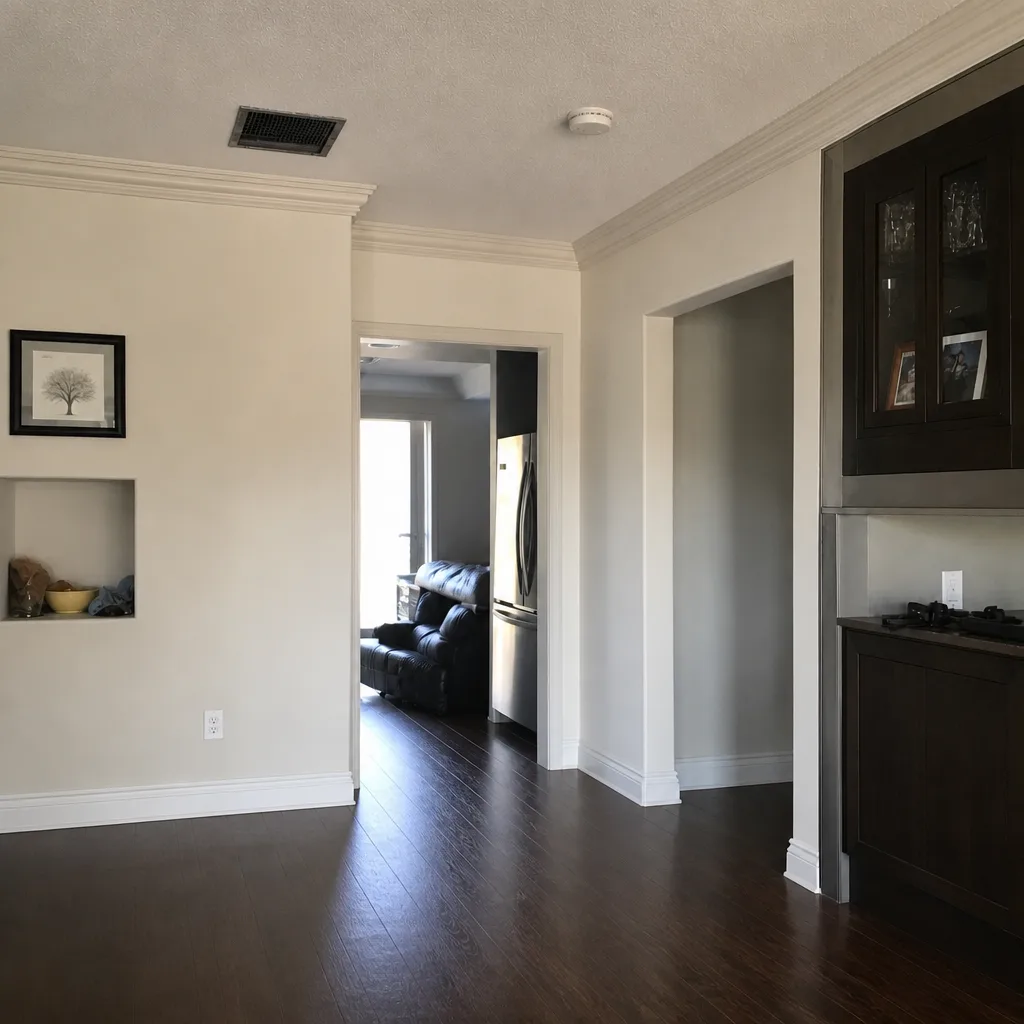 After
When to Call a Professional
Call a professional when the system has been running through heavy smoke, when water has reached the ducts, when an earthquake has left you with visible joint damage, or when you need documentation for an insurance claim. These are cases where a filter change won’t fix the real problem and a full inspection is needed before you run the system again. If you’re seeing ash residue at the registers, hearing new airflow noise, or smelling mustiness you can’t trace, those are the signals to bring in a trained technician with commercial-grade equipment. Newport Beach Air Duct Cleaning offers free estimates in Newport Beach – call (833) 482-6044. We answer 24/7. Fast dispatch from 7am to 7pm, Sunday through Friday.
Frequently Asked Questions
You very likely do, especially if your HVAC system ran during the event. Fine ash travels into ducts, coats evaporator coils, and loads the filtration media in ways a filter change doesn’t address, so an inspection is the right first step. Call (833) 482-6044 for an exact quote – estimates are free.
Yes. When the AQI crosses 150, switch the thermostat fully to “off” and close windows and dampers to keep the system from pulling in contaminated air. A running system is the main pathway for ash and smoke particulate to enter the home.
Mold can begin colonizing moisture-contacted ductwork within 48 to 72 hours. That window is why flood-damaged ducts need an inspection quickly rather than after they dry – the lining can hold water where you can’t see it. Call (833) 482-6044 for an exact quote – estimates are free.
Ask for before-and-after photos of your own ducts and a written pre- and post-clean report. We provide both as part of every job, which gives you documentation you can show an adjuster or a buyer. Call (833) 482-6044 for an exact quote – estimates are free.
Cheap quotes usually reflect consumer-grade equipment and a surface pass that doesn’t reach the coil, plenum, or full duct run. We use Rotobrush and Nikro commercial-grade platforms with Abatement Technologies containment practices, and we set one flat price per system before any work starts. Call (833) 482-6044 for an exact quote – estimates are free.
Photograph the filter as found, every register and exposed duct run, note the event timing and AQI readings, and keep the contractor’s inspection report. Professional pre- and post-clean documentation carries far more weight than a receipt on its own.
The Bottom Line
Emergency preparedness for a Newport Beach home comes down to a few concrete moves: shut the HVAC off when outdoor air is bad, watch the moisture clock after any flood, check duct integrity after an earthquake, and document everything as you go. Fine ash behaves differently than dust, so post-event cleanup needs commercial-grade equipment and a full system inspection rather than a quick vacuum. Get a clean, sealed baseline before Santa Ana and king tide season, and recovery becomes far simpler if an event does occur. If you need a full-system assessment, Newport Beach Air Duct Cleaning covers cleaning, repair and sealing, and air-quality sanitizing under one roof.
Call (833) 482-6044 for a free estimate. We answer 24/7. Fast dispatch from 7am to 7pm, Sunday through Friday.
Written by the team at Newport Beach Air Duct Cleaning.