
Last updated November 25, 2026
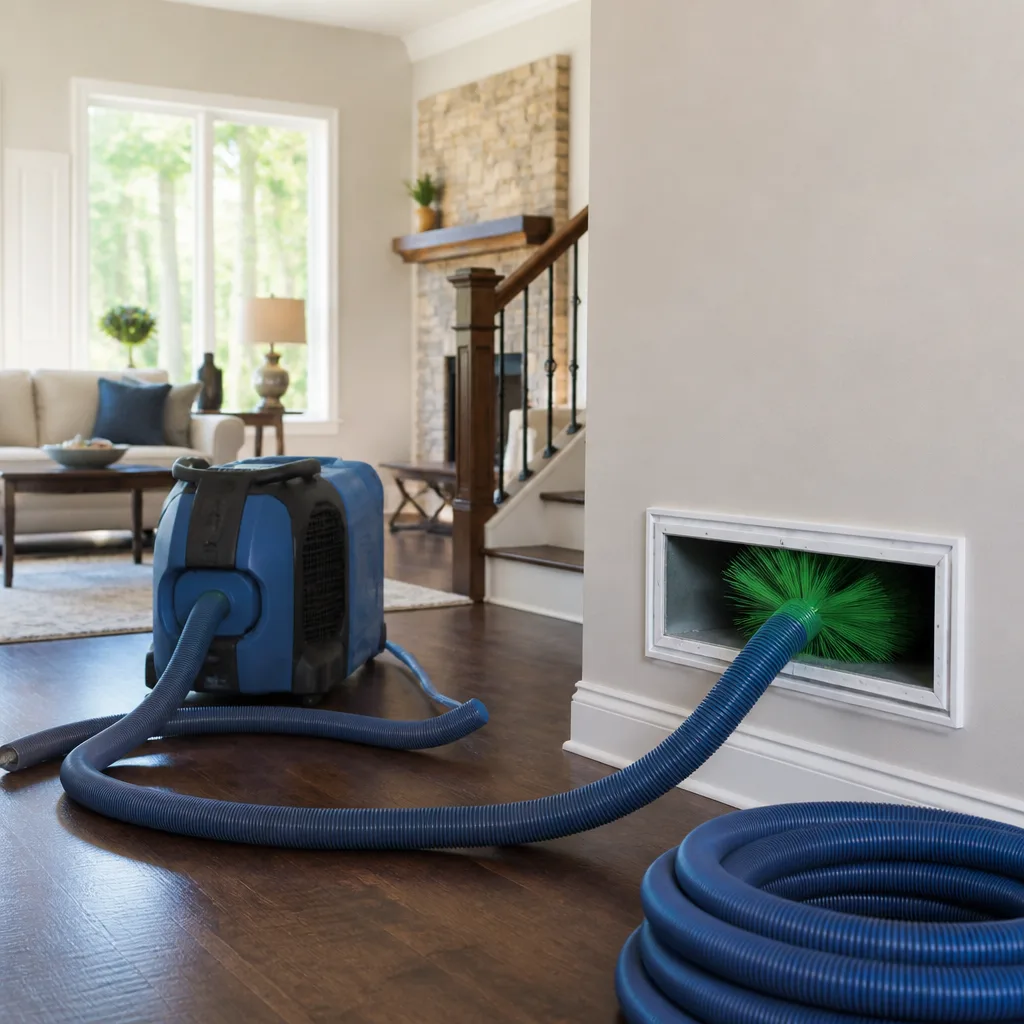 Whole-home duct cleaning
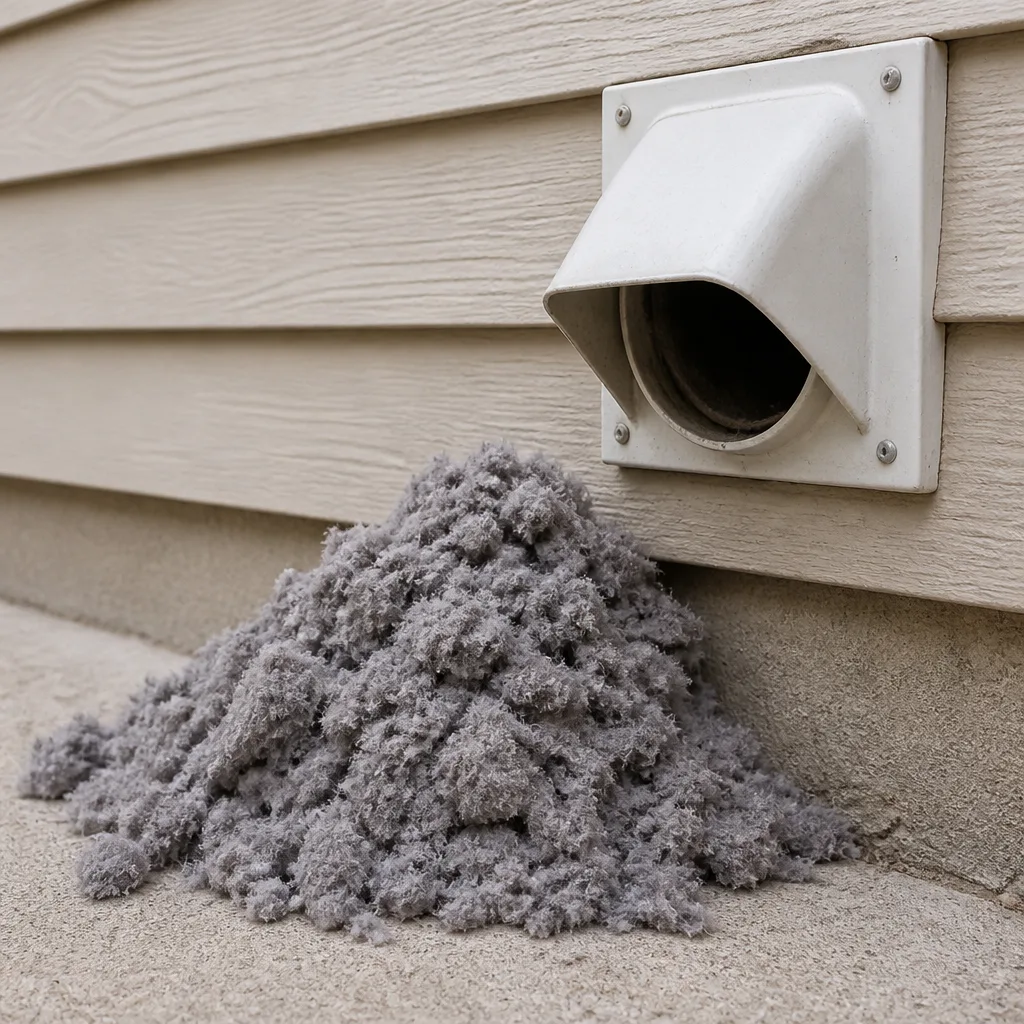 Dryer vent cleaning
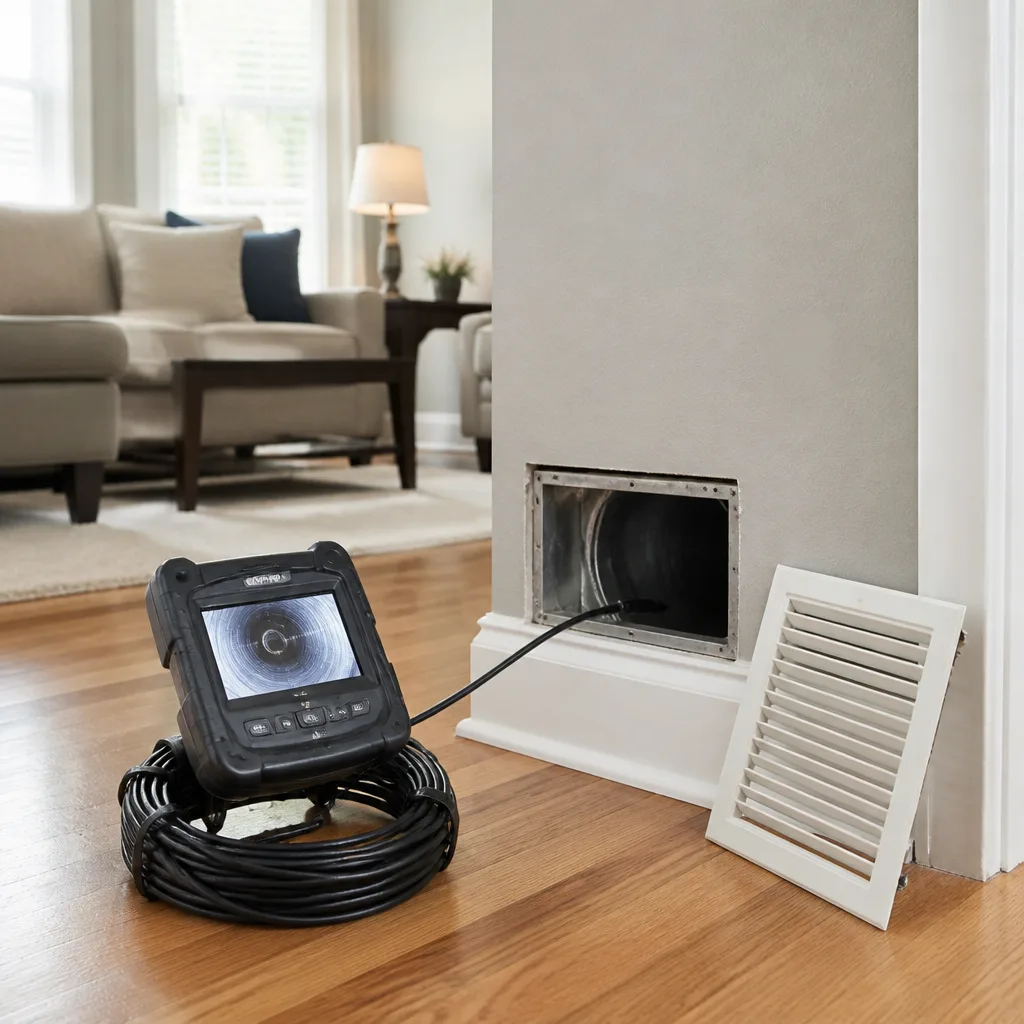 Camera inspection
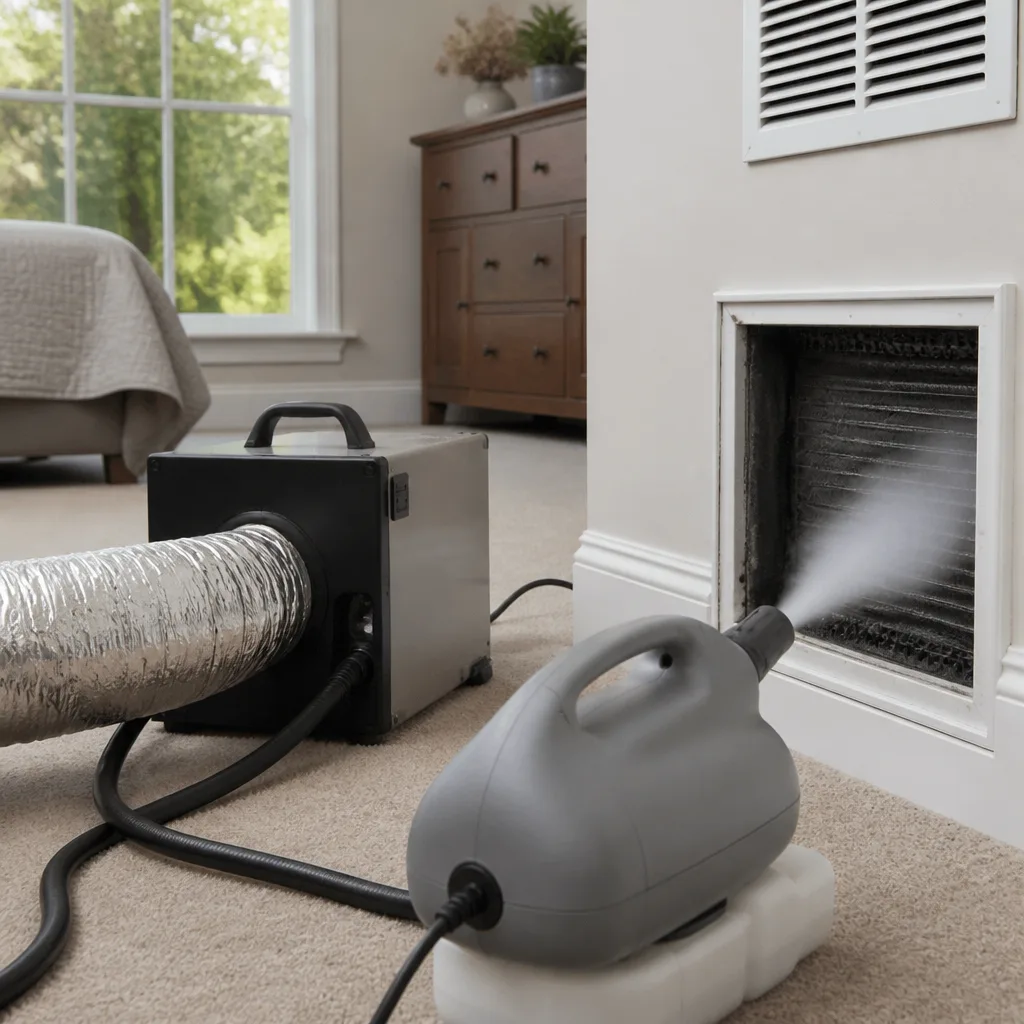 Sanitizing & deodorizing
Whole-system duct and dryer vent check with before-and-after photos - you see exactly what came out of your vents
That "$99 whole-house special" is a bait ad - the real number appears once they are in your hallway, or the "clean" is a shop-vac at the register. We photograph the inside of your ducts before and after instead.
Choosing the Right Air Duct Cleaning Brand: A Buyer’s Guide for Newport Beach
Most homeowners never ask what machine is coming to their house. They ask the price, the date, and whether the technician wears shoe covers. But the gap between a Rotobrush BrushBeast and a shop-vac with a flex hose is the difference between source removal and surface disturbance, between air that measures cleaner afterward and air that just smells like it does. In Newport Beach, where homes sit close together and HVAC systems run hard most of the year, that difference shows up in the air you’re breathing long after the invoice is filed. This guide teaches you to read equipment choices the way a knowledgeable buyer reads specs: what each class of machine can and cannot do, what to ask before booking, and what evasive answers tell you.
Quick Answer
The right air duct cleaning company in Newport Beach is the one whose equipment can actually remove debris from the source and prove it afterward. That means a truck-mounted or portable negative-pressure vacuum with true HEPA filtration, mechanical rotary brushing (Rotobrush and Nikro are the recognized platforms), containment practices from brands like Abatement Technologies, and technicians who will name their equipment and show before-and-after evidence. Price matters, but equipment class matters more, because it determines whether the job is source removal or surface noise.
Styles & brands we work with
- Whole-home duct cleaning
- Dryer vent cleaning
- Camera inspection
- Sanitizing & deodorizing
Table of Contents
- What Is the Difference Between Professional and Consumer Equipment?
- Why Does Negative Pressure Matter in Newport Beach Homes?
- Why HEPA Filtration on the Vacuum Side Is Non-Negotiable
- What Questions Should You Ask Before Booking?
- What Do Evasive Answers Signal?
- How Does Equipment Choice Reveal Professional Standards?
- How Do You Verify Cleaner Air After Cleaning?
- Why Is a Full-System Assessment Better Than Duct-Only Cleaning?
What Is the Difference Between Professional and Consumer Equipment?
Air duct cleaning equipment falls into three broad tiers, and knowing them changes how you read every quote you get in Newport Beach. The differences are not cosmetic. Each tier has a ceiling on what it can accomplish, and a contractor’s machine tells you which ceiling you’re buying.
Consumer and entry-level equipment. These are shop vacuums fitted with aftermarket hoses, or small portable units marketed to homeowners. They generate modest suction, have limited or no HEPA filtration, and cannot sustain airflow across a long duct run. They disturb surface dust near the register and often redeposit it into the system or into the room. This tier cannot perform source removal. It performs surface agitation with a vacuum attached.
Professional portable systems. This is where real duct cleaning begins. Machines like the Rotobrush line and Nikro platforms combine a powerful vacuum source with rotary brush agitation. The brush physically dislodges debris from duct walls while the vacuum pulls it out. Portable systems give technicians flexibility in older Newport Beach homes where access to attic equipment or tight closet-mounted air handlers is limited.
Commercial-grade and containment systems. Truck-mounted vacuums and negative-pressure systems from manufacturers like Abatement Technologies are designed for remediation-level work. They maintain the whole duct system under negative pressure while cleaning, so dislodged debris is drawn toward the vacuum rather than into living space. These are the systems used on commercial and post-construction jobs where containment is the first priority.
If your technician cannot tell you which tier of machine is coming to your home, you are not being given enough information to judge the work. Period.
Why Does Negative Pressure Matter in Newport Beach Homes?
Negative pressure means the vacuum pulls harder than the cleaning tool pushes, so every dislodged particle travels out of the house rather than into it. In a Newport Beach home with the windows shut and the HVAC fan running, that distinction is the whole game.
Here’s the mechanism. When a rotary brush spins inside a duct, it loosens years of accumulated dust, lint, pet dander, and construction debris. If the vacuum is weaker than the agitation, those particles get pulled into the return airflow and distributed through every room in the house. If the vacuum wins the airflow battle, they leave through the hose. The technician’s goal is to guarantee the second outcome.
Several conditions make negative-pressure discipline especially important in Newport Beach:
- Tight building envelopes. Modern and renovated homes here are well sealed. Once you shut the windows, there’s little passive airflow to dilute particles that escape the cleaning process. What gets airborne stays airborne.
- Ceiling and closet air handlers. Many homes route ductwork through compact utility closets and attic spaces with limited access. Proper containment keeps debris out of those tight spaces and out of the living area below.
- Fine ambient particulate. Airborne dust in this region is fine-grained. Fine particles stay suspended longer and travel farther through a system than coarse debris would.
- Occupied homes. A technician working around furniture, children’s rooms, and everyday life needs containment practices, not just a big vacuum. Negative-pressure setups do that.
Ask how the contractor maintains negative pressure. If they can’t explain the concept in one sentence, the answer is probably that they don’t.
Why HEPA Filtration on the Vacuum Side Is Non-Negotiable
A vacuum without a HEPA filter is a dust-recirculation device. It captures the heavy material and exhausts the fine material back into the room, which in a Newport Beach home with fine ambient particulate means you’re creating a fresh air-quality problem while solving the old one. HEPA filtration on the exhaust side of the vacuum is the single feature that keeps the cleaning process from making things worse.
True HEPA filtration captures the majority of particles at the microscopic scale where they affect respiratory comfort. That matters because the most irritating fraction of dust is also the smallest. Larger debris stays in the duct walls until a brush moves it. Fine particles ride the return airflow all day long, and when they get loosened during cleaning, they need to be trapped at the machine.
Three things to verify:
- The HEPA filter is on the exhaust side of the vacuum, not just the intake. A vacuum that filters incoming air but exhausts unfiltered air is a fan.
- The filter is genuine, not a knockoff. Ask the model number. Off-brand filters marketed as HEPA often don’t meet the efficiency standard.
- The filter is maintained. A loaded HEPA filter stops being effective. Ask when it was last changed.
In our experience, a technician who knows their filtration setup will answer all three questions in under a minute. Evasiveness on any one is a red flag.
What Questions Should You Ask Before Booking?
The fastest way to separate a real duct cleaning company from a marketing operation is to ask five specific questions and listen for specific answers. Write these down before your next call.
- “What equipment are you bringing?” You’re listening for a brand name. Rotobrush, Nikro, Abatement Technologies, and HEPA-AIRE are all legitimate professional systems. “Our standard cleaning equipment” is not an answer.
- “Is the vacuum HEPA-filtered on the exhaust side?” The answer should be immediate yes. If the technician has to check with a supervisor, the filtration story is shaky.
- “How do you maintain negative pressure during cleaning?” Look for terms like containment, negative pressure, and air scrubber. Those are the working tools of a professional.
- “What does the before-and-after verification look like?” Ask for photos, particle counts, or both. A contractor who can produce evidence is a contractor who takes evidence seriously.
- “Will you assess the whole system or just the ducts?” A real assessment looks at the air handler, the coil, the cabinet, and the register boots. Duct-only cleaning misses more than half of the system.
If you want a fuller picture of what comprehensive system cleaning includes, the air duct cleaning page breaks down the process step by step, including what happens inside the air handler.
What Do Evasive Answers Signal?
The signals of a weak contractor are consistent, and they’re observable. None of them individually means a company is dishonest, but together they form a pattern that experienced buyers learn to read quickly.
- Vague equipment descriptions. “High-powered industrial equipment” and “state-of-the-art systems” are the language of brochures, not technicians. A real technician names their machine because they know it and trust it.
- Price-only quotes. If the conversation never leaves the dollar figure, the contractor has nothing else to offer. Price is the outcome of equipment, process, and verification, not a substitute for them.
- Refusal to discuss filtration. A technician who can’t describe HEPA filtration or brushes off the question as unnecessary is telling you they don’t have it or don’t understand it.
- No interest in your system’s layout. A real assessment starts with questions about your home: how many returns, where the air handler sits, whether there’s been a renovation, whether anyone in the home has allergies. No questions, no assessment.
- Pressure to discount. A quote that drops when you hesitate is a quote without a process behind it.
Evasive answers in Newport Beach are especially telling, because the housing stock here is varied enough that a technician who doesn’t ask about your specific system is a technician who plans to do the same generic job they do everywhere.
How Does Equipment Choice Reveal Professional Standards?
Contractors who invest in commercial-grade equipment tend to invest in the boring infrastructure too: proper liability insurance, ongoing training, and membership in industry organizations like NADCA. The two go together more reliably than inexperienced buyers expect.
Here’s why. A Rotobrush BrushBeast or a negative-pressure containment system from Abatement Technologies costs serious money. A contractor who bought one did so because they intend to do the work properly, not because they planned to shortcut it. That same mindset usually shows up elsewhere:
- Insurance. If they’re willing to spend on equipment that meets a professional standard, they’re also likely to carry general liability coverage appropriate to the work. Ask for a certificate; the good ones send it without debate.
- Training. Equipment brands provide training. Technicians who use professional platforms have usually been through the associated coursework, sometimes including the recognized industry certifications.
- Accountability. A company with a real equipment investment has something to protect. Reviews, repeat customers, and property manager relationships matter to them.
- Breadth of service. Equipment-invested companies often offer more than one service line. Our five categories – air duct cleaning, dryer vent cleaning, HVAC cleaning, duct repair and sealing, and air quality and sanitizing – exist because the equipment and training required for one support the others.
Newport Beach property managers tend to screen vendors on exactly these signals. Equipment choice is one of the fastest filters they use.
How Do You Verify Cleaner Air After Cleaning?
Verification separates cleaning from guessing. If the contractor can’t produce evidence that the system is measurably cleaner, you’re trusting a process you can’t see to have worked. That’s fine for some categories of home maintenance, but air quality deserves a check.
Here’s what professional verification usually looks like:
- Before-and-after photographs. Interior duct-wall photos from a flexible inspection camera show the physical result. Ask to see them for your specific ducts, not stock images.
- Particle count readings. A particle counter measures airborne particulate before and after cleaning. Some contractors use them; some don’t. If they do, ask for a copy of the readings.
- Airflow measurement. Cleaning should not restrict airflow. A technician who measures static pressure or airflow before and after can confirm the system is working as designed.
- Visual register inspection. Registers and boots should show the difference at the surface level, not just inside the duct.
The equipment class matters here. Systems with lower vacuum strength and no containment often produce air quality that reads slightly worse immediately after cleaning because dislodged particles are still settling. Professional systems with proper negative pressure and HEPA exhaust avoid that window.
Why Is a Full-System Assessment Better Than Duct-Only Cleaning?
Clean ducts are only the start. A duct-only clean addresses one part of an indoor-air system and leaves the biggest variables untouched: the air handler, the cooling coil, the cabinet, and the points where debris can re-enter after the cleaning is done.
A full-system assessment looks at all of it. On one visit, a technician should evaluate:
- Ductwork condition. Not just clean or dirty, but airtight or leaking. Loose joints and cracked runs allow contaminated air to re-enter the system. Duct repair and sealing is what fixes the root cause.
- Air handler and coil. A dirty coil degrades efficiency and can harbor biological growth. HVAC cleaning addresses the cabinet and components that ducts alone never touch.
- Filtration compatibility. Stock filter slots often accept only the thinnest residential filters. Aprilaire and Honeywell filtration upgrades let the system carry a higher-MERV filter without choking airflow.
- Duct layout and return sizing. Some Newport Beach homes have return-air problems that no amount of cleaning will fix. Assessment surfaces them.
- Dryer vent condition. The dryer vent is a separate air path with its own fire-safety profile. Dedicated dryer vent cleaning belongs on the same visit as HVAC work, not tacked on later.
- Sanitizing needs. Where biological growth is present – often in homes with prior water intrusion or long-vacant periods – a Guardsman-grade sanitizing treatment is a reasonable option after cleaning.
The whole point of full-system assessment is that it answers questions duct-only cleaning leaves open. Newport Beach homes often benefit from exactly this wider view.
Common Mistakes to Avoid
- Choosing on price alone. The lowest quote usually reflects a camera-less, brush-less, containment-less process. You get surface agitation instead of source removal, and you can’t tell the difference until you look inside the ducts.
- Not asking what equipment will arrive. Equipment determines what’s technically possible. A contractor using a shop vac and a hose cannot perform source removal no matter how many hours they spend in your home.
- Accepting before-and-after photos that aren’t yours. Stock images prove nothing. Real contractors photograph your ducts. Ask for yours.
- Skipping the air handler. Duct-only cleaning leaves the coil and cabinet untouched, which is where a lot of what circulates through your home actually originates.
- Ignoring the dryer vent. Fire safety is separate from air quality and just as important. Dryer vent cleaning deserves its own line item, not a five-minute afterthought.
- Not asking about containment. Cleaning without negative pressure redistributes debris into living space. Ask specifically how the company prevents that.
- Not verifying insurance. A legitimate contractor provides a certificate of insurance without argument. If the conversation gets uncomfortable, that silence is the answer.
See the difference
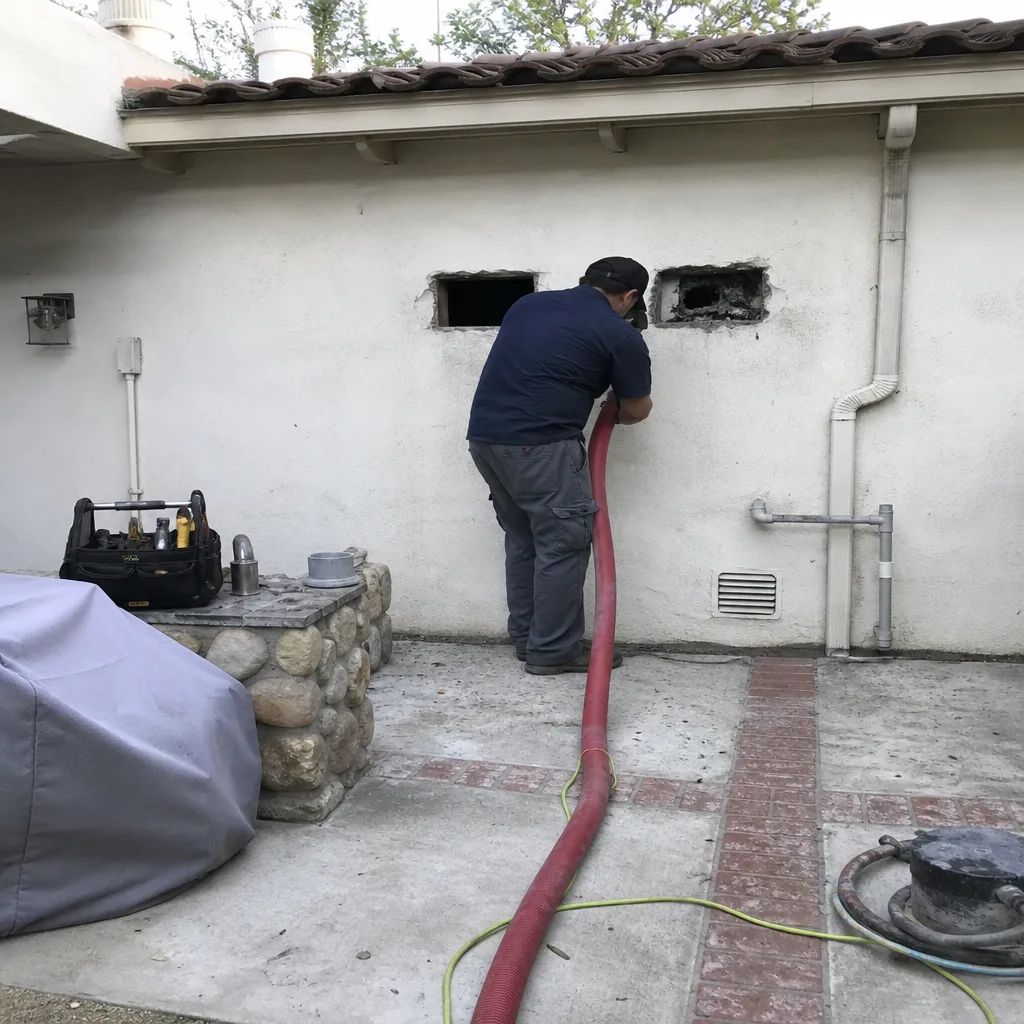 Before
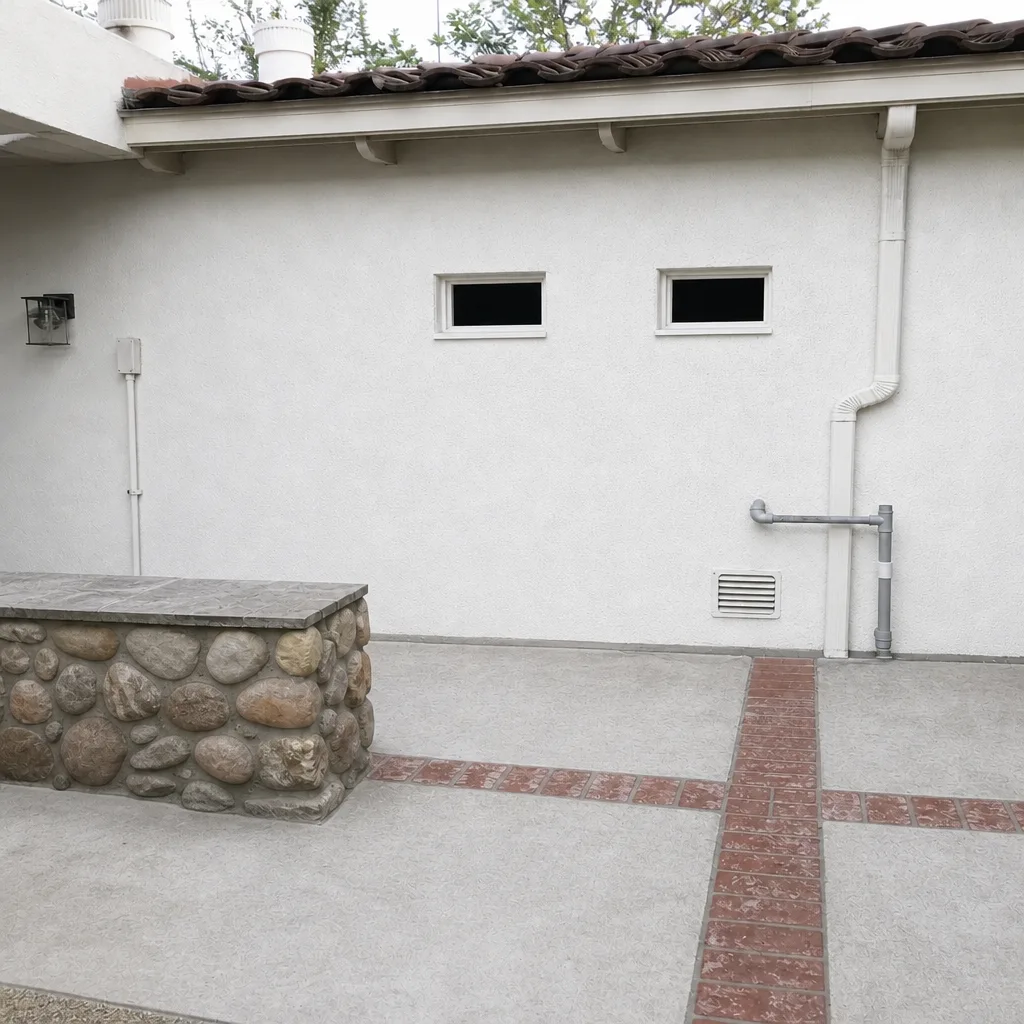 After
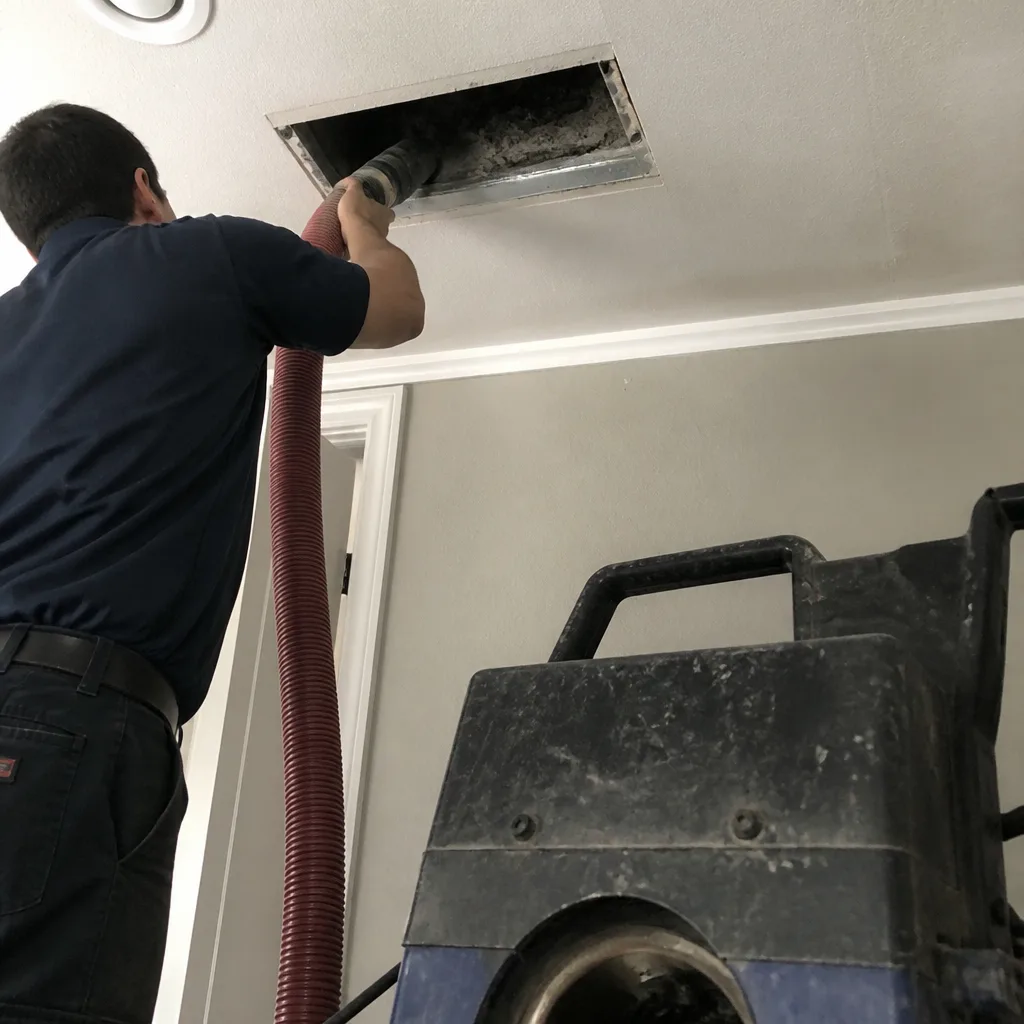 Before
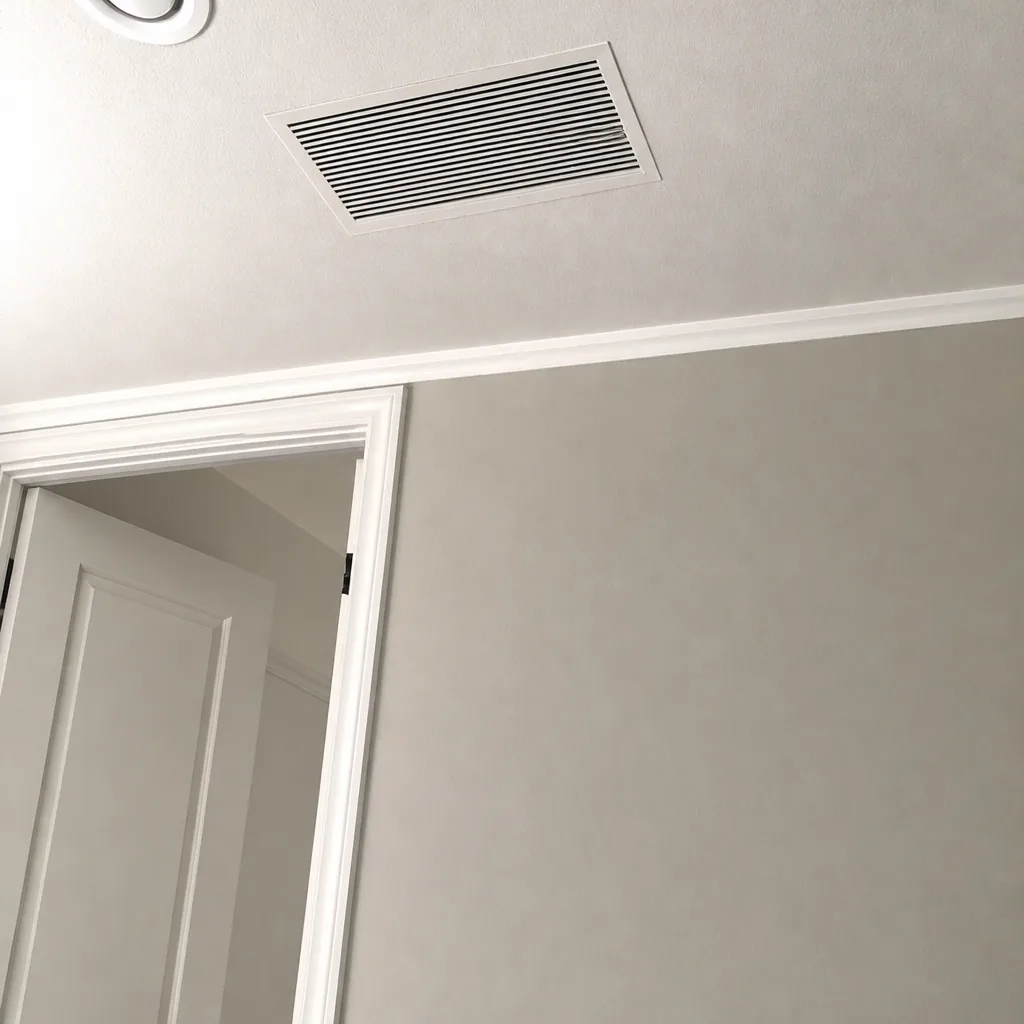 After
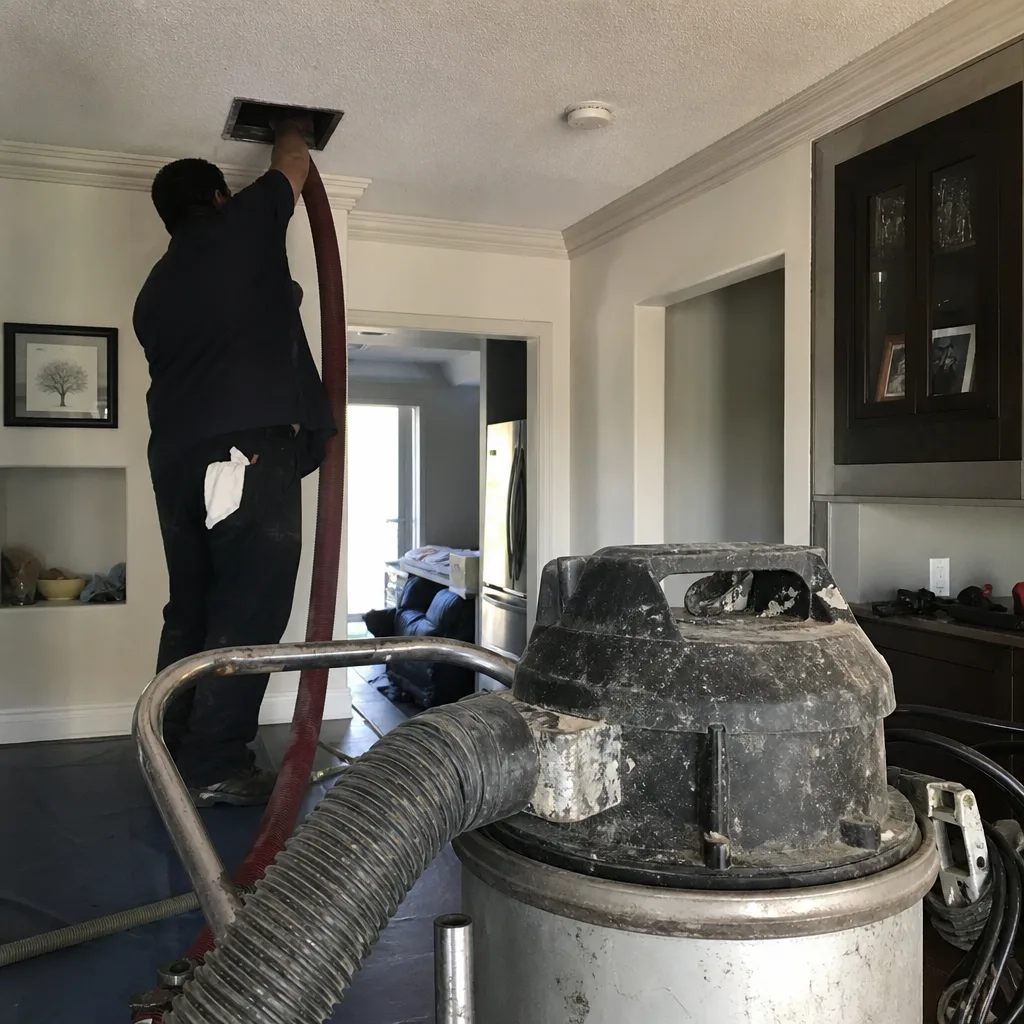 Before
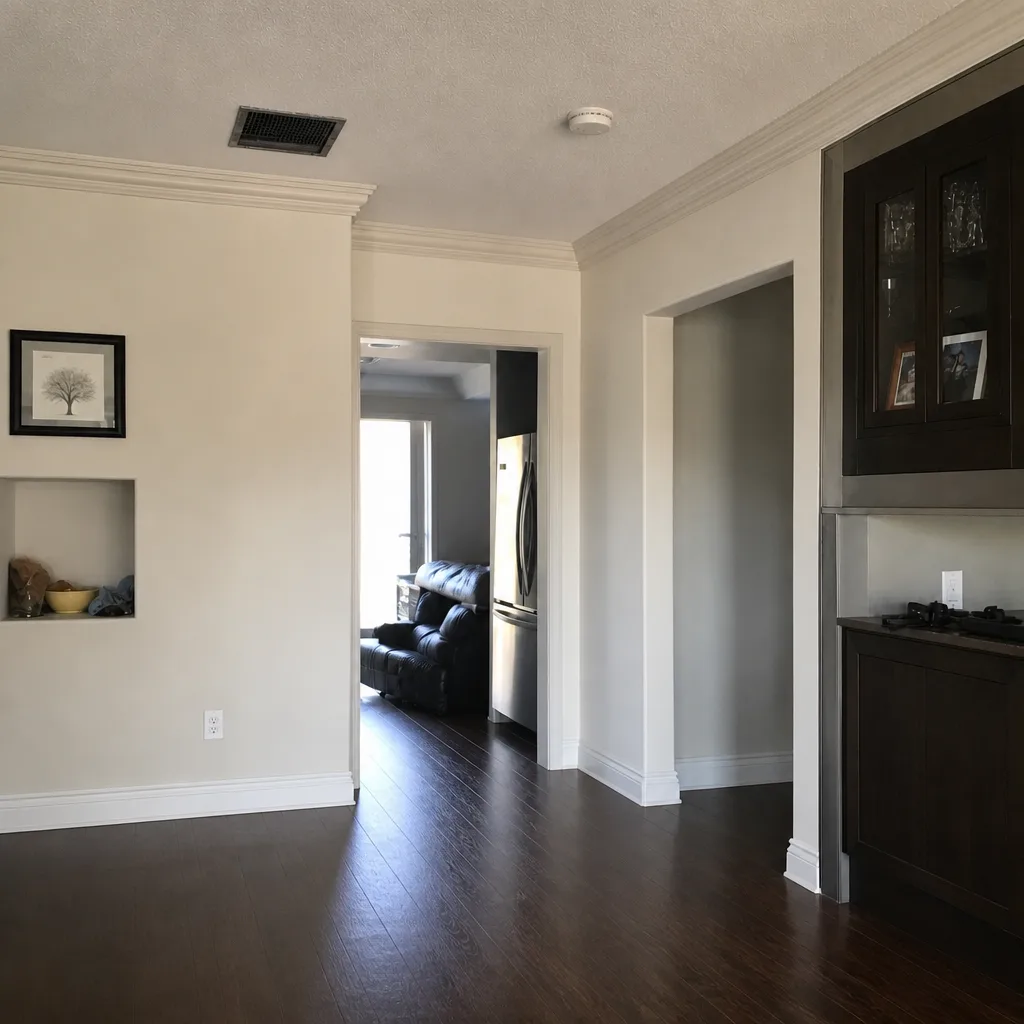 After
When to Call a Professional
Some signs mean the system needs a professional assessment, not a filter change. Persistent dust at the registers even after cleaning the room. Visible debris inside the return grilles. A musty smell from the supply registers when the system turns on. Recent renovation or a new roof, which push fine construction dust through the entire duct system. A dryer that takes noticeably longer to dry clothes, or a dryer vent that has not been cleaned in years. Allergies that worsen when the HVAC is running. A visible mold or moisture issue anywhere in the system. And an HVAC system that has never been professionally cleaned in the life of the current equipment.
Newport Beach Air Duct Cleaning offers free estimates in Newport Beach – call (833) 482-6044. We answer 24/7. Fast dispatch from 7am to 7pm, Sunday through Friday. One flat price per system is agreed before work starts, and before-and-after photos are yours to keep.
Frequently Asked Questions
Typical whole-home air duct cleaning in Newport Beach falls in the several-hundred-dollar range depending on the number of vents, the number of systems, and the level of contamination. Prices are set per system by written estimate, not by an advertised teaser. Ask for a written range that covers equipment, containment, filter, and verification before booking. Call (833) 482-6044 for an exact quote – estimates are free.
Cheaper quotes usually mean cheaper equipment: a shop vacuum or an entry-level portable instead of a commercial-grade rotary brush system with HEPA exhaust filtration. That difference changes the work from source removal to surface agitation. You aren’t getting the same cleaning at a lower price; you’re getting a different job. Call (833) 482-6044 to talk through what our equipment can and cannot do, so the comparison is honest.
Ask for before-and-after photographs of your own ducts taken with an inspection camera, and ask for particle count readings if the contractor has a counter. A written summary of what was cleaned is a reasonable expectation. What you should never accept is stock photography as proof. Our technicians photograph the ducts they clean, and the images are yours. Call (833) 482-6044 for a free estimate and to see what that looks like.
Most homes do not need duct cleaning every year. A reasonable interval is every three to five years for typical occupancy, and sooner after renovation, water intrusion, pest activity, or a new HVAC install. Homes that run the system year-round, as many do in Newport Beach, tend to accumulate debris on the slightly shorter end of that range. Call (833) 482-6044 for an assessment tailored to your system.
Yes, because equipment determines whether the job is source removal or surface disturbance. Rotobrush and Nikro are recognized across the HVAC industry, and containment-grade negative-pressure systems from Abatement Technologies are the standard for remediation-level work. A Newport Beach home that stays sealed most of the year is a poor place to redeploy fine debris, so the vacuum class matters more here than homeowners expect. Call (833) 482-6044 for a free estimate.
Yes. Cleaning is the foundation, but air quality work often continues with filtration and purification products from Honeywell and Aprilaire, and with duct repair and sealing where the root cause of contamination is leaking ducts. That means one visit can cover the assessment, the cleaning, and the recommended hardware. Call (833) 482-6044 to book a free estimate on the full picture.
The Bottom Line
The brand on the machine is a reasonable proxy for the standards behind the work. Rotobrush and Nikro rotary systems, Abatement Technologies containment, HEPA filtration on the exhaust side, and honest verification with your own before-and-after photos are what separate a real air duct cleaning from a marketing visit. In Newport Beach, where homes stay sealed and systems run hard, that difference is measurable. Our technicians have up to 10 years of experience, we work with professional-grade equipment as the standard rather than the upgrade, and we can carry air-quality products from Aprilaire and Honeywell. One flat price per system, agreed before work starts. Newport Beach Air Duct Cleaning is here when you’re ready. Call (833) 482-6044. We answer 24/7. Fast dispatch from 7am to 7pm, Sunday through Friday.
Written by the team at Newport Beach Air Duct Cleaning.