
Last updated November 25, 2026
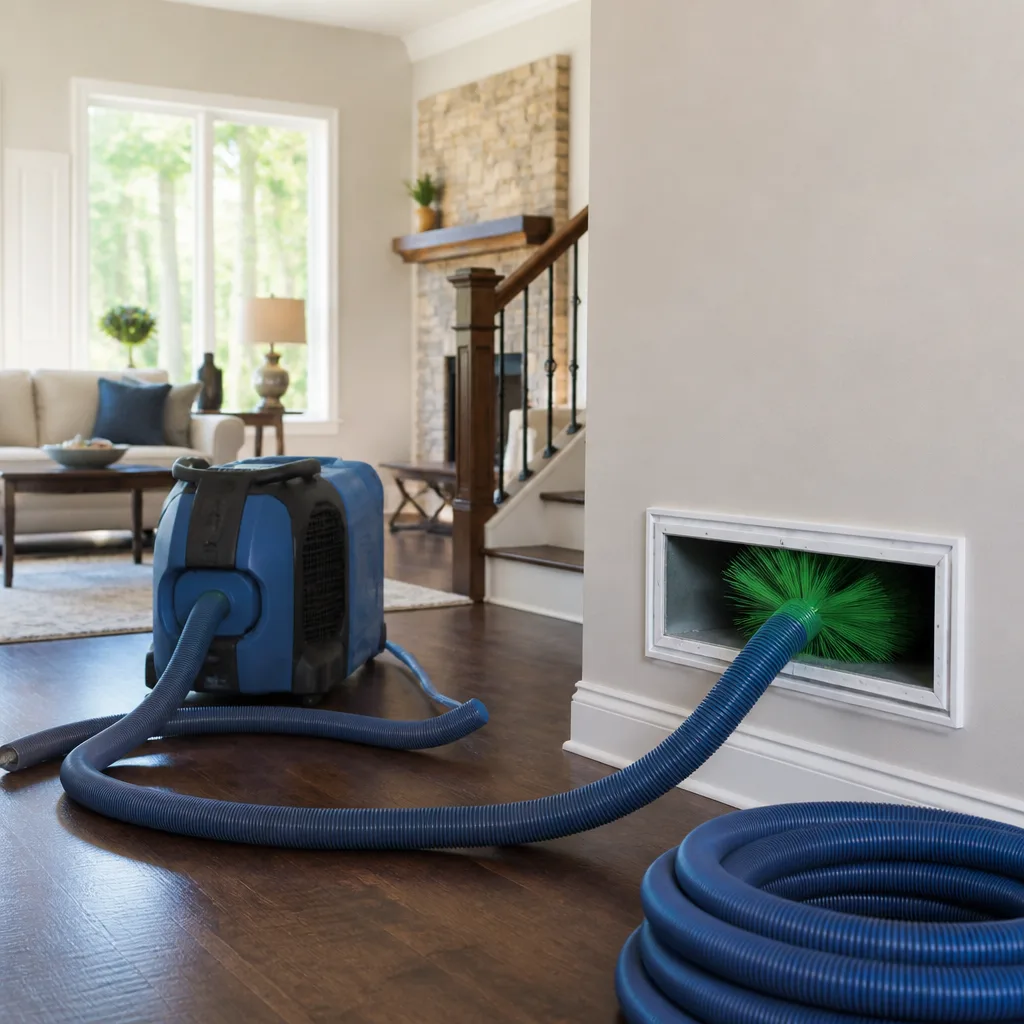 Whole-home duct cleaning
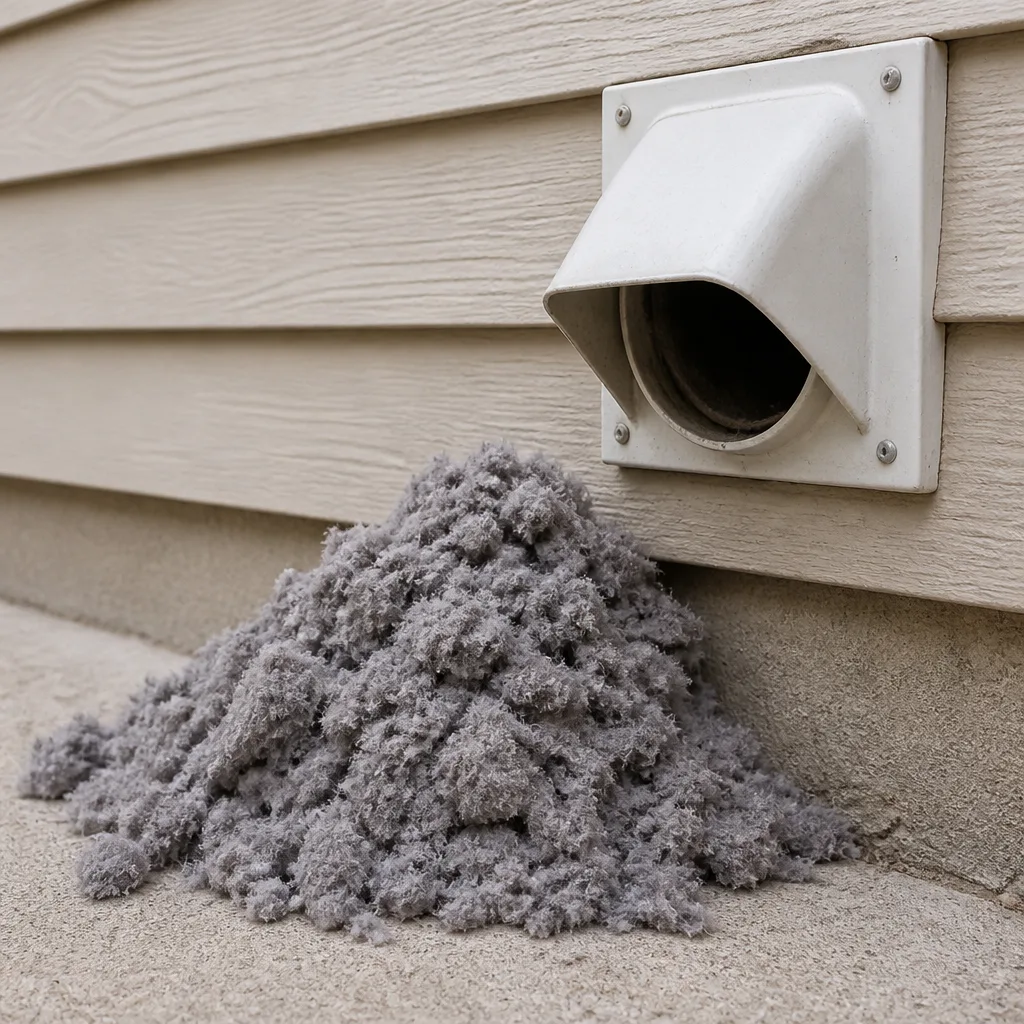 Dryer vent cleaning
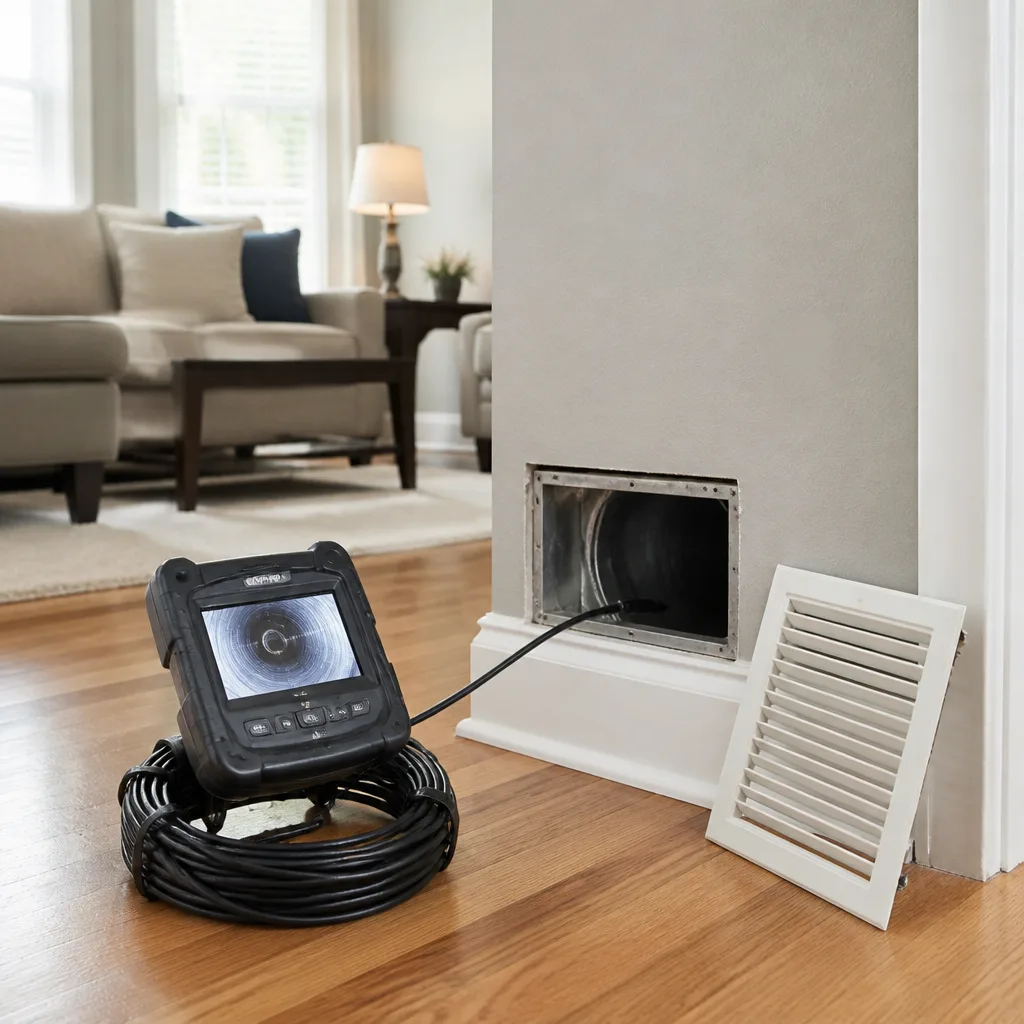 Camera inspection
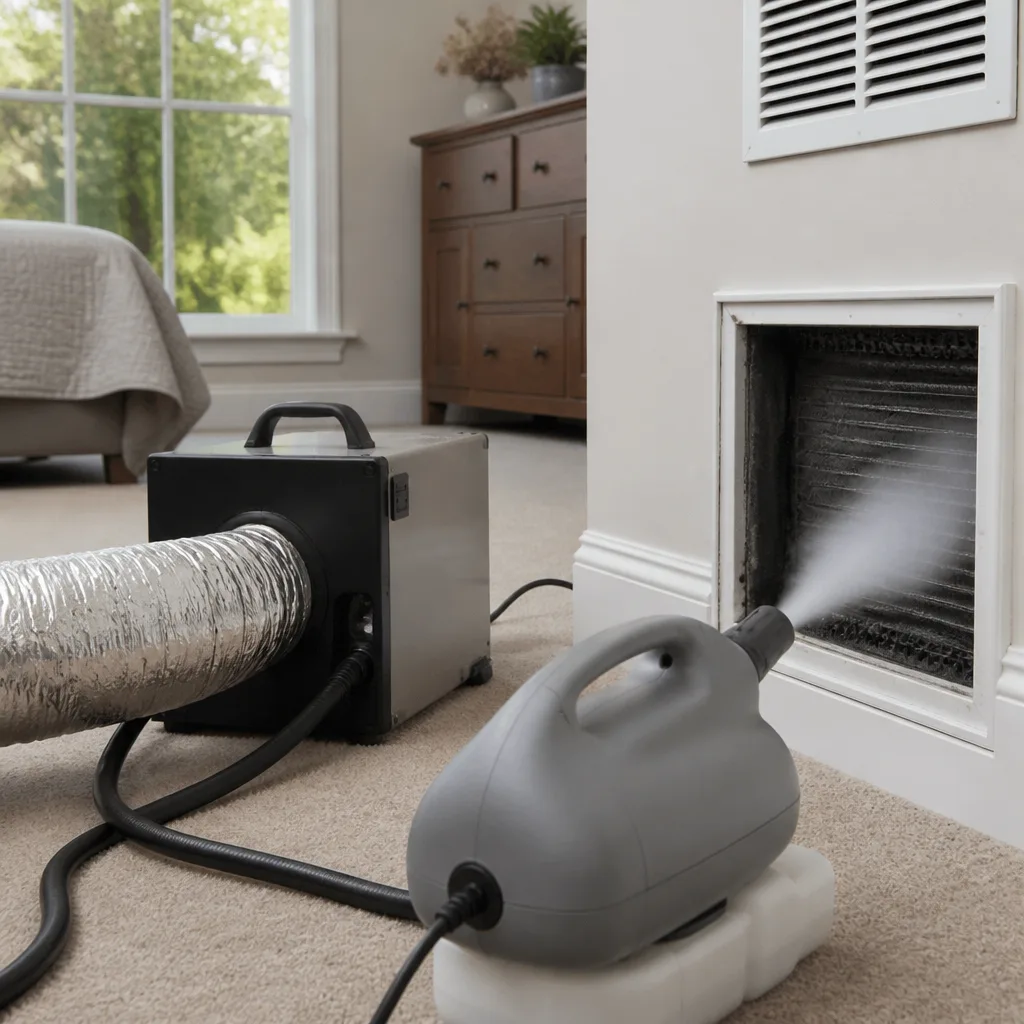 Sanitizing & deodorizing
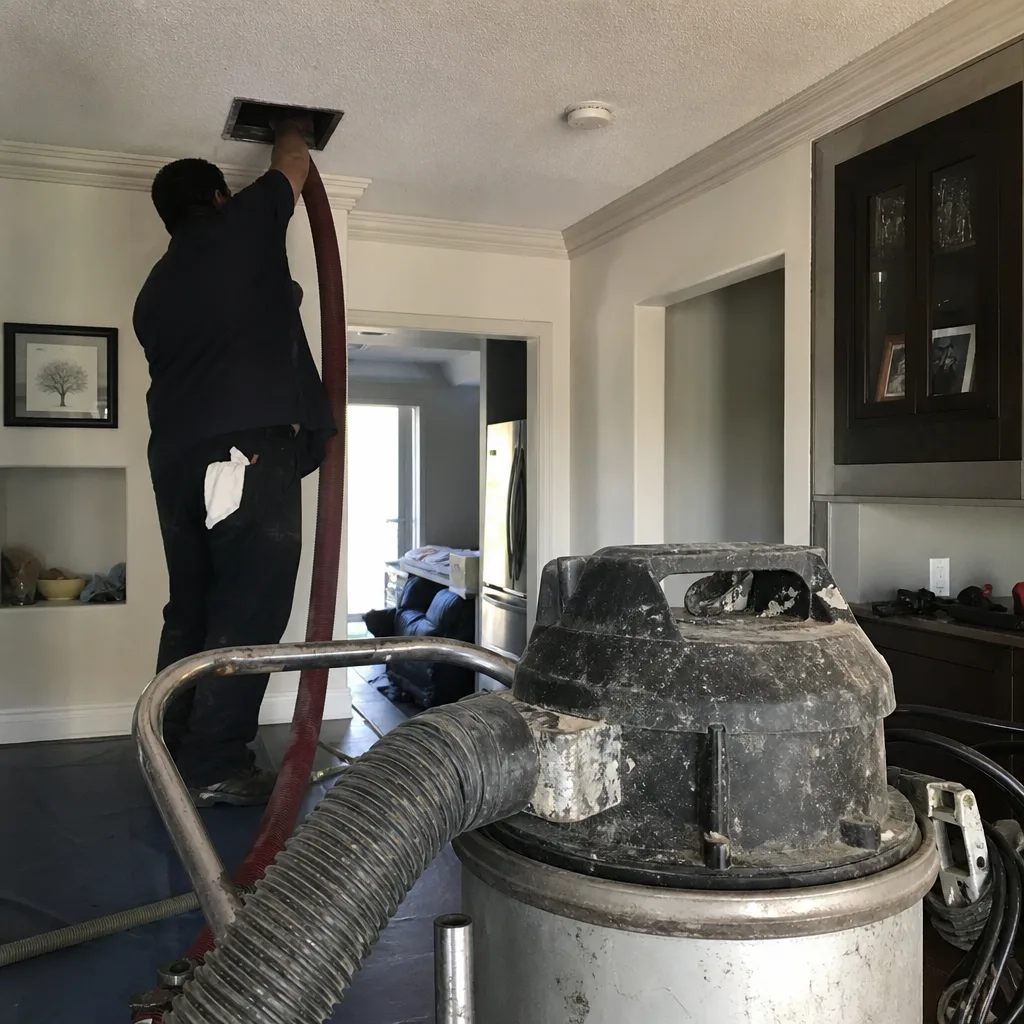
Whole-system duct and dryer vent check with before-and-after photos - you see exactly what came out of your vents
That "$99 whole-house special" is a bait ad - the real number appears once they are in your hallway, or the "clean" is a shop-vac at the register. We photograph the inside of your ducts before and after instead.
Air Duct Cleaning Permits, Codes & Inspections in Newport Beach, CA: What You Need to Know
The duct cleaning usually needs no permit. The section of flex duct a technician sometimes replaces while doing it often does, and that’s where Newport Beach homeowners get caught. A cleaning is maintenance. Cutting out ductwork, running new flex through a chase, or opening up the air handler cabinet to get at a coil is mechanical alteration, and mechanical alteration falls under a different set of rules. This guide draws that line clearly: what’s exempt, what needs a permit, who at the city reviews it, how Title 24 energy rules apply when ducts change, what HOA documents in Newport Beach developments typically require, and how to get a record at the end that holds up at resale.
Quick Answer
Air duct cleaning alone generally does not require a permit in Newport Beach, because it’s classified as maintenance rather than alteration. Duct repair, flex duct replacement, resizing, rerouting, or modifications to the air handler or plenum typically do require a mechanical permit through the City of Newport Beach Building & Safety Department, and any ductwork changed in an existing home must also meet Title 24 energy compliance for the altered portion. Always confirm the current requirement with the city before work begins, since interpretations and local amendments change.
Styles & brands we work with
- Whole-home duct cleaning
- Dryer vent cleaning
- Camera inspection
- Sanitizing & deodorizing
Table of Contents
- Does Air Duct Cleaning Require a Permit in Newport Beach?
- What the California Mechanical Code Says About Ductwork
- How the Newport Beach Building & Safety Department Reviews Mechanical Work
- Title 24 and Ductwork Changes in Existing Homes
- What Newport Beach HOA Rules Say About HVAC Work
- What an Inspection Actually Looks Like
- How to Get a Post-Service Record You Can Use Later
- How to Verify a Contractor’s Work Status Online
Does Air Duct Cleaning Require a Permit in Newport Beach?
No. Routine air duct cleaning in Newport Beach does not require a permit. Cleaning falls under maintenance: a technician is removing accumulated debris from a system that stays structurally as it was. Nothing is added, removed, resized or rerouted, so there’s nothing for the city to review. The same goes for sanitizing treatments and filtration upgrades that drop into an existing filter slot.
The permit question appears the moment the work moves from maintenance into alteration. Here’s the practical split we use when a homeowner asks.
- Typically no permit: source removal cleaning of supply and return ducts, register and grille cleaning, air handler and coil cleaning, sanitizing, filter replacement, minor sealing of accessible joints with mastic or approved tape.
- Typically needs a mechanical permit: replacing a run of flex duct, adding or removing a supply or return, changing duct size to fix static pressure, rerouting ductwork around a remodel, replacing a plenum or trunk section, cutting a new access panel into the air handler cabinet.
There’s a third category that catches people: duct sealing that’s part of a larger energy or HVAC project. If a contractor is sealing and repairing as part of a system changeout, the permit for the changeout usually covers the associated ductwork, but the scope has to be written on the application. If sealing is done as a standalone repair, ask the city whether they treat it as maintenance or alteration. That answer varies with how much duct material is being cut and replaced.
This matters most in older Newport Beach homes, where ductwork in attics and crawlspaces has often been patched a few times over the years. What looks like a cleaning job can turn into a repair once the technician opens an access point and finds disconnected or crushed sections. A reputable technician stops, explains what’s actually there, and tells you whether a permit is involved before cutting anything. If a contractor starts replacing duct sections without ever raising the question, that’s your cue to ask.
What the California Mechanical Code Says About Ductwork
The California Mechanical Code governs how duct systems are installed and altered in this state, and it’s the reference the City of Newport Beach uses when reviewing mechanical permits. You don’t need to read it cover to cover, but knowing what the code cares about helps you have a real conversation with a contractor.
Three things matter most for ductwork in an existing home:
- Materials and joining. The code specifies approved duct materials, how joints and seams are sealed, and how flexible duct must be supported and routed. A run of flex that’s sagging, kinked or stretched tight around a corner doesn’t meet the intent of the code, and it’s also a pressure problem.
- Support and clearances. Ducts need proper support spacing and clearance from heat sources and combustibles. Attic runs in Newport Beach homes sit in a hot, dry environment for much of the year, and poorly supported flex resting on joists or against framing is common.
- Return air and cabinet integrity. The air handler cabinet, plenum connections and return path all have to be sealed and sized correctly. Cutting a new return or opening the cabinet is where permits usually enter the picture.
What the code doesn’t do is require duct cleaning. There’s no state or city rule mandating cleaning at any interval, which is one reason the industry gets confusing. Cleaning is a maintenance decision you make based on what’s in your system, not a legal obligation. Code compliance applies to how the system is built, sealed and altered, not to how clean it is.
When we assess a system, we’re looking at both sides of that line at once, because the two interact. A crushed duct section is a code and performance issue and also the reason debris keeps collecting downstream of it. That’s why our approach treats cleaning and repair as connected work rather than separate transactions. Fixing the cause of contamination matters as much as removing what’s there now.
How the Newport Beach Building & Safety Department Reviews Mechanical Work
Mechanical permits in Newport Beach go through the City of Newport Beach Building & Safety Department. That department has jurisdiction over mechanical systems in residential and light-commercial properties, including ductwork alterations that meet the permit threshold. The exact scope of what triggers a permit can shift with code adoption cycles and local amendments, so the department’s current guidance is the only reliable answer for your address.
Here’s how the process typically runs for a duct-related permit:
- Scope is defined. The contractor lists what duct material is being removed and installed, where, and why. Vague scopes slow down review.
- Application is filed. Plans and details are submitted to the Building & Safety Department. Simple residential duct replacements are usually straightforward; larger alterations or anything tied to a remodel get more scrutiny.
- Permit is issued. Work can begin once the permit is in hand. Starting before that is a problem for the homeowner, not just the contractor.
- Inspection is scheduled. The inspector verifies the work before it’s closed off. Ductwork buried above a ceiling or inside a chase should be inspected before it becomes inaccessible.
- Permit is finalized. The closed permit becomes part of the property record, which is exactly what you want to be able to show later.
One practical point for Newport Beach properties: a lot of the housing stock has ductwork in tight attics, soffit chases or between floors, and access is genuinely limited. That affects both how the work gets done and how inspection is sequenced. If a permit is required for duct replacement, the inspector needs to see the work at the right stage, and a contractor who plans the job around that will save you a reopened ceiling.
Before any duct alteration starts, call the Building & Safety Department and describe the specific work in plain terms. “Replacing two runs of flex duct to three bedrooms” gets a clearer answer than “some duct repair.” If the city says a permit is needed, get it. The cost of a residential mechanical permit is small next to the cost of an unpermitted alteration surfacing during a sale.
Title 24 and Ductwork Changes in Existing Homes
Title 24 is California’s energy code, and it reaches into ductwork whenever ducts are altered in an existing home. When you replace duct runs, seal a distribution system, or change duct insulation, the altered portion has to meet current requirements for sealing and insulation. You’re not required to bring the entire original system up to today’s standard, but the portion you touch is held to it.
In practice, that means a few things for Newport Beach homeowners:
- Sealing quality is part of compliance. Joints, seams and connections on altered ductwork need to be sealed with approved materials, not just pushed together.
- Insulation values matter. Replacement duct in an unconditioned attic needs insulation appropriate to the code requirement for that location.
- Documentation belongs with the job. If a permit is pulled, the energy compliance details are part of the submittal. If a permit isn’t required, ask your contractor for a written description of the materials and sealing methods used on the altered section anyway. It’s the only record you’ll have.
Title 24 compliance and system performance point the same direction. A duct system sealed to code leaks less, and less leakage means better pressure balance and more delivered airflow at the registers. That’s why duct repair and sealing earns its own place in our service line rather than being folded into cleaning. We identify where the system is losing air, fix it, and confirm the fix. A cleaning that leaves disconnected ducts in place just moves debris around a leaking system.
If your home has had additions or HVAC changes over the years, the duct system is probably a patchwork. Newport Beach homes built decades apart, sometimes modified more than once, frequently have mixed duct types and insulation levels. When we’re inside a system, we note what we find and tell you which portions are worth correcting and which are fine as they are. There’s no reason to rebuild a duct system that’s working.
What Newport Beach HOA Rules Say About HVAC Work
Many Newport Beach properties sit within planned developments or high-rise associations, and those CC&Rs add a layer on top of city requirements. HOA rules don’t replace building permits; they add approval steps, access rules, and documentation requirements around them.
What associations commonly control:
- Access and scheduling. High-rise buildings often require contractors to check in, use service elevators, protect common corridors, and work within specified time windows. A technician who hasn’t cleared this in advance may not get past the lobby.
- Architectural approval. In planned developments, changes that affect exterior appearance, roof-mounted equipment, or visible venting may need architectural committee approval before work starts.
- Insurance and licensing documentation. Many associations require a contractor’s certificate of insurance and license information on file before allowing work. The local pro we connect you with is licensed and insured as their state requires, and can supply the paperwork your association asks for.
- Noise and debris rules. Duct cleaning equipment isn’t silent, and negative-pressure setups generate filtered exhaust. Associations may specify where equipment can be staged.
Read your CC&Rs before booking, not after. The relevant sections are usually the ones covering alterations, common area access, and contractor requirements. If you’re a property manager, keep a copy of those requirements with your vendor file so the same questions don’t get re-answered on every job. Ask your contractor in advance what documentation they can provide for the association, and get the approval in writing before the scheduled work day. A permit may not be involved at all, and the HOA paperwork still can be.
What an Inspection Actually Looks Like
An inspection on ductwork is short and specific. The inspector isn’t judging air quality or whether your ducts look clean. They’re verifying that the work matches the permit: the right materials, the right sealing, the right support, and correct routing.
What gets checked on a typical duct replacement or alteration:
- Materials match the approved scope. Duct type, insulation and sealing materials as listed on the permit.
- Connections are sealed. Joints, seams and transitions at the air handler and plenum.
- Support and routing are correct. Flex duct isn’t sagging, kinked, or compressing against framing, and there’s proper clearance from heat sources.
- Access is adequate. The inspector needs to see the work before it’s concealed.
- The system is complete. Registers connected, returns intact, nothing left open.
Timing matters more than people expect. Ductwork that will be enclosed above a ceiling, inside a chase, or behind drywall needs its inspection before it’s closed in. On a Newport Beach job where a duct run passes through a soffit or a tight attic space, that sequencing has to be planned from day one. If a contractor wants to seal up a ceiling the same afternoon the duct went in, ask when the inspection is scheduled.
Cleaning-only jobs don’t get inspections because there’s no permit to close. That’s not a gap in the system; it just means the quality check is on you and your contractor. This is why a post-service record matters so much on cleaning work. With repair or replacement, the inspection is a neutral third party confirming the work. Without it, your documentation is what your contractor gives you.
How to Get a Post-Service Record You Can Use Later
Ask for a written service record before the work starts, and ask for it in two parts: what was cleaned and what was structurally modified. Those are different categories with different consequences, and a single invoice line doesn’t capture either.
Here’s the request in a form you can hand to any contractor:
- Scope summary, pre-work. A written description of what’s being cleaned and what’s being repaired or replaced, agreed before the technician begins. This is the basis for everything else.
- Before-and-after photos. Photos of your own ducts, not stock images. They document condition and confirm the work happened.
- Cleaning record. Which systems and components were cleaned, what method was used, and what equipment was used. Source removal with commercial-grade equipment is worth being specific about, because it’s the difference between debris actually leaving the system and debris being loosened.
- Modification record. Anything cut, replaced, added or resealed, with materials and locations. This is the section that matters if a permit was required.
- Permit reference, if applicable. The permit number and status once finalized. If no permit was needed, a simple statement to that effect.
- Materials documentation. If filtration or purification equipment was installed, the model and manufacturer so the record is complete.
Why bother? Because this record is what you hand over at resale disclosure, what your HOA may ask for, and what a future technician reads to understand what’s already been done. In our experience, the homes that end up with unresolved questions are the ones where the only paperwork was a receipt. A record costs a contractor a few minutes and saves a homeowner real friction.
One thing to note in that record: whether any part of the work involved duct repair and sealing rather than cleaning. Those are different services, and a document that says “duct work performed” tells a future buyer nothing.
How to Verify a Contractor’s Work Status Online
You can check most of this yourself in a few minutes, and it’s worth doing before the work, not after.
- License status. Confirm the contractor’s license is active and in good standing through the state licensing board’s online lookup. Match the license name and number to the contract.
- Permit status in Newport Beach. If a permit was pulled, the City of Newport Beach Building & Safety Department can confirm it was issued and whether it’s been inspected and finalized. Ask for the permit number and check it.
- Insurance documentation. Ask for a certificate of insurance and confirm it names the correct entity. HOAs and property managers will require this anyway.
- Equipment and method. Ask what equipment will be used. Commercial-grade platforms from manufacturers like Rotobrush and Nikro are standard for professional source-removal cleaning, and containment-grade negative-pressure setups, such as equipment from Abatement Technologies, reduce cross-contamination during the work. The answer tells you whether you’re getting a systematic cleaning or a vacuum with a hose.
- Scope in writing. One flat price per system, agreed before work starts, beats a per-vent number every time. If the quote is built per vent, the final invoice depends on how many vents the technician counts.
That last point deserves emphasis. This trade has a bait-and-switch reputation for a reason: a low advertised number that becomes a much larger invoice once the technician is in the house. The defense is structural, not personal. A whole-system price agreed in writing before anything starts, and before-and-after photos of your own ducts at the end. If a contractor won’t put the scope and price in writing, the rest of the verification doesn’t matter much. This is a scheduled maintenance service, so there’s no reason to accept a quote you can’t read before work begins.
Common Mistakes to Avoid
- Assuming the whole job is permit-free because cleaning is. Cleaning is maintenance; replacing duct runs is an alteration. Ask the contractor which parts of the scope fall on which side of that line, in writing, before they start cutting.
- Letting a technician replace duct sections without raising the permit question. If they’re cutting out flex and installing new material, the conversation needs to happen first. Unpermitted mechanical work is a disclosure problem in Newport Beach, where buyers and their agents ask for permit history.
- Overlooking HOA requirements. In Newport Beach high-rises and planned developments, the association may require insurance documents, access scheduling and approval before a contractor sets foot on the property. Getting that organized after the equipment is at the door wastes everyone’s day.
- Skipping Title 24 on the altered portion. Replacement duct in an unconditioned attic needs proper insulation and sealing to meet the code for the section being changed. A contractor who doesn’t mention it isn’t tracking the requirement.
- Accepting a receipt instead of a service record. A receipt proves you paid. It doesn’t tell a future buyer or inspector what was cleaned versus modified. Ask for photos and a written scope, split by category.
- Not confirming inspection timing before ductwork gets enclosed. Duct that’s going behind drywall or into a chase needs inspection before it’s covered. Plan the sequence at the start.
- Comparing per-vent quotes to whole-system quotes. They aren’t comparable. Convert every quote to a total for your system, in writing, before deciding.
See the difference
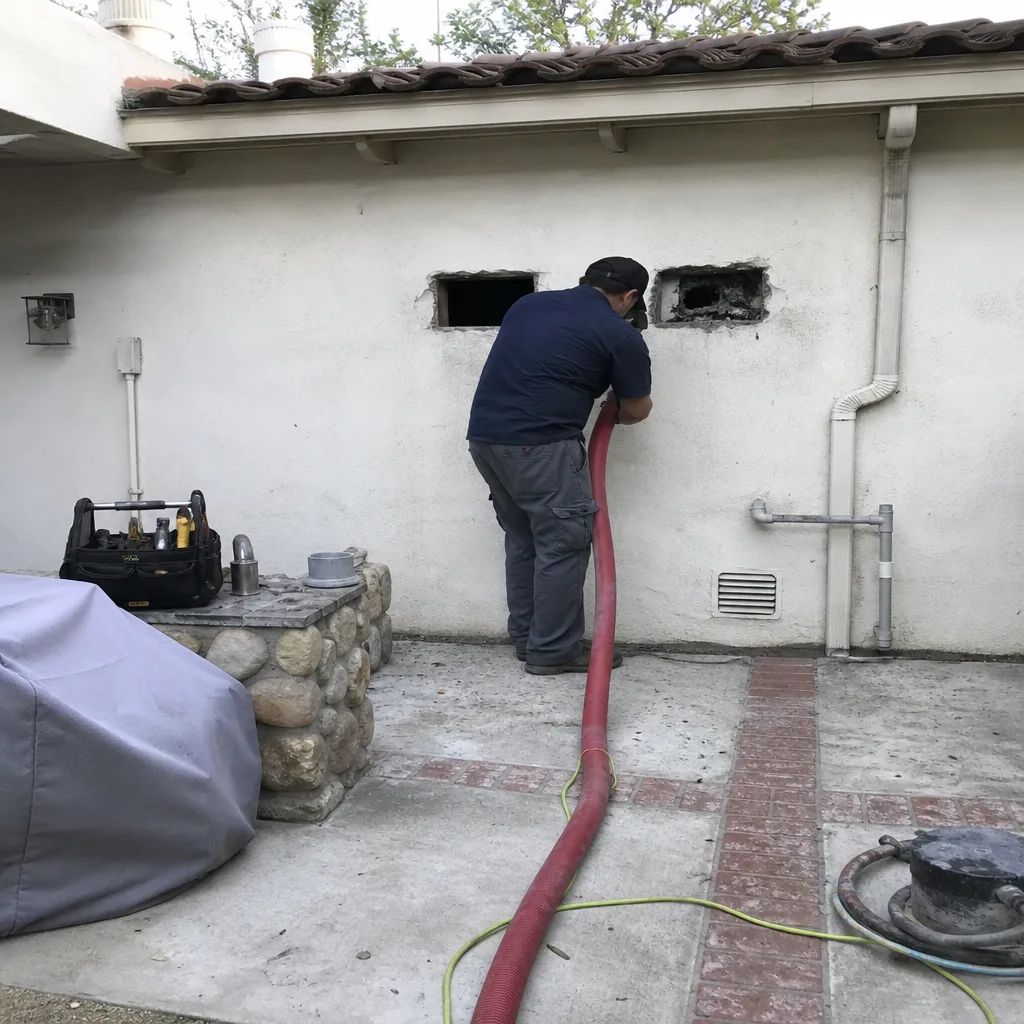 Before
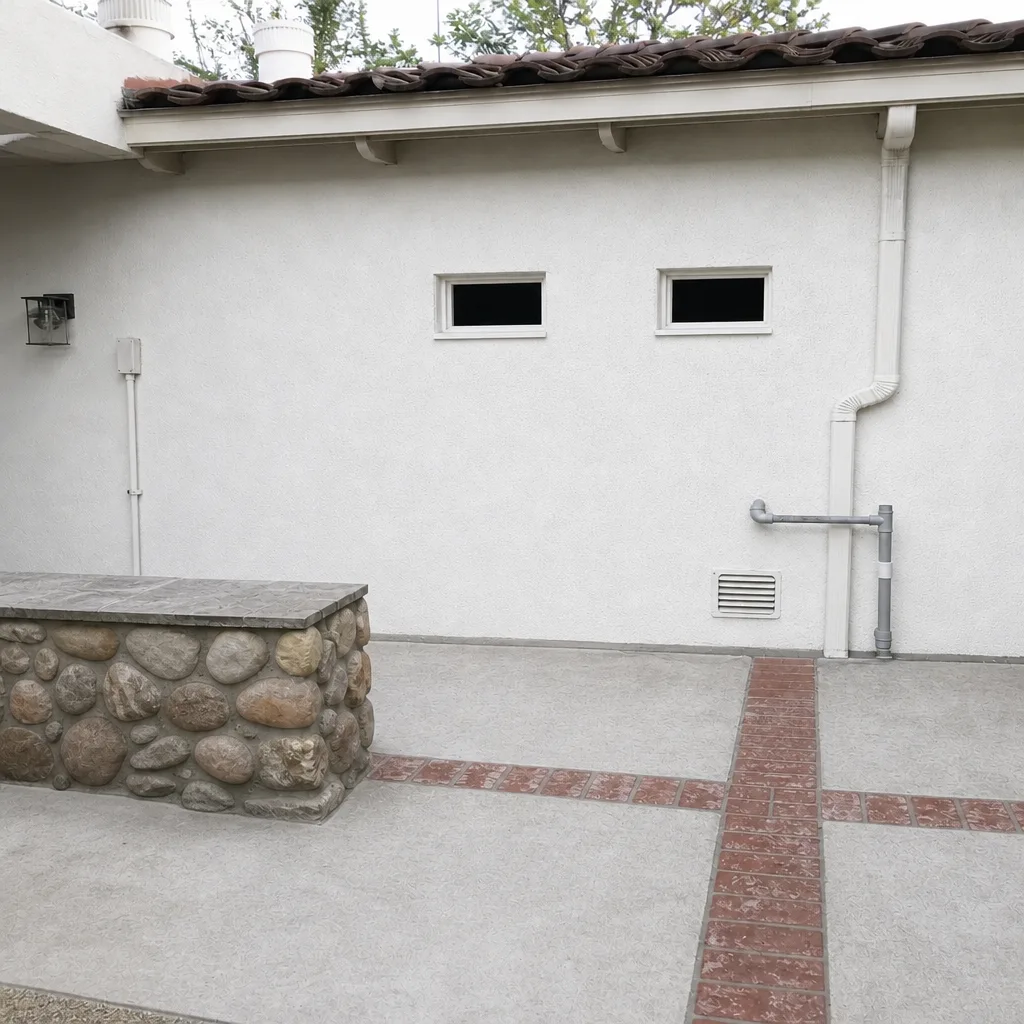 After
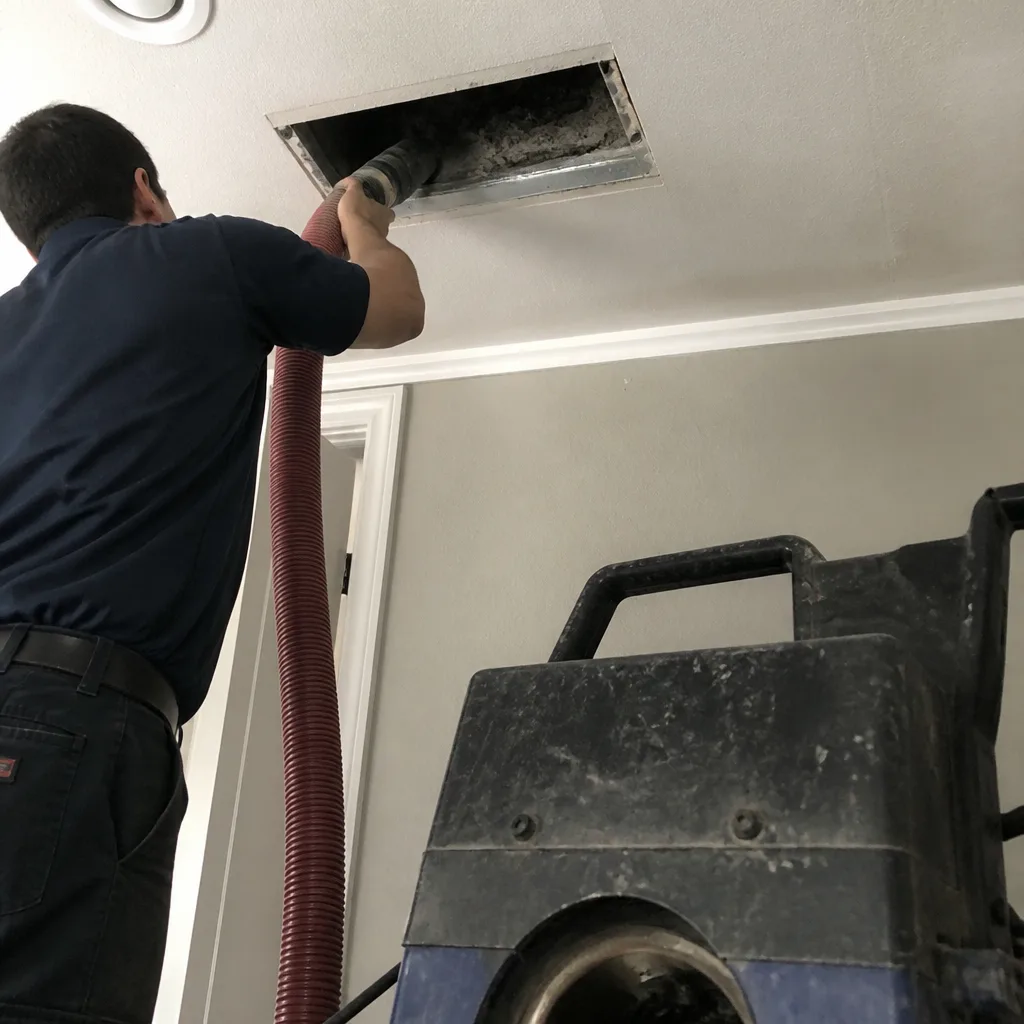 Before
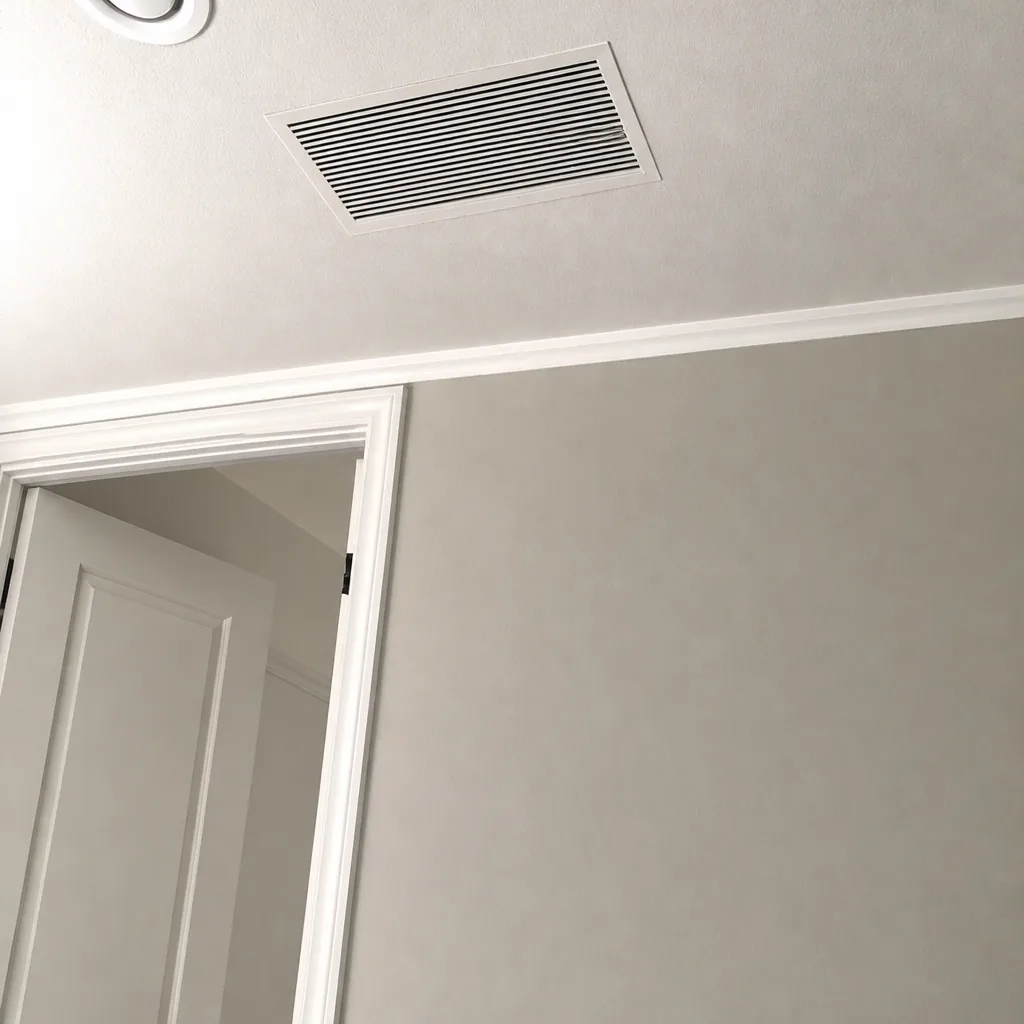 After
 Before
 After
When to Call a Professional
Call a professional when the work involves more than surface cleaning. If a technician finds crushed, disconnected, or pest-damaged duct sections, that’s repair territory and possibly permit territory. If you’re planning a remodel that moves or resizes ductwork, get the permit question answered before demolition. If your system hasn’t been assessed in years and you’re noticing uneven airflow, dust returning quickly after cleaning, or allergy symptoms that track with HVAC runtime, a full-system assessment makes sense. The same is true if you’re preparing a home for sale and need documentation of what’s been done to the HVAC system. And if dryer vent lint is building up, that’s a separate dryer vent cleaning safety issue worth addressing on its own.
Newport Beach Air Duct Cleaning offers free estimates in Newport Beach. Call (833) 482-6044. We answer 24/7. Fast dispatch from 7am to 7pm, Sunday through Friday.
Frequently Asked Questions
No. Air duct cleaning is treated as maintenance and doesn’t require a permit in Newport Beach. A permit typically becomes necessary when the work involves replacing, adding, removing, resizing or rerouting ductwork, or modifying the air handler cabinet. Confirm the specifics with the City of Newport Beach Building & Safety Department before any alteration, and call (833) 482-6044 for a free estimate. We answer 24/7. Fast dispatch from 7am to 7pm, Sunday through Friday.
The City of Newport Beach Building & Safety Department reviews mechanical permits for ductwork alterations in residential and light-commercial properties. The California Mechanical Code is the technical reference behind those reviews, and Title 24 energy requirements apply to the portion of ductwork being altered. Ask the department directly about your specific scope, since interpretations and local amendments change over time.
Yes, to the section being altered. Title 24 requires the replaced or modified portion of ductwork to meet current sealing and insulation requirements, even in an existing home. You aren’t obligated to bring the entire original system up to current standards, but the new material has to comply. Ask your contractor to describe the materials and sealing methods in writing.
Possibly. Planned developments and high-rise associations often require contractor insurance documentation, access scheduling, and sometimes architectural approval before HVAC work begins. The HOA’s requirements sit on top of city permits rather than replacing them. Read your CC&Rs, particularly sections on alterations and common area access, and get association approval in writing before the scheduled work day.
It should separate what was cleaned from what was structurally modified. Ask for a written scope agreed before work, before-and-after photos of your own ducts, the cleaning method and equipment used, a list of any duct sections replaced or resealed, and the permit number and status if one was required. That document serves you at resale disclosure and gives the next technician a real starting point.
Before-and-after photos of your own ducts, plus a written scope that matches what you agreed to. Ask what equipment will be used: professional source-removal platforms from manufacturers like Rotobrush and Nikro are standard for real cleaning, and containment-grade negative-pressure setups reduce cross-contamination. A whole-system price agreed in writing before the work starts, rather than a per-vent quote that grows on site, is the other half of that confidence. Call (833) 482-6044 for an exact quote. Estimates are free.
The Bottom Line
Cleaning and alteration are two different jobs with two different rule sets. Cleaning is maintenance and needs no permit. Replacing duct sections, rerouting runs, resizing, or cutting into the air handler typically does, and the altered portion has to meet Title 24 for sealing and insulation. Newport Beach permits run through the City of Newport Beach Building & Safety Department, and HOA rules in planned developments and high-rises add access and documentation requirements on top. The one habit that protects you in every scenario: get the scope in writing before work starts, split into cleaned versus modified, with photos and a permit reference if one applies. That record is what carries you through inspection, HOA review and resale. For a full-system assessment, HVAC cleaning and related work start with a free estimate. Call (833) 482-6044. We answer 24/7. Fast dispatch from 7am to 7pm, Sunday through Friday.
Written by the team at Newport Beach Air Duct Cleaning.