
Last updated November 25, 2026
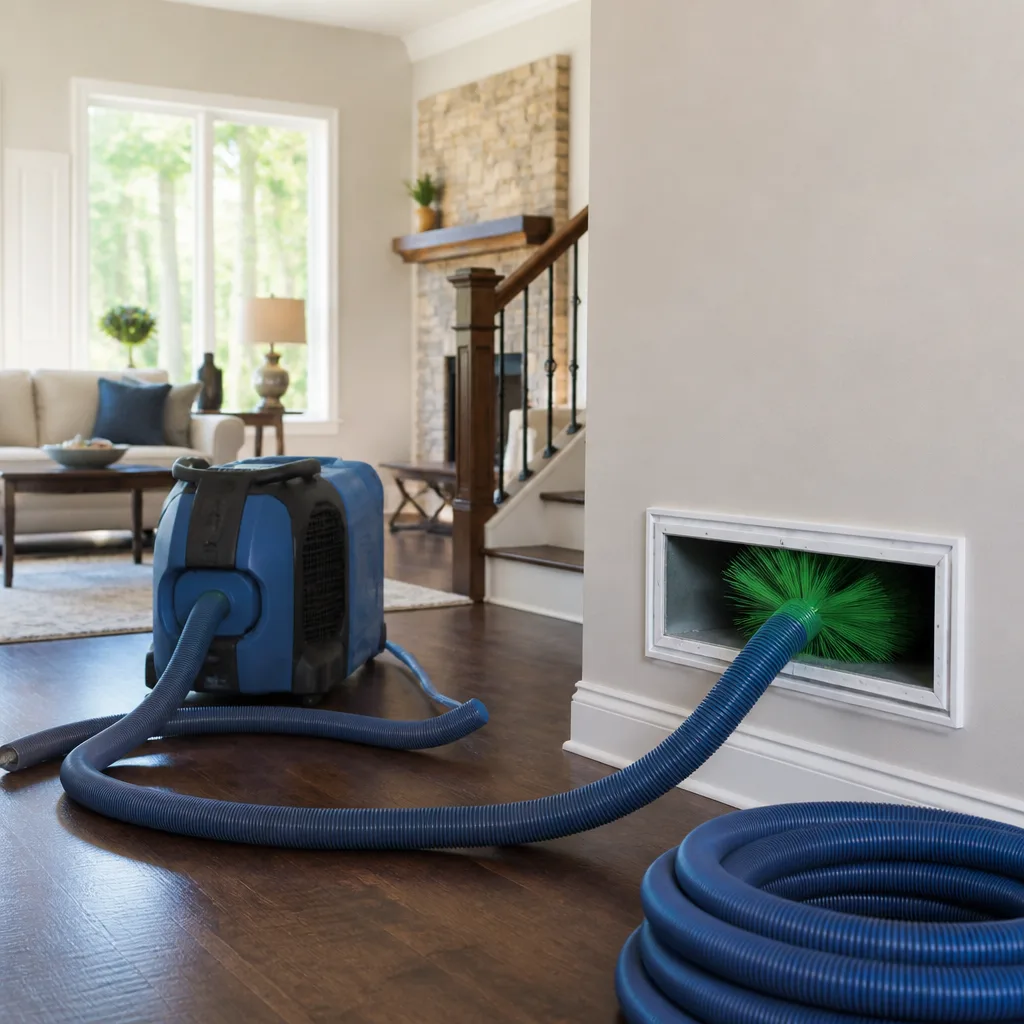 Whole-home duct cleaning
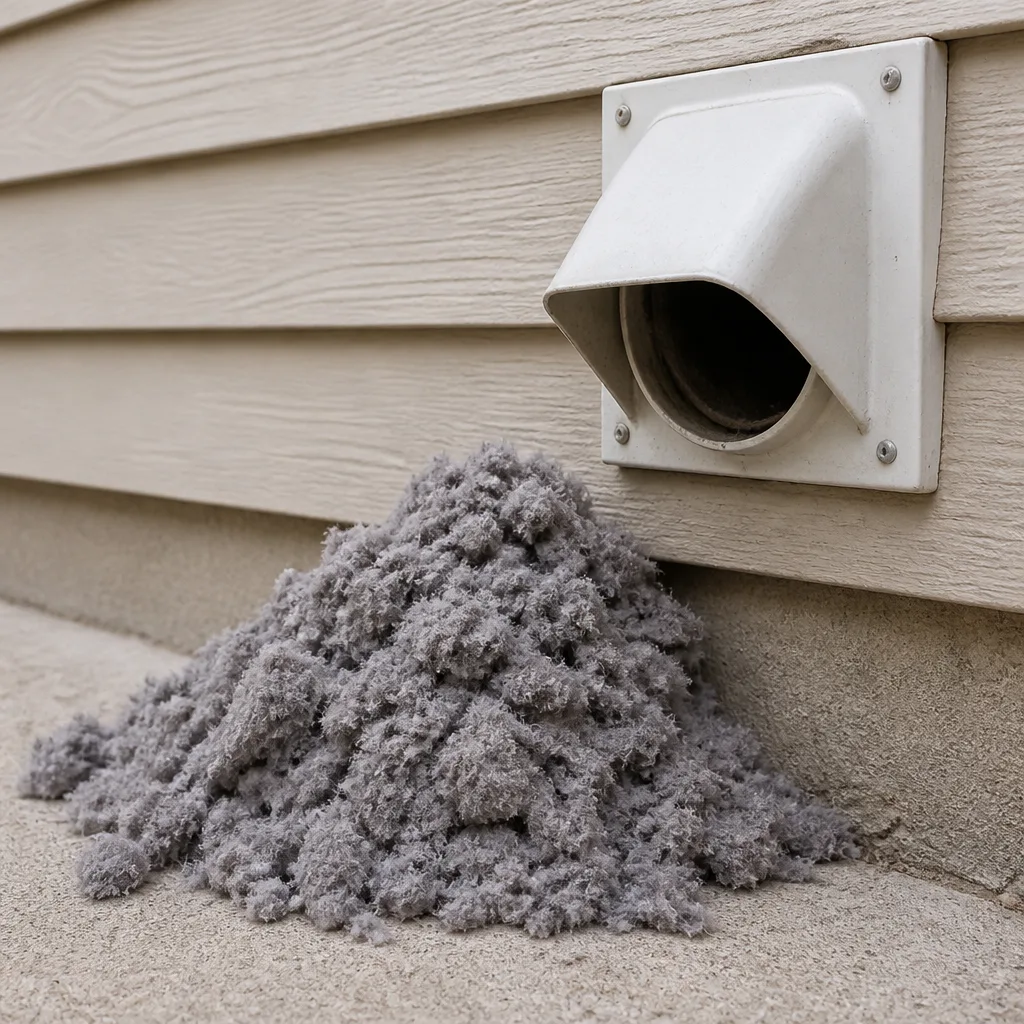 Dryer vent cleaning
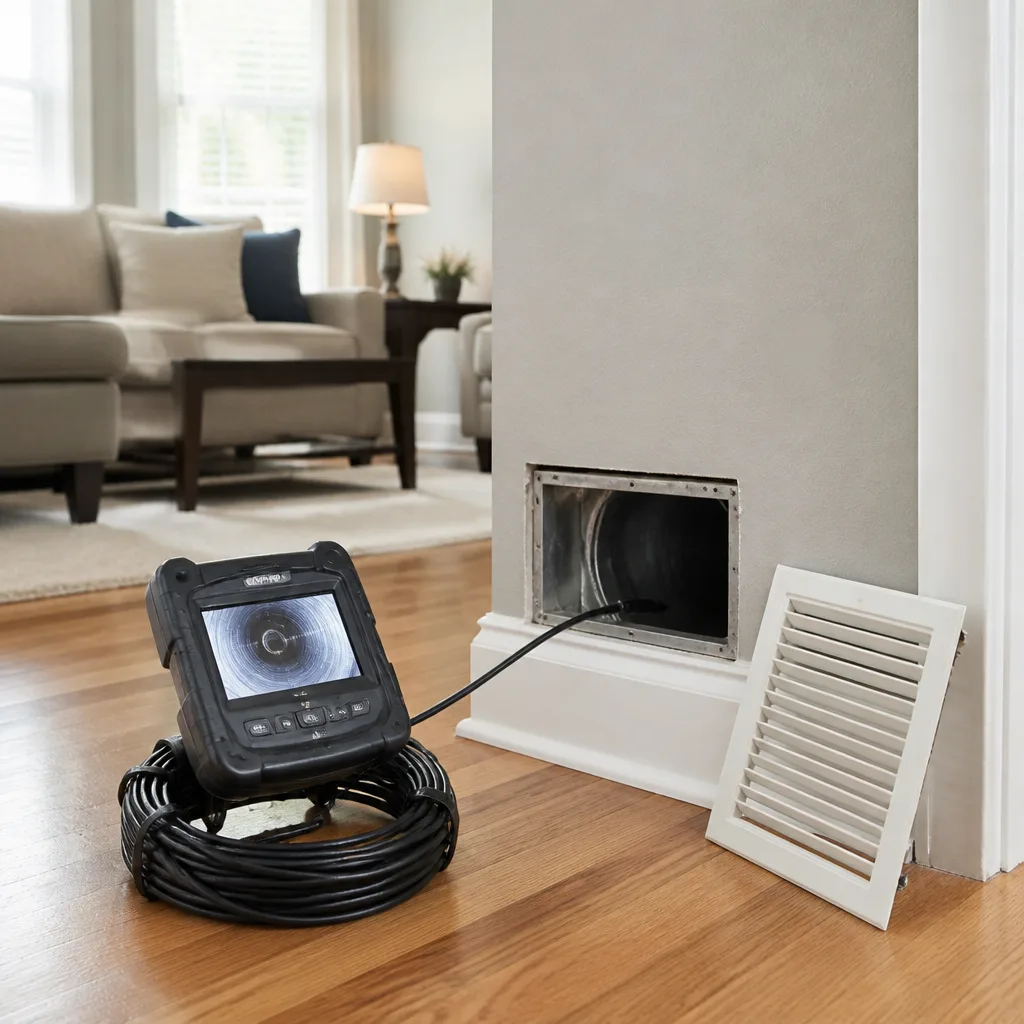 Camera inspection
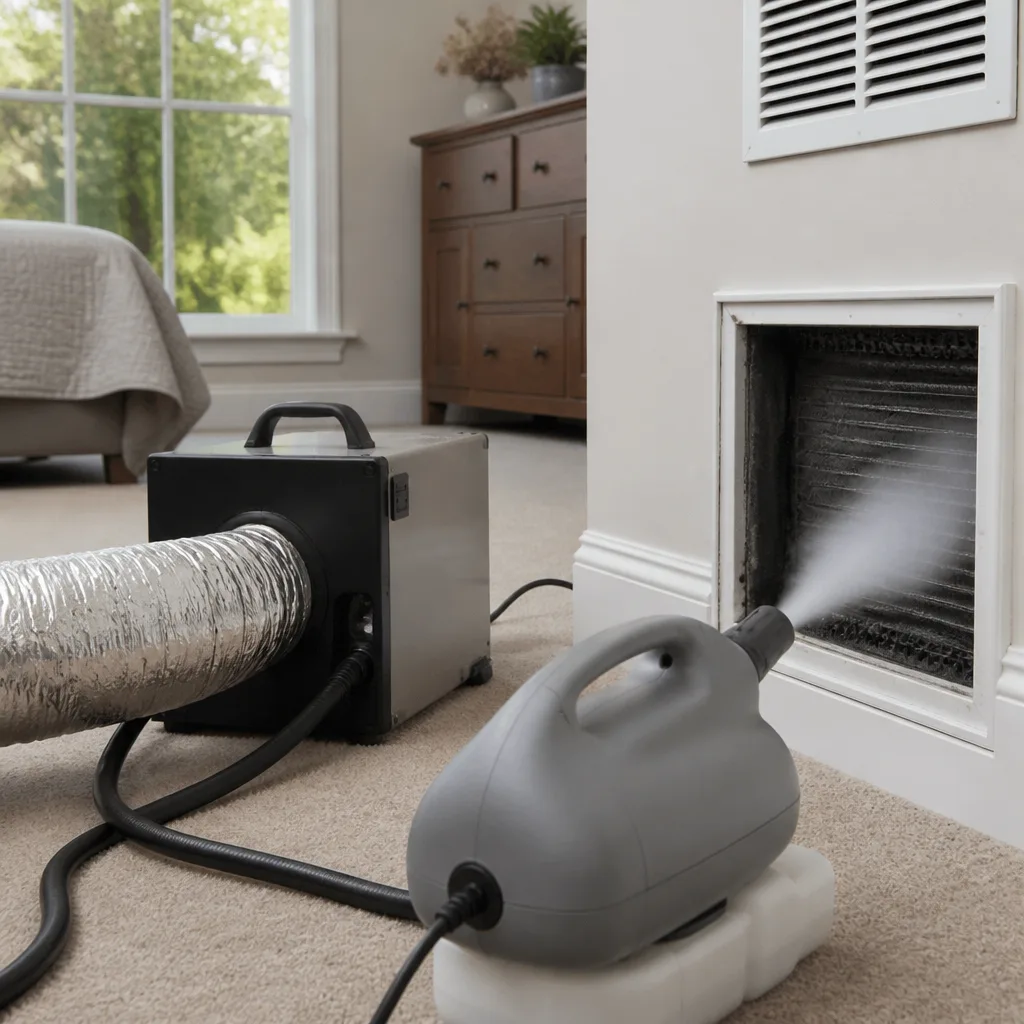 Sanitizing & deodorizing
Whole-system duct and dryer vent check with before-and-after photos - you see exactly what came out of your vents
That "$99 whole-house special" is a bait ad - the real number appears once they are in your hallway, or the "clean" is a shop-vac at the register. We photograph the inside of your ducts before and after instead.
Air Duct Cleaning Troubleshooting in Newport Beach: Common Problems and How to Fix Them
If a technician cleaned your ducts and your allergy symptoms came back in two weeks, the ducts probably weren’t the original problem. That’s the part most homeowners never hear. Ducts are a delivery system, not a source. When air quality problems persist after a cleaning, the contamination is still being generated somewhere upstream: a return plenum pulling attic dust, a crawl space feeding moisture into the system, or a leaking joint in a flex run that has been siphoning unfiltered air for years. In this guide, we’ll show you how to read your symptoms correctly, map each one to the actual root cause, and know before anyone arrives whether your Newport Beach home needs a cleaning, a repair, or something bigger.
Quick Answer
Most duct “problems” in Newport Beach trace back to one of three root causes: negative pressure (your system is sucking air from the wrong place), duct leakage (unconditioned air is entering through gaps and bad joints), or an active contamination source (crawl space, attic, or return plenum) that a standard cleaning never addresses. Symptoms tell you which one you have, and that diagnosis determines whether cleaning, sealing, repair, or replacement is the real fix.
Styles & brands we work with
- Whole-home duct cleaning
- Dryer vent cleaning
- Camera inspection
- Sanitizing & deodorizing
Table of Contents
- Symptom-to-Cause Diagnostic Matrix
- Why Symptoms Come Back After Cleaning
- Testing for Duct Leakage Before You Call
- Newport Beach Factors That Affect Duct Problems
- When Cleaning Is Enough vs. When Repair or Replacement Is Required
- Negative Pressure: The Problem Nobody Suspects
- What a Full-System Assessment Actually Looks At
- Common Mistakes to Avoid
Symptom-to-Cause Diagnostic Matrix
Three homes, three complaints, and three completely different fixes. Homeowner A has dusty vents. Homeowner B smells something musty every time the AC kicks on. Homeowner C has one room that never gets cool. All three call about “duct cleaning.” Only one of them actually needs cleaning.
Here’s how we sort it out. The symptom is data. Read it correctly and the diagnosis usually becomes obvious before anyone shows up with equipment.
- Dusty supply registers and frequent dust on furniture: Usually points to filtration weakness or negative pressure pulling airborne debris past your filter and into the airstream. Rarely a “dirty duct” problem alone.
- Musty or “old basement” smell when the fan runs: Moisture intrusion into a return run, condensate pan, or crawl space connection. Cleaning hides the smell for a week. Sealing the source is the actual fix.
- Uneven airflow between rooms: Leakage in the branch runs, crushed flex duct, or an improperly sized or blocked return. This is a duct problem, but it’s a structural problem, not a cleanliness one.
- Persistent respiratory irritation in one room: A localized contamination source feeding that specific branch: an attic-side return, unsealed register boot, or a crawl space penetration near that room.
- Visible lint and pet hair at the register grille: This one is generally cleaning. If the debris is inside the duct, it accumulated there and can be mechanically removed.
- Whistling at a register or a door that closes itself: Pressure imbalance. The system is starving for return air and drawing it through paths it shouldn’t. Fixing this doesn’t require more cleaning.
The pattern here: two of the six symptoms above lead to cleaning as the primary answer, and the rest lead to diagnosis first. If you take one thing from this section, it’s that “my ducts are dirty” is rarely the actual diagnosis. It’s the assumption.
Why Symptoms Come Back After Cleaning
Post-cleaning recurrence almost always means a contamination source was never addressed. The ducts were the channel, not the generator. Cleaning removed what was already inside. Then the source kept feeding it.
In our experience running full-system assessments across Newport Beach, the three most common untreated sources are:
- Crawl space or attic connections. Any return plenum that runs through unconditioned space, however briefly, is a path. Insulation fibers, dust, and moisture ride the return into your living space. Cleaning the interior of that return does nothing if the source penetration is still open.
- Return plenum leaks. A return-side leak is worse than a supply-side leak because the system pulls from wherever the pressure is lowest: a wall cavity, an attic, or a crawfoot. Filter bypass around the air handler is a common culprit here and a common oversight after a cleaning-only visit.
- Moisture and biological growth inside the air handler or evaporator coil. Cleaning the ductwork while leaving a damp coil and a fouled drain pan untouched is like washing a bowl while leaving the soup inside it. The smell isn’t coming from the ducts. It’s coming from the box at the other end of them.
Here’s the sequence that prevents recurrence: find the source, correct it, then clean. Not the reverse. Cleaning first feels productive, and it will give you two perfectly clean weeks. Then the source starts up again.
The tools matter here. We clean with Rotobrush and Nikro systems specifically because mechanical agitation plus high-volume negative pressure gets duct internals to a verifiable state. Abatement Technologies equipment gives us containment-grade negative pressure during the process so we’re not distributing debris into the home while we work. Those are commercial-grade platforms used in remediation work, not the shop-vac-grade cleaning that shows up in a lot of low-bid proposals.
Testing for Duct Leakage Before You Call
You can test for duct leakage in your Newport Beach home in about ten minutes with a piece of toilet paper and no tools. It won’t measure the leak rate, but it will tell you whether leakage is likely and whether it’s on the supply or return side.
Here’s the sequence:
- Turn the system to fan-only. Fan ON with the thermostat’s heat/cool modes off gives you air movement without temperature changes.
- Tear a single square of toilet paper and hold it against a supply register grille, flat against the surface, not hovering over it. If the paper is sucked firmly toward the grille, air is being pulled in through that register. That’s a return leak or a supply register installed on a return run. Both indicate a problem worth investigating.
- Hold the paper lightly in front of a return grille. Strong suction is expected. Weak suction at some registers but strong suction at others means the return system is starved or has an obstruction.
- Walk around the perimeter of your home and feel for air movement at register boots where they meet the drywall. Air leaking from a boot isn’t necessarily a duct leak, but it’s leakage into the wall assembly and worth noting.
- Check the filter slot on the air handler. If air is whistling through a filter slot that should be sealed, the system is pulling unfiltered air from the utility closet.
What this test actually measures: pressure direction and relative strength. What it doesn’t measure: the percentage of conditioned air you’re losing. For that you need a duct blaster and a calibrated pressure gauge, which is a diagnostic step a qualified technician handles on-site. But the tissue test gives you enough information to describe your problem accurately when you call, and that saves time.
Newport Beach Factors That Affect Duct Problems
Most of Newport Beach sits in a marine climate, and that matters more to duct performance than people expect. Not because of salt, but because of moisture, temperature differentials, and the way a lot of the housing stock was built.
Humidity and duct insulation. In homes across neighborhoods like Balboa Island, Corona del Mar, and the peninsula, the daily moisture swing is significant. Duct runs through unconditioned attic or garage space see cooler surface temperatures at night than the surrounding air. Condensation forms on the outside of insulated flex duct when the insulation has been crushed, compressing its thermal barrier. That’s a real source of moisture-related growth inside the system, and it happens even without a leak.
Flex duct in tight attic bays. Much of the peninsula housing stock uses flex duct in low-clearance attic runs. Flex duct that’s crushed, kinked, or pinched against framing loses its insulation value and its airflow capacity. This is where the “uneven airflow” complaint usually lives.
Renovation dust and construction debris. Newport Beach has a high rate of home renovation and re-piping activity. Sheetrock dust, drywall sanding residue, and insulation fibers from even a modest remodel find their way into return plenums through unsealed openings that existed long before the permit was pulled. Post-renovation duct cleaning is a legitimate use case here, but only if the openings are sealed first.
Register boots cut into return-side drywall. Older construction sometimes has return paths routed through wall cavities. Dust and debris accumulate in those cavities and feed the return directly. Cleaning the visible ductwork doesn’t touch them.
None of these are unusual per se, but the combination of (a) mild climate with real humidity swings, (b) tight low-clearance attic ductwork, and (c) an active renovation culture means Newport Beach homes show a lot of the same three failure modes: crushed flex, moiré vent boots cut into returns, and moisture-fed growth in the air handler.
When Cleaning Is Enough vs. When Repair or Replacement Is Required
Cleaning alone fixes the problem when the contamination is stored debris with no active source refilling it. Anything with an active source needs correction first. Here’s where the line sits.
Cleaning is sufficient when:
- The ducts show visible debris accumulation at the registers and the source of that debris has stopped (recent renovation dust, pet hair over time, aging filtration).
- The system has not been cleaned in a long time, the home has no recurrence pattern, and a full-system inspection confirms no leaks and no moisture issues.
- A pre-purchase or post-move cleaning to reset the system to a known-clean state before adding a filtration upgrade.
Cleaning alone will not fix it when:
- There is a persistent musty smell: you’re dealing with moisture, not dirt.
- Airflow is uneven or a room is chronically under-served: that’s a sizing or leakage issue.
- Symptoms return within two to four weeks of cleaning: an active source is present.
- Ductwork shows crushed or disintegrated flex, disconnected runs, or deterioration from rodent activity: the structural problem is the priority.
For structural problems, the fix is a repair and sealing capability, not a cleaning. We treat HVAC cleaning as an inseparable part of the assessment because the air handler is often where the real issue is located, and a genuinely thorough cleaning has to address the coil, drain pan, and filter assembly at the same time as the duct runs. If a technician from another company cleaned the ducts and never opened the air handler, ask why.
When the ducts themselves are compromised beyond repair, the answer is replacement, and we’ll say so. But replacement is the last resort, not the first quote.
Negative Pressure: The Problem Nobody Suspects
Negative pressure is the leading cause of mysterious dust and air quality complaints we find in Newport Beach, and almost no homeowner has heard of it before we arrive. Your home should be under slight positive or neutral pressure relative to outside. When it’s under negative pressure, every crack and gap becomes an intake for unfiltered air.
Where does negative pressure come from? Three places typically:
- Undersized returns. A central return that was sized for one system configuration and left in place after a changeout that increased supply capacity. The system pulls harder for return air than the returns can supply.
- Exhaust fan interfaces. Kitchen and bath exhaust fans running longer than a bath session, or dryer vent discharge into the home (a serious problem we’ll get to in a moment), can drive the house negative.
- Leaking return ducts outside the conditioned envelope. A return duct that runs through the attic or garage and leaks will always prefer pulling attic air over pulling through the filter. It’s under suction, so it pulls from the path of least resistance. That path is unfiltered attic air.
Testing for negative pressure isn’t a tissue test. It requires a differential pressure gauge and a walkthrough of the house with the fan running. The important thing to know now is that no amount of duct cleaning fixes a negative pressure problem. The cleaning removes stored debris. The pressure imbalance refills it.
And on dryer vents: a dryer vent cleaning isn’t just about lint. A clogged or improperly routed dryer vent is a fire hazard and, when it discharges indoors or pulls air from a conditioned space, a contributor to negative pressure. If you notice the laundry room runs warmer than the rest of the house or the dryer takes longer than usual to dry a load, that’s worth diagnosing in the same visit as your HVAC work.
What a Full-System Assessment Actually Looks At
A cleaning-only visit is a duct job. A full-system assessment looks at every place your air passes through between the return grille and the supply registers, including the components that determine why the air got that way.
A thorough on-site assessment should check:
- Return and supply duct internals via mechanical agitation and a camera inspection where visible.
- Duct connection points: boots, plenums, flex joints, and any transitions where a leak would go unnoticed.
- Air handler and evaporator coil condition, including the drain pan and any biological growth indicators.
- Filtration setup: filter slot sealing, filter grade appropriateness for the system’s static pressure limits, and whether a return bypass is occurring.
- Static pressure at the air handler, which is where the negative pressure and undersized return issues become measurable instead of speculative.
- Dryer vent condition and routing, if relevant to the home.
Once we know what the system is doing, we can talk about the next steps honestly. Sometimes that’s a sealing correction. Sometimes it’s leaving the ducts alone and adding better filtration. We supply and install Honeywell and Aprilaire air-quality products specifically because the right filter and the right humidification or purification setup can make a bigger difference than a second cleaning in an already-clean duct system. Fitting a filtration upgrade at the same time as a cleaning is a reasonable outcome: one visit, one assessment, and a marginal cost instead of a second appointment.
For homes with a recurring reactive-symptom pattern and confirmed contamination in the air handler, a sanitizing treatment tier is available that uses Guardsman-grade product. That’s a chemical intervention and it has to follow a cleaning and source correction, not replace it.
Common Mistakes to Avoid
- Booking a cleaning before a diagnosis. Cleaning is a procedure, diagnosis is a decision. Getting the order right is the difference between one visit that solves the problem and two visits that don’t. In Newport Beach, that’s often the difference between a $300 fix and a $1,800 one.
- Assuming the smell is the ducts. A musty smell that returns within two weeks of cleaning means the source is moisture, and the moisture is in the air handler, crawl space connection, or return plenum. Cleaning a duct that isn’t generating the smell doesn’t stop the smell.
- Ignoring a crushed flex run because it looks fine. A crushed flex duct can look visually intact from the outside. The airflow restriction is on the inside. If one room is chronically uncomfortable, do not accept “your ducts are fine” without a pressure or airflow check.
- Believing a filter upgrade can be fitted without checking system static pressure. The right Honeywell or Aprilaire filter is a meaningful improvement. The wrong grade on a system that was already running high static pressure simply adds back pressure and lowers airflow. This matters more in Newport Beach properties with low-clearance attic runs than most people realize.
- Treating a dryer vent as a bonus line item. A dryer vent clog is a fire safety issue and a source of moisture and pressure problems. It should be assessed on the same visit, not deferred to “next time.”
- Accepting a quote that has no reference to air handler inspection. If a proposal doesn’t mention the air handler, the coil, the drain pan, or the return plenum, it’s a duct-vacuum service, not a full-system cleaning. Those two things are not the same.
- Sealing the ducts without identifying what the pressure problem is. Sealing reduces leakage. If negative pressure is coming from undersized returns, sealing the leaks doesn’t fix the returns. Get the diagnosis first, then the repair.
See the difference
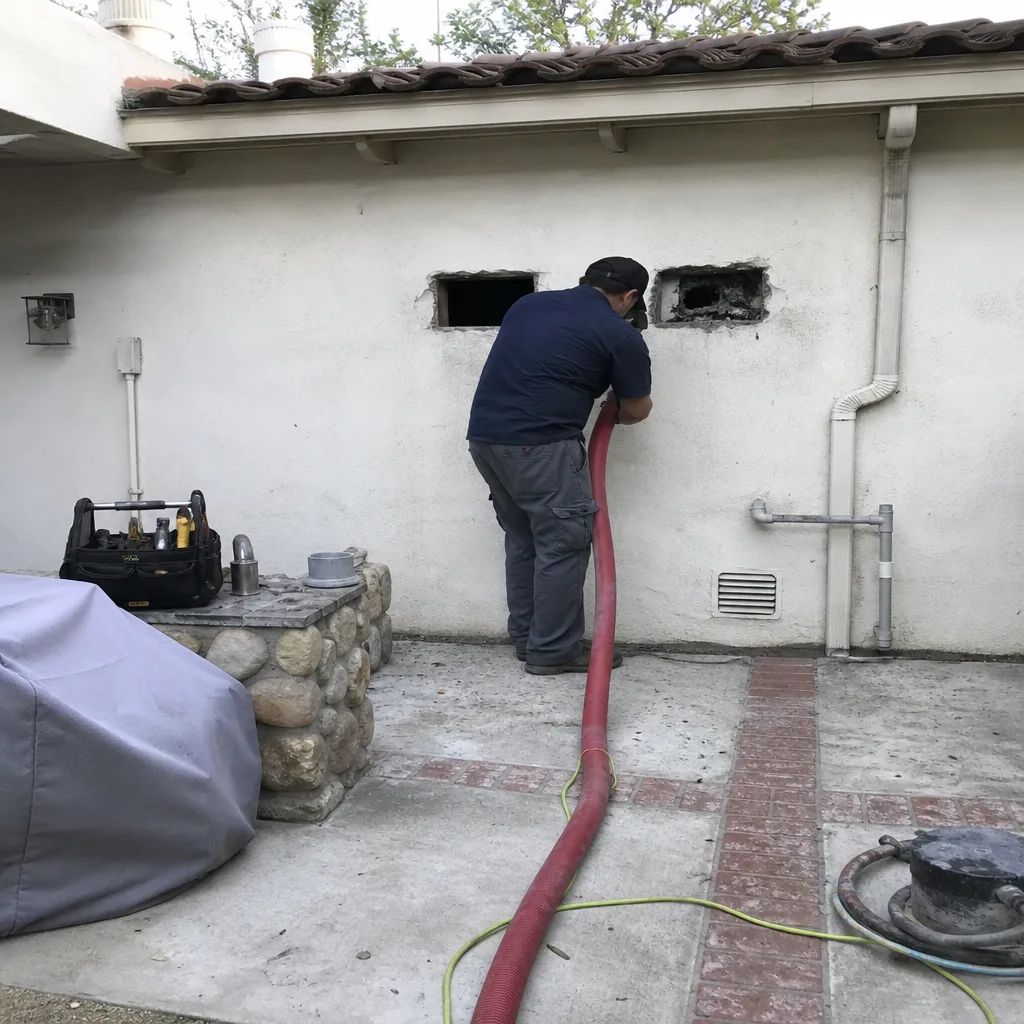 Before
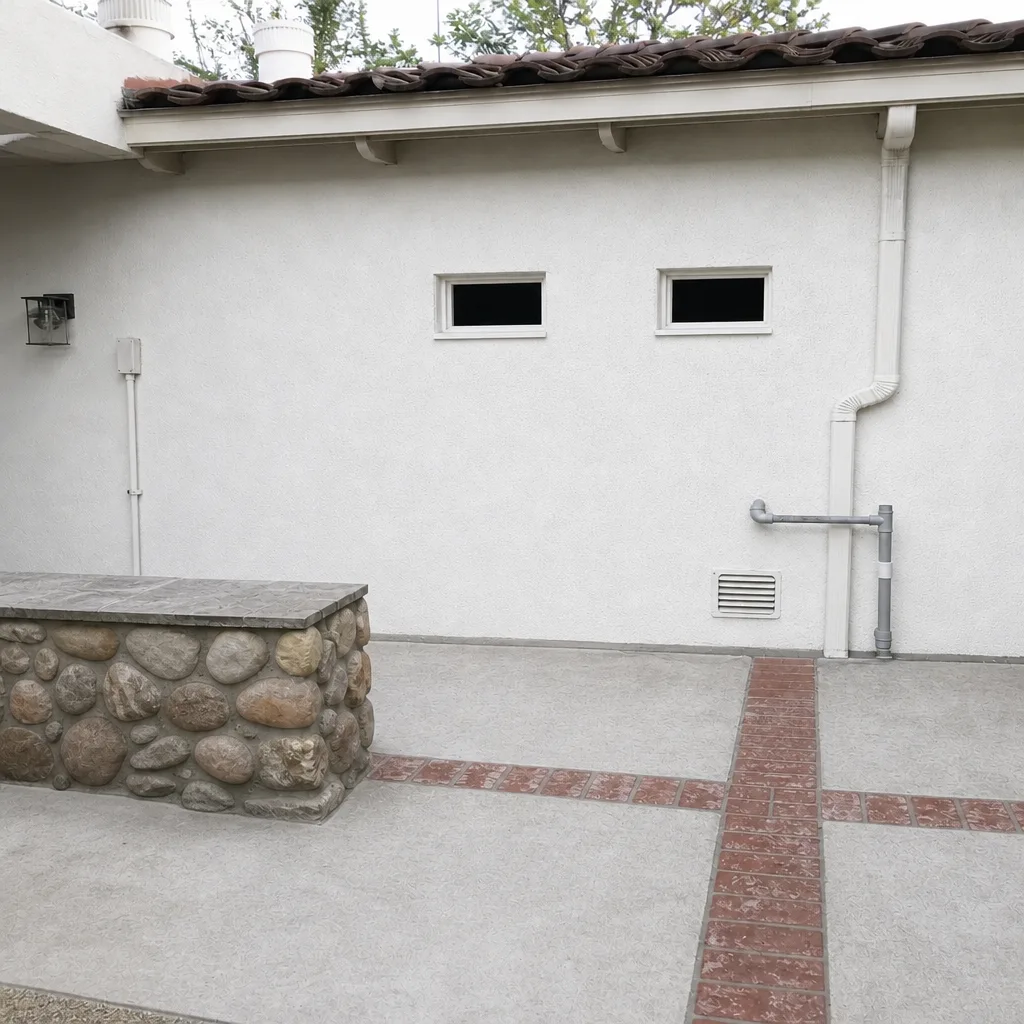 After
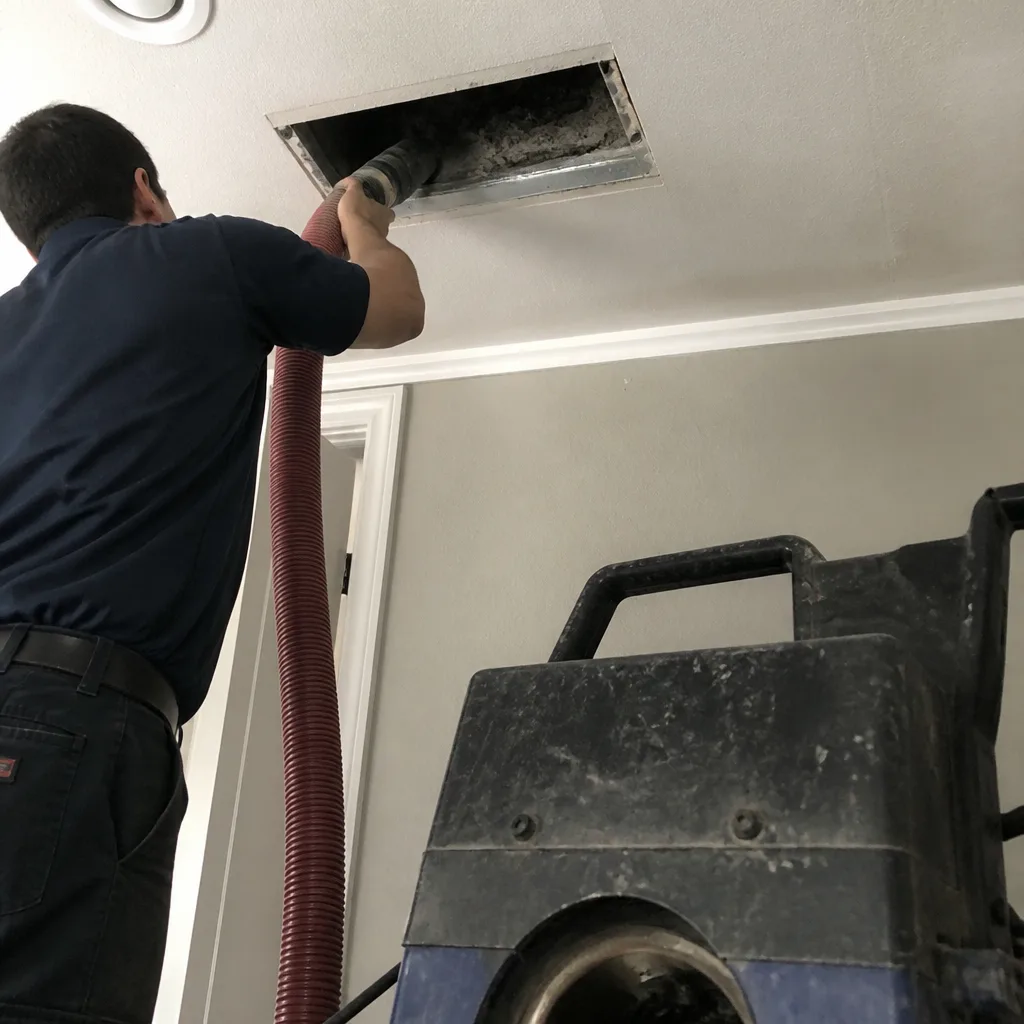 Before
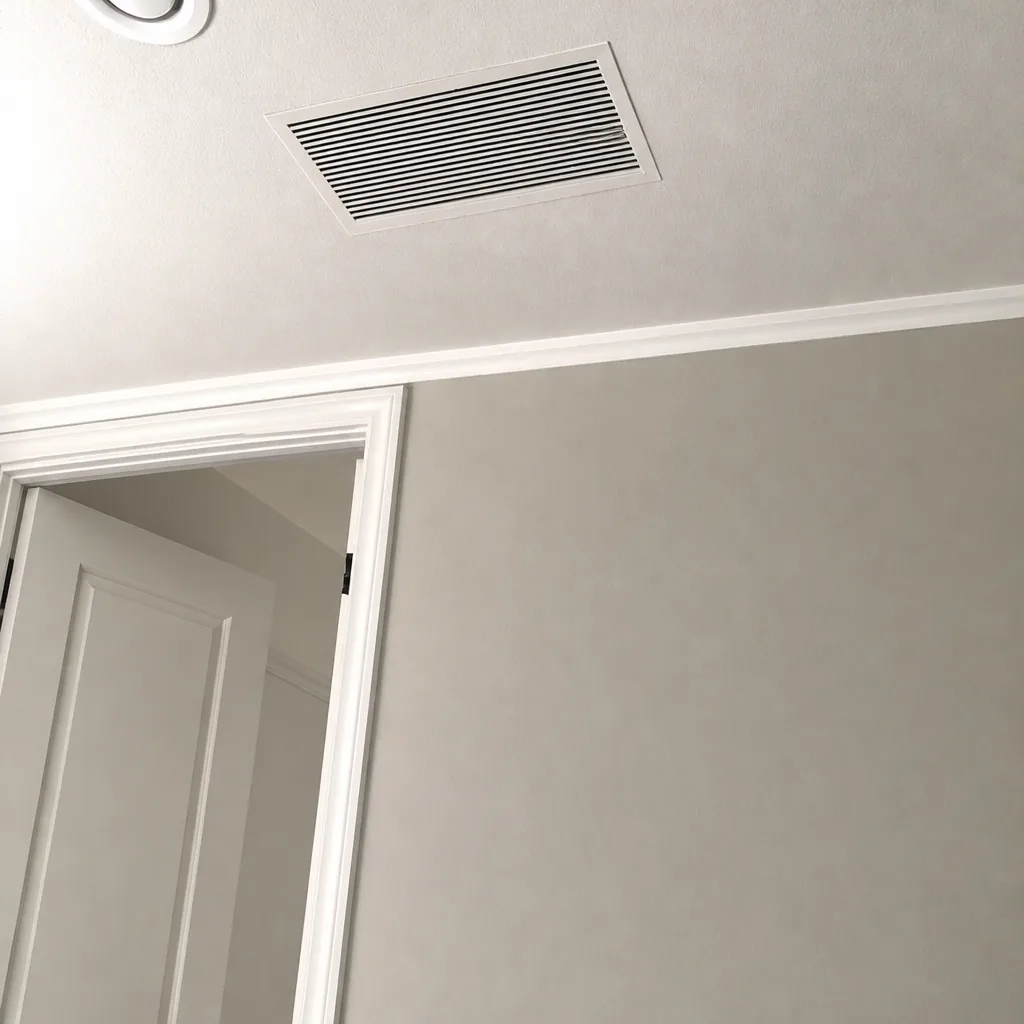 After
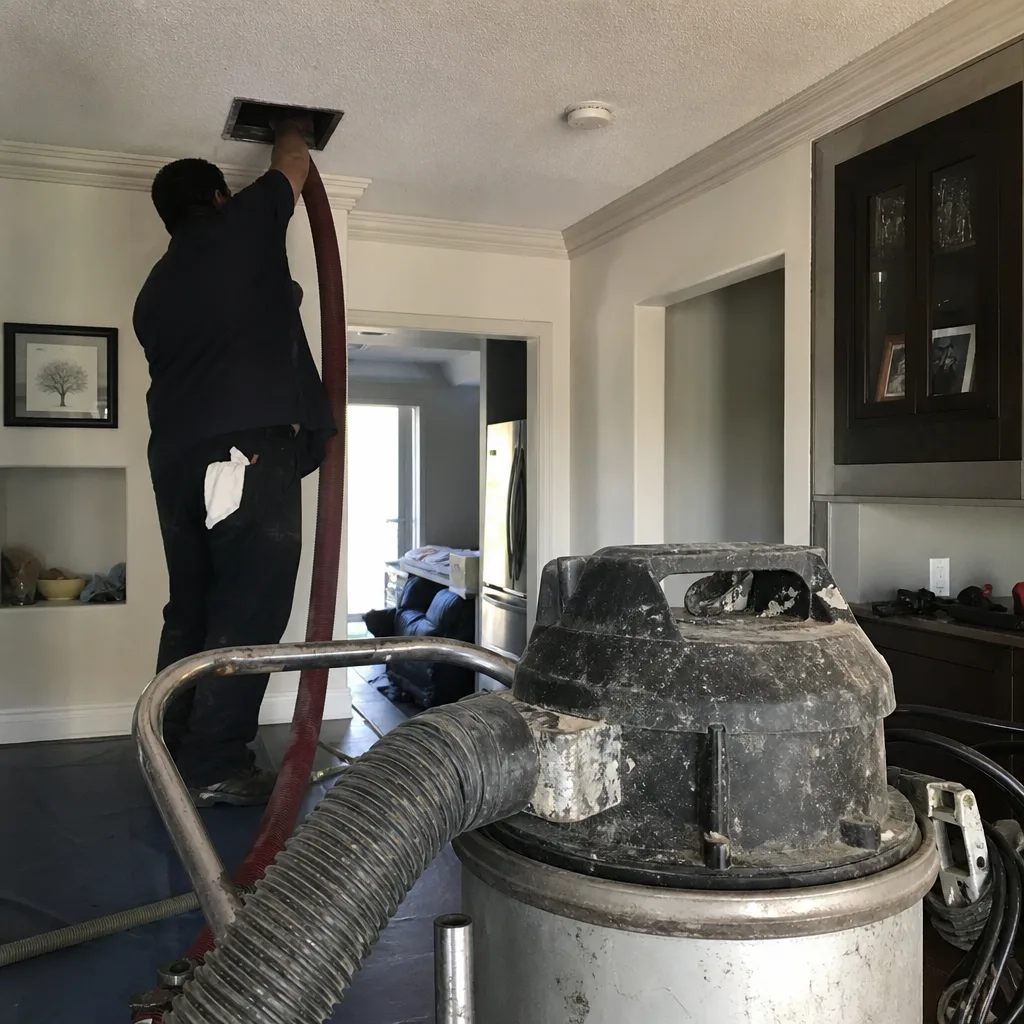 Before
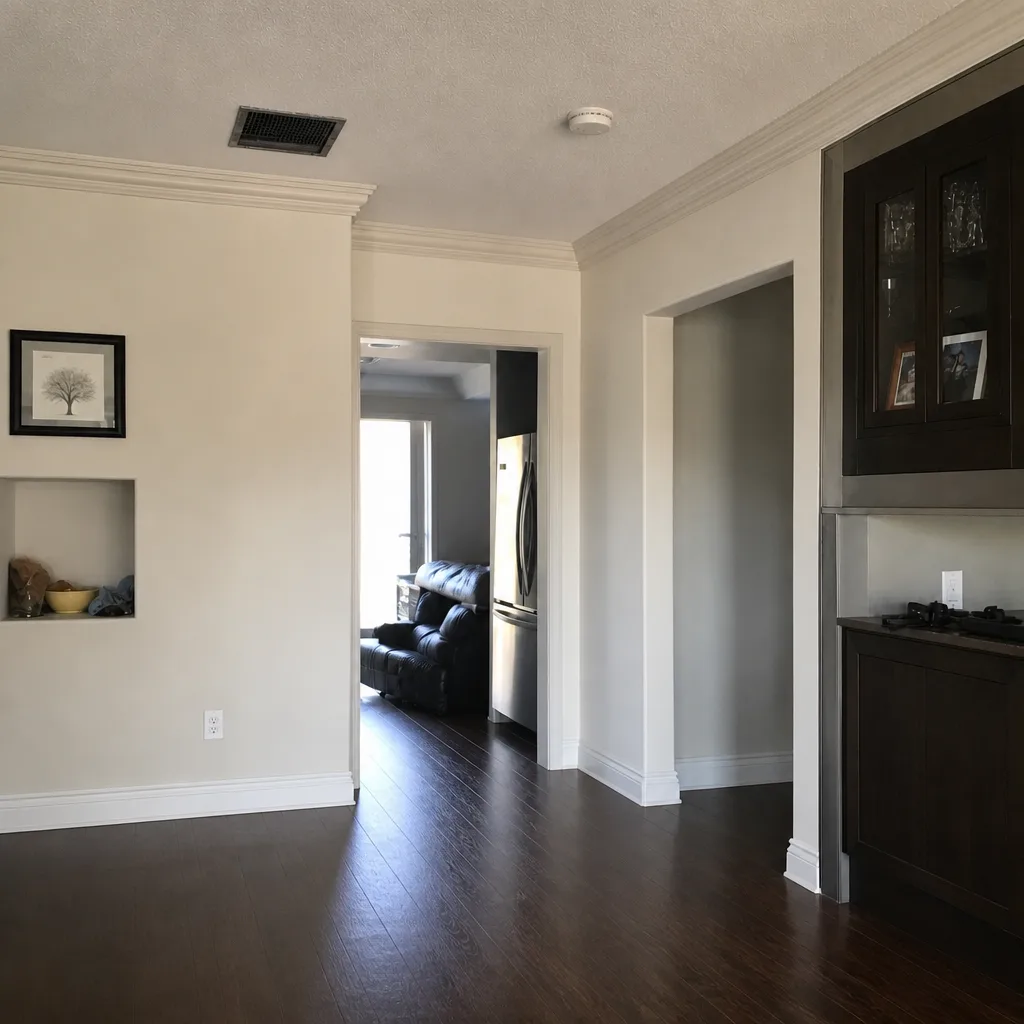 After
When to Call a Professional
Call when you have a persistent musty smell you can’t trace, when a room is chronically under-served, when you see visible debris accumulation inside a register that a routine vacuum doesn’t solve, or when symptoms return within a month of a previous cleaning. Call when you’re planning a renovation and want to understand the return path first. Call when a dryer is taking noticeably longer to dry a load: that one’s a safety issue, not an inconvenience. And call when a prior technician never opened the air handler and you want a full-system second opinion.
Newport Beach Air Duct Cleaning covers the full indoor-air lifecycle under one roof: air duct cleaning, dryer vent cleaning as a dedicated safety service, HVAC cleaning, duct repair and sealing, and air quality and sanitizing. We’re able to diagnose whether your problem is contamination, pressure, or structural on the same visit, which is usually the only way it gets answered honestly. Newport Beach Air Duct Cleaning offers free estimates in Newport Beach. Call (833) 482-6044. We answer 24/7. Fast dispatch from 7am to 7pm, Sunday through Friday.
Frequently Asked Questions
Most whole-system air duct cleanings in Newport Beach fall in a typical range based on the number of vents, the size of the system, and whether the air handler and coil are included. There’s no per-vent bait price here; we quote per system, in writing, before work starts. The written estimate sets the final price. We don’t do a low coupon that expands on-site. If you have sticker shock from a competitor’s opening number, that’s usually the reason: the real number arrives later. Call (833) 482-6044 for a free estimate – the exact quote takes the system size and layout into account.
Because they usually don’t include the air handler, the coil, or the return plenum. A duct-only vacuum of visible runs is a real service, but it’s a fraction of the work a full-system cleaning does. In Newport Beach, where crushed flex and return-path issues are common, the cleaning-only quote is often the wrong service for the problem. Ask what equipment is being used (Rotobrush, Nikro, and Abatement Technologies systems are commercial-grade platforms) and whether the air handler is included. If the answer to either is “no” or “not sure,” the price is cheap because the scope is small. Call (833) 482-6044 for an honest whole-system quote.
Ask for before-and-after photos of your own ducts and the air handler. Not stock images, not a manufacturer’s brochure. We provide photos of the specific system we’re cleaning because it’s the only way to verify the result. You should also see the equipment being brought in and used. Call (833) 482-6044 to schedule a cleaning with photo documentation.
Most homes don’t need it on a fixed schedule. The real triggers are: after a renovation, after a rodent or moisture issue, when a return is running through an unconditioned space and drawing dust, and when a pre-purchase inspection finds visible accumulation. Homes in Newport Beach with ongoing attic-return vulnerabilities and a lot of outdoor dust drawn through a negative-pressure system sometimes benefit from a more active check-in schedule than the industry average. That’s a conversation, not a subscription. Call (833) 482-6044 and we’ll assess your system rather than sell you a calendar.
The smell is coming from a source the cleaning never addressed. The most common culprits are moisture in the air handler, a return plenum drawing from the attic or crawl space, or a filter bypass at the air handler. Get an HVAC cleaning and inspection that includes the coil, drain pan, and return-side connections. Cleaning again without that inspection is throwing money at the same problem. Call (833) 482-6044 for a full-system assessment.
Do you offer same-day service in Newport Beach?
Duct cleaning is a scheduled service, not an emergency one, so we book it to fit your system and your day. We answer 24/7, and fast dispatch runs from 7am to 7pm, Sunday through Friday. If you call with a same-day request, we’ll tell you directly whether that day’s schedule has room or whether the next opening is better for a thorough job. A thorough job takes longer than a superficial one and we don’t rush it to fit the calendar.
The Bottom Line
Most duct problems aren’t duct problems. They’re negative pressure, leakage, or a live contamination source that was never corrected. Read your symptoms as data. Test for leakage with the tissue method before you call. Ask any technician whether the air handler, coil, and return plenum are included in the quote, and require before-and-after photos. If you’re in Newport Beach and you want a straight diagnosis before a cleaning, air duct cleaning shouldn’t be the first thing on the table until we know what’s actually wrong. Call (833) 482-6044. We answer 24/7. Fast dispatch from 7am to 7pm, Sunday through Friday. One flat price per system, agreed before work starts. Breathe the difference.
Written by the team at Newport Beach Air Duct Cleaning.